
Research

How War Is Rewriting Journalism in Ukraine
A recent analysis published by International Policy Digest explores how Russia’s war against Ukraine is fundamentally reshaping journalism, forcing reporters to adapt to new physical dangers, information warfare, and ethical challenges while documenting one of the most consequential conflicts of the modern era. The article centers on interviews with Ukrainian journalist Anna Chernenko, who reports from Kharkiv, a city heavily affected by Russian attacks and drone warfare. Chernenko argues that the conflict has transformed journalism from traditional frontline reporting into a more immersive and psychologically demanding form of documentation. She describes modern Ukrainian journalism as...
Scientists and Journalists Must Work Together to Defend Public-Interest Research
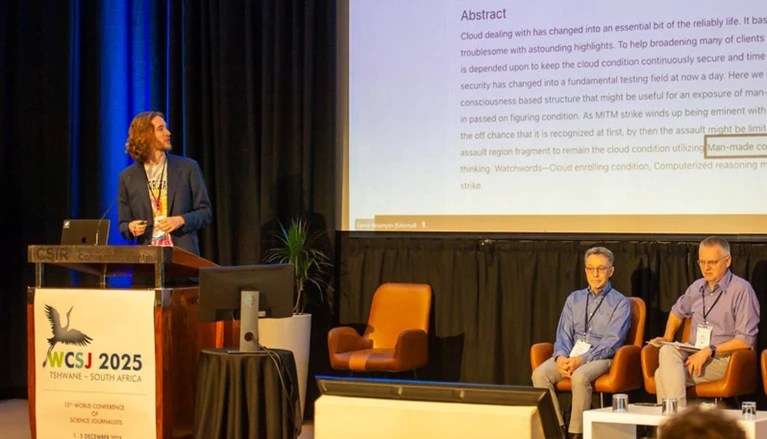
Collaboration between scientists and journalists is becoming increasingly important in protecting public-interest research, combating misinformation, and exposing scientific misconduct in an era shaped by political pressure, digital disinformation, and declining trust in institutions. A recent commentary published in Nature examined how stronger cooperation between researchers and investigative journalists can improve public understanding of science and strengthen accountability within academic systems. The article was written by science sleuth Lonni Besançon following his participation in the 2025 World Conference of Science Journalists in Pretoria, South Africa. Besançon reflected on his experiences investigating problematic COVID-19 research papers and...
Artificial Intelligence and the Future of Public-Interest Journalism
The rapid expansion of artificial intelligence in news production has intensified debate over whether human journalists can be replaced by automated systems and how public-interest journalism can be protected in an increasingly AI-driven media environment. A recent analysis published by the Reuters Institute for the Study of Journalism examined the growing role of generative AI in newsrooms and the risks it may pose to editorial independence, accountability, and democratic discourse. The article argued that while AI technologies are becoming more capable of producing summaries, drafting reports, translating content, and analyzing large datasets, journalism involves responsibilities...
Documenting State Violence: Brazilian Photojournalism and the Human Impact of Police Operations
Photojournalism continues to play a critical role in documenting state violence and public security operations in Brazil, particularly in marginalized communities where police raids often result in significant civilian casualties. A recent analysis published by the LatAm Journalism Review examined the work of Brazilian photojournalist Guilherme Santos, whose reporting focused on the aftermath of one of the deadliest police operations in the country’s history. The article centered on Santos’ visual documentation of the 2021 Jacarezinho police raid in Rio de Janeiro, an operation carried out by Brazilian police forces that left 28 people dead, including...
Reporting During Internet Shutdowns: How Journalists Adapt When Connectivity Disappears
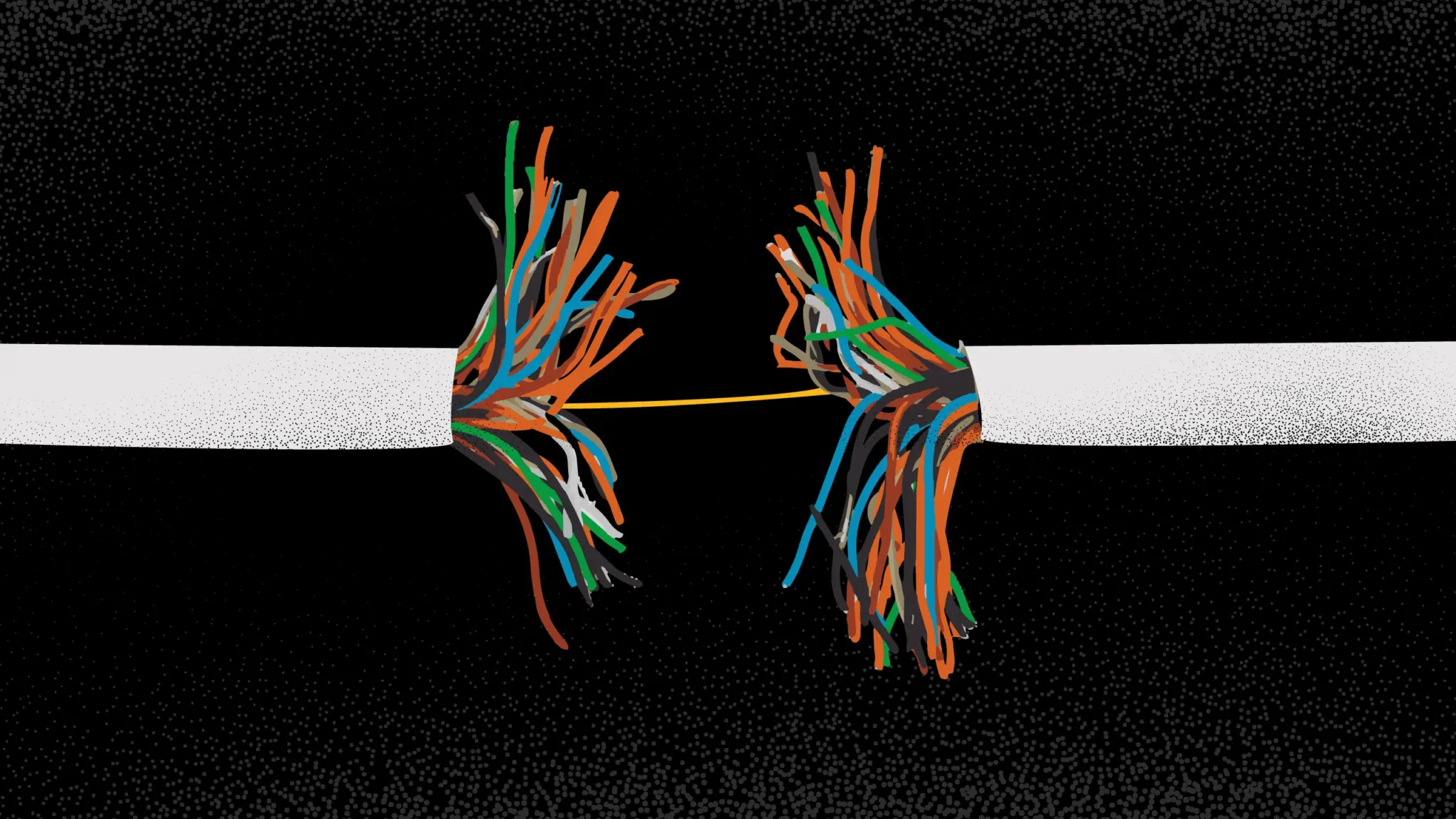
Internet shutdowns and communication blackouts have become increasingly common during political crises, protests, armed conflicts, and elections, creating major obstacles for journalists attempting to gather information and report developments in real time. A recent analysis published by Global Voices examined how reporters continue working when governments or authorities deliberately restrict digital access and communication networks. The article explained that internet shutdowns are often used by governments as tools to control information, suppress dissent, limit public mobilization, and restrict media coverage during periods of instability. These disruptions can involve blocking mobile data, restricting social media platforms,...
Believability Versus Credibility: What Journalism Can Learn From Digital Creators
The rapid growth of creator-driven media is reshaping audience trust and forcing traditional journalism to reconsider how credibility is built in the digital age. A recent analysis published by The Media Online explored the distinction between “credibility” and “believability,” arguing that modern audiences increasingly trust content creators not necessarily because they are formally authoritative, but because they appear authentic, relatable, and emotionally accessible. The article explained that traditional journalism has historically relied on credibility as the foundation of public trust. Credibility is typically associated with professional standards such as fact-checking, editorial oversight, objectivity, institutional reputation,...
The Skills, Risks, and Methods Behind Investigative Journalism
Investigative journalism remains one of the most demanding and influential forms of reporting, requiring persistence, skepticism, legal awareness, and the ability to uncover information that powerful individuals or institutions may prefer to keep hidden. A recent feature published by Newsport examined the realities of becoming an investigative journalist and highlighted the professional and ethical challenges involved in the field. The article emphasized that investigative journalism differs significantly from daily news reporting because investigations often take months or even years to complete. Rather than simply covering events as they happen, investigative reporters typically focus on uncovering...
UNESCO Report Warns of Escalating Online Violence Against Women Journalists
A new report published by UNESCO has highlighted the growing scale and impact of online violence targeting women journalists, warning that digital harassment is increasingly threatening press freedom, mental health, and the ability of reporters to safely participate in public discourse. The report examined patterns of online abuse directed at women working in journalism across multiple regions and media platforms. According to UNESCO, female journalists are frequently subjected to coordinated harassment campaigns that include threats of violence, misogynistic attacks, sexualized abuse, doxxing, disinformation, and intimidation intended to silence or discredit their reporting. Researchers found that...
Medical Journal Retracts Stent Study Nine Years After Journalist Investigation
A medical journal published by the BMJ Group has formally retracted a controversial research paper nearly nine years after a journalist first raised concerns about the study’s data and scientific integrity. The case has renewed discussion about accountability in academic publishing, the role of investigative journalism in scientific oversight, and the lengthy delays that can occur before questionable research is formally addressed. The retracted paper focused on cardiac stent procedures and had been cited in medical literature despite longstanding concerns regarding the reliability of its findings. According to reports, science journalist Jeanne Lenzer first identified...
Challenges and Transformations in War Reporting in the Social Media Age
War journalism has undergone a structural shift in the digital era, driven primarily by the rapid expansion of social media platforms, user-generated content, and real-time information flows. Contemporary reporting on armed conflict is no longer confined to embedded correspondents or traditional editorial pipelines, but increasingly shaped by decentralized networks of civilians, soldiers, and digital audiences who actively produce and circulate information. Research on conflict reporting indicates that social media has significantly increased the speed and volume of war-related information available to journalists, enabling near real-time updates from multiple sources across conflict zones. However, this immediacy...
AI-Powered Investigative Journalism Initiative Aims to Redefine Data-Driven Reporting at Northwestern
Northwestern University has launched a new initiative focused on exploring how artificial intelligence can transform investigative journalism by improving how reporters process, analyze, and interpret large volumes of complex data. The project brings together journalists, developers, and researchers to design AI-driven tools intended to support, rather than replace, traditional reporting practices. According to the announcement, the initiative centers on a global competition that challenges participants to build “AI agent skills” capable of assisting investigative journalists in identifying patterns, leads, and connections within large document sets. These workflows are designed to make investigative reporting faster, more...
Targeting the Press: Legal Harassment, Violence, and Financial Pressure as Structural Tools of Media Suppression
The article examines how journalists and news organizations globally are increasingly subjected to coordinated forms of pressure that extend beyond physical violence, including legal intimidation, economic coercion, and institutional harassment, creating an environment in which press freedom is systematically constrained rather than incidentally threatened. It frames attacks on journalism as part of an interconnected ecosystem of control where governments, powerful individuals, and other actors use overlapping strategies to weaken independent reporting. These include lawsuits, regulatory enforcement, financial pressure on media outlets, and threats aimed at both journalists and their families, all of which contribute to...
Journalism Under Fire: Reporting from Gaza and the Ethical and Operational Limits of War Coverage
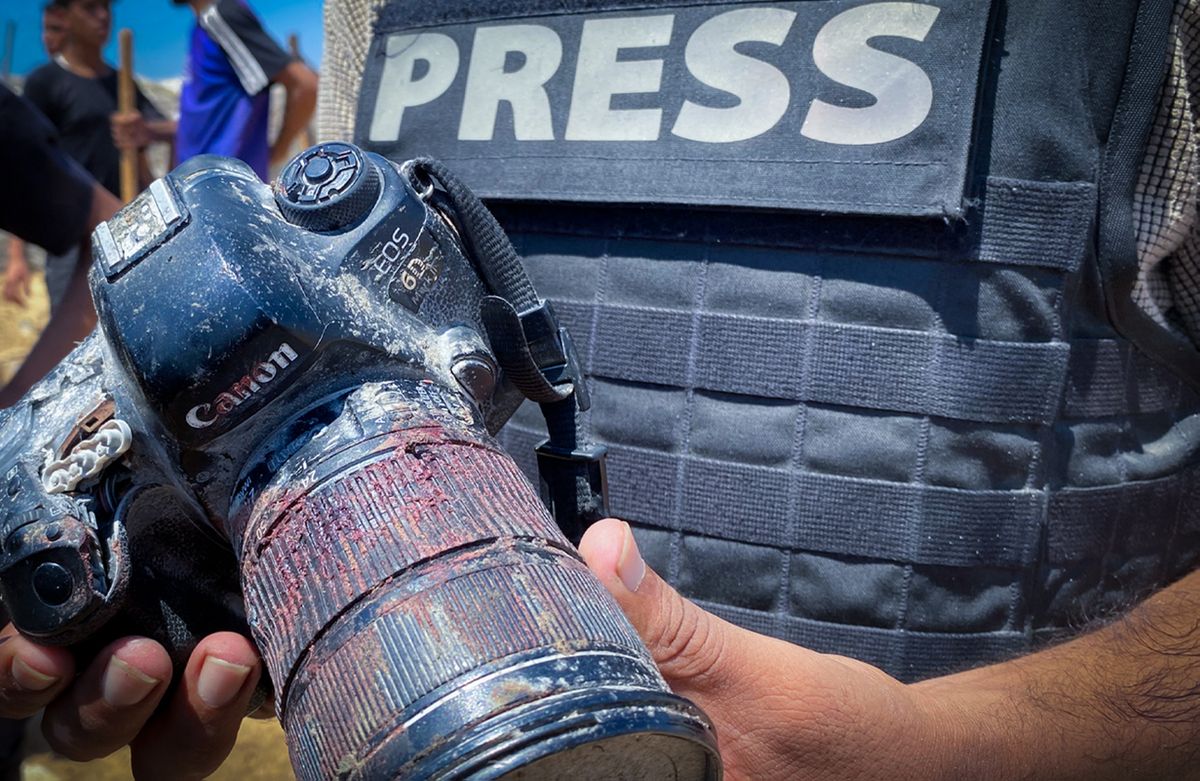
The article published in the Al Jazeera Journalism Review examines how journalists covering the war on Gaza are navigating extreme conditions that blur the boundaries between reporting, documentation, and survival, while raising broader questions about the role of journalism in conflict zones. It presents a field-based narrative focused on reporters working inside Gaza during ongoing hostilities, where journalists are not only covering events but also directly experiencing the humanitarian consequences of war, including displacement, destruction of infrastructure, and loss of colleagues. The piece frames journalism in this environment as a continuous struggle to document events...
Critical Thinking as a Litmus Test for Journalism in an Age of Information Saturation
The article examines critical thinking as a foundational benchmark for evaluating journalism quality, arguing that in today’s fast-moving information environment, the ability to question, verify, and contextualize information has become central to distinguishing professional journalism from misinformation and surface-level reporting. It frames critical thinking not as an abstract academic skill but as a practical newsroom requirement that shapes how journalists gather, interpret, and present information. In this context, journalism is portrayed as a discipline that depends on structured skepticism, where claims must be tested against evidence rather than accepted at face value. The discussion highlights...
Reconfiguring Journalism in the Digital Age: Power, Regulation, and Media Autonomy Under Pressure
The selected study, published in a peer-reviewed journal on Taylor & Francis Online, examines the evolving dynamics of media systems and journalistic practice within contemporary socio-political environments, with a particular focus on how institutional pressures, digital transformation, and regulatory frameworks shape professional autonomy, content production, and information dissemination in the public sphere. The research situates journalism within a broader theoretical framework of media governance and communication studies, analysing how journalists navigate structural constraints imposed by political authorities, platformisation of news distribution, and shifting audience behaviours. It draws on interdisciplinary approaches from media sociology, political communication,...
Press Freedom Crisis in Nigeria Deepens as Journalists Face Long-Term Pattern of Killings and Impunity
A regional press freedom analysis highlights a persistent and worsening crisis for journalists in Nigeria, where decades of violence, intimidation, and systemic impunity have created one of the most dangerous environments for media workers in West Africa. According to reporting referenced by Impact Policies, at least 28 journalists have been killed in Nigeria since 1986, beginning with the high-profile assassination of investigative journalist Dele Giwa in a parcel bomb attack in 1986. That case remains one of the country’s most emblematic unsolved crimes against the press and is often cited as the starting point of...
Mexico Sees Sharp Rise in Journalist Killings and Abductions in 2025, Advocacy Report Warns
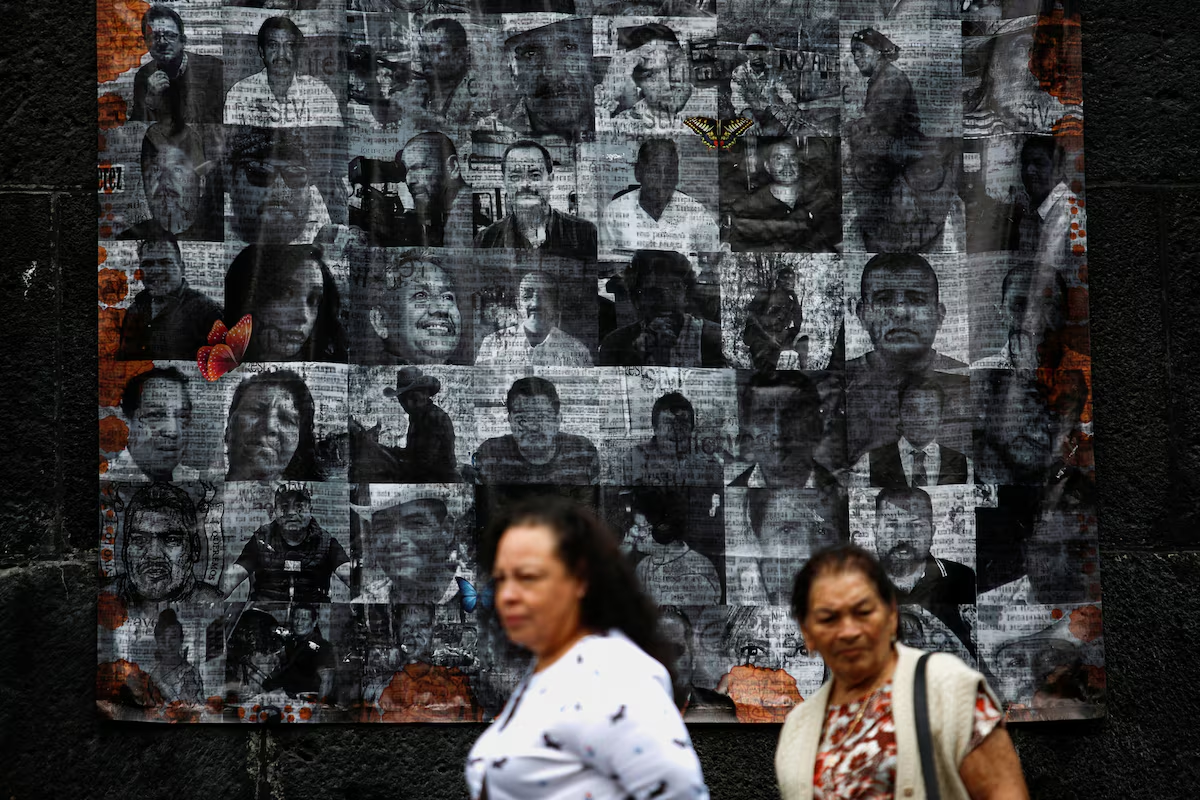
Violence against journalists in Mexico intensified significantly in 2025, with a leading press freedom organization reporting a near doubling in killings compared to the previous year, alongside persistent patterns of disappearance, physical attacks, and judicial harassment targeting media workers. According to a report by Article 19, cited by Reuters and Internazionale, at least eight journalists were either killed or disappeared in Mexico in 2025. This figure includes seven murders and one disappearance, compared with four journalist killings recorded in 2024, marking a sharp increase in lethal violence against the press. The report identifies Mexico as...
Persistent Threats to Journalism and Media Freedom in the MENA Region
ARTICLE 19’s latest analysis of the Middle East and North Africa (MENA) region highlights a sustained and multi-layered deterioration in press freedom, driven by violence in conflict zones, restrictive legal frameworks, and expanding state control over information. The report argues that these pressures are not isolated incidents but part of a systemic pattern that continues to weaken independent journalism across the region. In conflict-affected areas such as Palestine, Sudan, Syria, and Lebanon, journalists face direct physical danger, including killings, arbitrary detention, and forced displacement. ARTICLE 19 notes that reporting in war zones has become increasingly...
Journacide and the Global Normalisation of Journalist Targeting
The article examines what it describes as a widening global pattern of violence, intimidation, and systematic neglect of attacks against journalists, framing it as a structural crisis in which the killing or silencing of reporters is increasingly met with limited accountability or sustained international pressure. It argues that these conditions amount to what some analysts term “journacide”, the deliberate or systemic destruction of journalism through direct attacks, legal harassment, and institutional indifference. A central theme is that the dangers faced by journalists are no longer confined to authoritarian contexts or active war zones, but are...
China Remains World’s Largest Prison for Journalists Amid Intensifying Media Repression, Report Warns
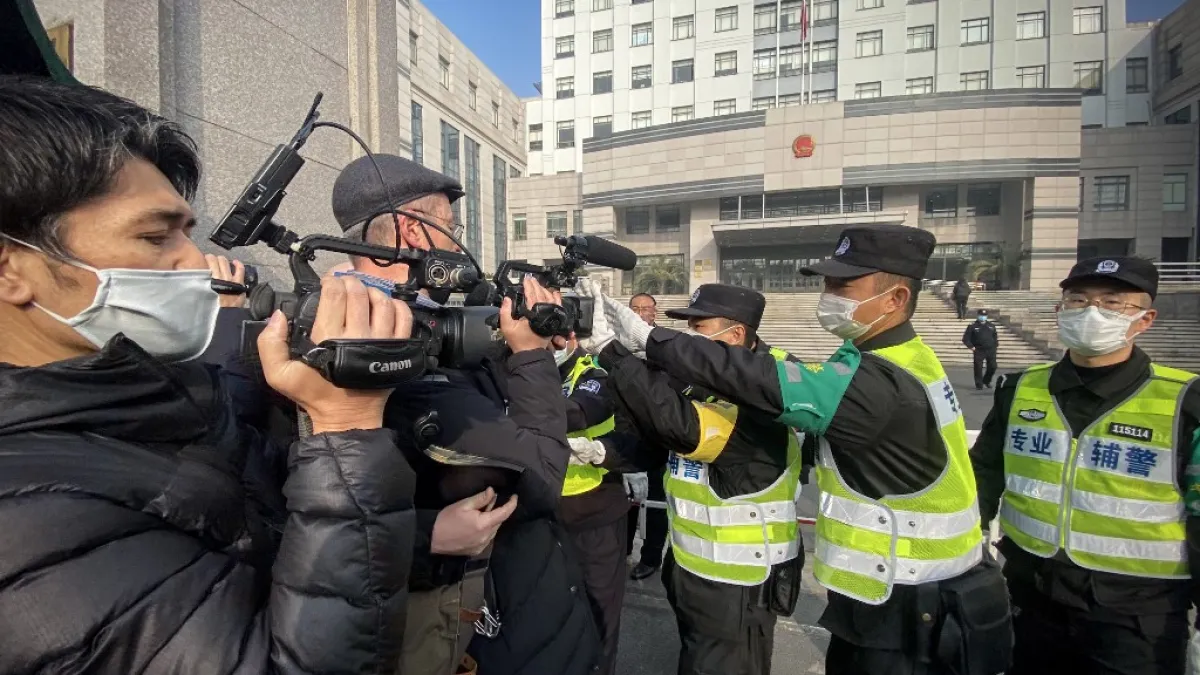
China continues to be identified as the world’s largest jailer of journalists, according to press freedom monitoring groups and recent international reporting, which highlight a sustained pattern of arrests, censorship, and surveillance targeting independent media workers. The latest assessments underscore that the country holds the highest number of imprisoned journalists globally, reflecting what rights groups describe as a systematic crackdown on press freedom. Reports indicate that more than 100 journalists and media workers are currently detained in China, with estimates placing the figure at over 110 individuals imprisoned in connection with their work. These detentions...
Global Survey Highlights Rising Risks for Journalists as Threats Shift from Violence to Systemic Intimidation
A 2026 global survey by the Paris-based investigative network Forbidden Stories finds that journalists facing threats are increasingly identifying coordinated international reporting as the most effective deterrent against those who target them, while also documenting widespread intimidation, weak legal protection, and underreporting of attacks on media workers. The survey, which gathered responses from 204 journalists across 53 countries who had experienced threats or attacks due to their reporting, reveals a complex and escalating risk environment for press professionals. According to the findings, 68% of respondents said that perpetrators are most concerned about global journalistic investigations...
Radio Silence Investigation Reveals How Political Power and Violence Shape Journalism in Kabul
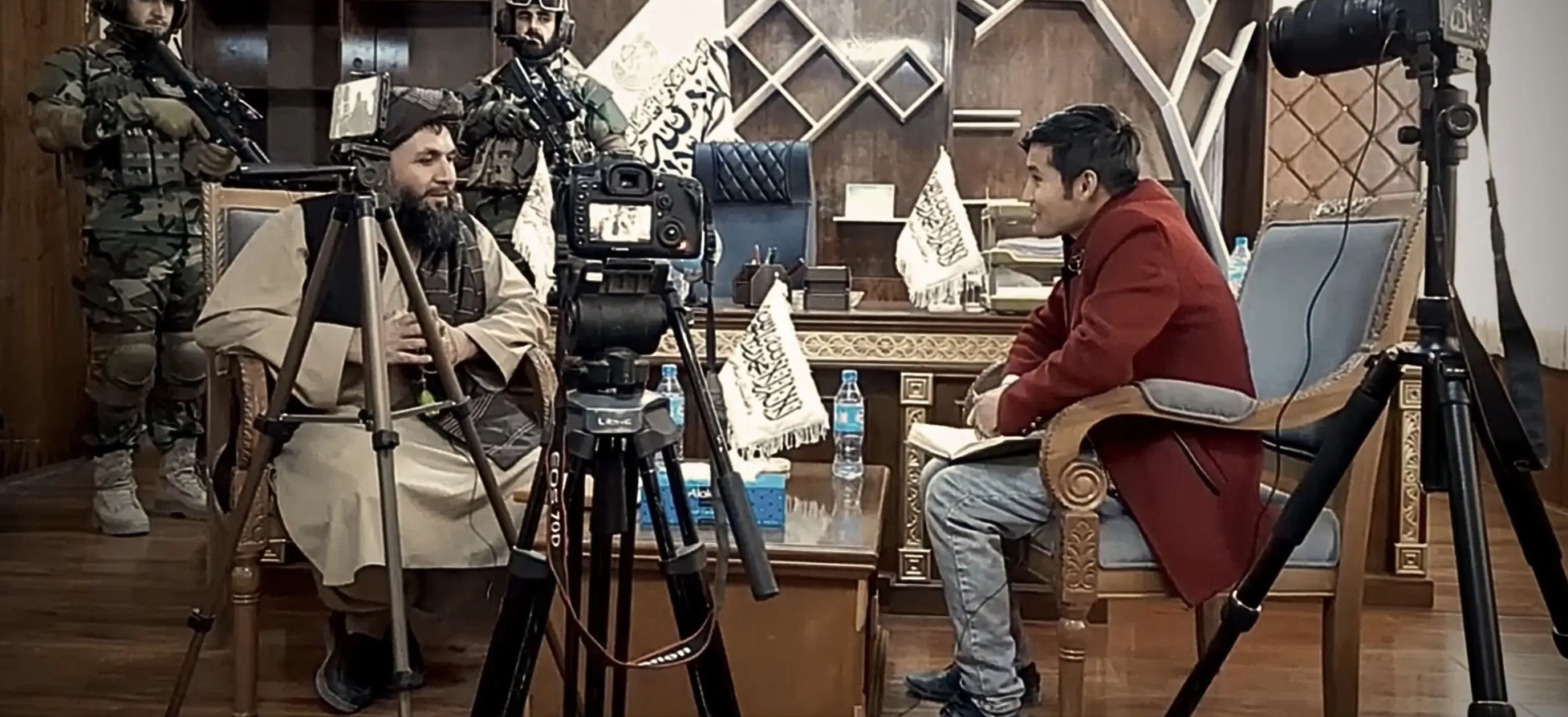
A cross-border investigative project by Forbidden Stories, titled Radio Silence, examines the risks faced by journalists in Kabul amid political upheaval, governance breakdown, and persistent threats to press freedom in Afghanistan. The investigation reconstructs reporting originally conducted by Afghan journalists who were unable to continue their work due to intimidation, displacement, or security risks following the return of the Taliban to power. It focuses in part on reporting linked to the governor of Kabul and broader questions about governance, accountability, and information control in the capital. At the centre of the project is an effort...
Independent Journalism Is Mission-Driven but Financially Precarious, New Report Finds
A new industry analysis highlighted by Nieman Lab argues that independent journalists are increasingly driven by mission-oriented goals such as accountability reporting and public service, but continue to operate under significant financial strain, reflecting structural instability in the digital news economy. The report finds that many independent journalists and small newsroom operators prioritize editorial independence and community impact over commercial expansion, often choosing to work outside traditional media institutions. However, this autonomy comes with limited revenue streams, inconsistent funding, and reliance on a fragmented mix of subscriptions, donations, grants, and platform-based income. Researchers note that...
From Reporting to Reflexivity: Journalism, Power, and the Changing Architecture of News Practice
The article from the Al Jazeera Journalism Review examines how contemporary journalism is evolving under pressure from political polarization, technological disruption, and shifting audience expectations, arguing that the profession is increasingly moving from simple reporting toward a more reflective and analytical mode of practice. It situates journalism not only as a mechanism for information delivery but also as an interpretive system shaped by institutional constraints and power relations. A central theme is the growing tension between traditional journalistic objectivity and the demand for deeper contextualization. The piece highlights how reporters are no longer just observers...
The Vanishing Women in Journalism — A Structural Disappearance From Pakistan’s Newsrooms
The number of women working as reporters in Pakistan’s media industry has fallen sharply in recent years, raising concerns about a widening gender gap in journalism and its impact on news coverage and representation. According to recent data cited in industry reporting, women now make up only about 4 percent of reporters in 2025, down from 16 percent in 2020, marking a steep and sustained decline in newsroom participation. This contraction is not occurring in isolation but reflects broader structural and institutional pressures within Pakistan’s media landscape. Analysts and journalists point to a combination of...
1 2 3 13