
Reporting During Internet Shutdowns: How Journalists Adapt When Connectivity Disappears
May 20, 2026
Artificial Intelligence and the Future of Public-Interest Journalism
May 24, 2026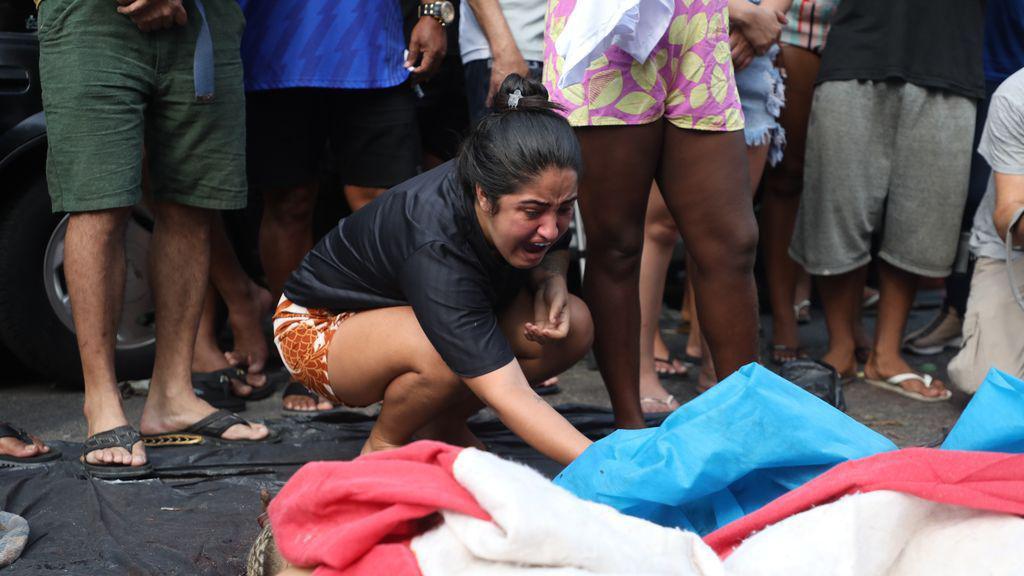
Photojournalism continues to play a critical role in documenting state violence and public security operations in Brazil, particularly in marginalized communities where police raids often result in significant civilian casualties. A recent analysis published by the LatAm Journalism Review examined the work of Brazilian photojournalist Guilherme Santos, whose reporting focused on the aftermath of one of the deadliest police operations in the country’s history.
The article centered on Santos’ visual documentation of the 2021 Jacarezinho police raid in Rio de Janeiro, an operation carried out by Brazilian police forces that left 28 people dead, including a police officer. The raid took place in the Jacarezinho favela and quickly became one of the most controversial security operations in Brazil because of allegations involving excessive force, unlawful killings, and human rights abuses.
According to the report, Santos spent years documenting the social consequences of police violence in Brazilian favelas, focusing not only on scenes of conflict but also on the long-term emotional and psychological effects experienced by residents and victims’ families. His photography captured funerals, grieving relatives, damaged homes, and everyday life in communities heavily affected by militarized policing. The article argued that this approach helped humanize individuals frequently reduced to statistics in public security debates.
The analysis highlighted the broader challenges faced by journalists reporting on police violence in Brazil. Reporters and photographers working in favelas often encounter dangerous conditions, including armed confrontations, threats from criminal groups, and hostility from security forces. Journalists covering police operations may also face restrictions on access, intimidation, or accusations of siding with criminal organizations when documenting abuses.
The article also examined how visual journalism shapes public understanding of violence and inequality in Brazil. Researchers and media analysts cited in the report argued that photography has become an important tool for challenging official narratives surrounding police operations. Images documenting civilian suffering, damaged neighborhoods, and grieving families can provide evidence that contrasts with government claims emphasizing security successes or anti-crime objectives.
Brazil has long recorded high numbers of police killings, particularly in low-income and predominantly Black communities. Human rights organizations, including Amnesty International and Human Rights Watch, have repeatedly criticized security operations involving excessive force and limited accountability for police misconduct. The Jacarezinho raid itself became the subject of investigations and legal scrutiny after rights groups alleged that many victims may have been executed.
The report concluded that documentary photography remains essential for preserving public memory and accountability in cases involving state violence. Through long-term visual reporting, photojournalists can help expose patterns of abuse, amplify marginalized voices, and contribute to broader discussions about policing, inequality, and human rights in Brazil.
Reference –
Brazilian photojournalist documents toll of country’s deadliest police operation