
Journalists Reported Detained After Israeli Interception of Gaza Aid Flotilla, Press Freedom Groups Condemn Operation
May 1, 2026
Sudanese Journalists Syndicate Honored With UNESCO Press Freedom Prize Amid War-Time Media Collapse
May 1, 2026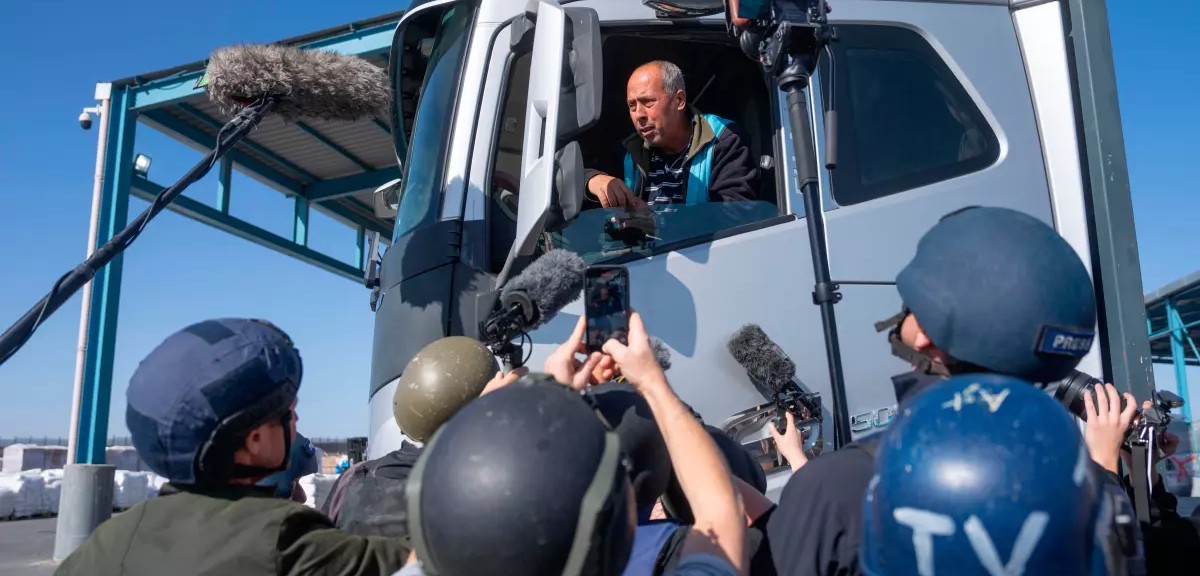
May 01, 2026 – Palestine –
Major international media organizations have jointly called on Israel to immediately allow foreign journalists independent access to Gaza, citing ongoing restrictions that have prevented on-the-ground reporting since the start of the conflict and raising renewed concerns about transparency and press freedom in war coverage.
The appeal, issued by more than two dozen leading news outlets including The Associated Press, BBC, CNN, Reuters, The New York Times, and The Washington Post, emphasizes that independent access is essential for verifying information, reporting civilian conditions, and challenging official accounts from all parties involved.
The statement argues that despite a ceasefire being in place for several months, Israel continues to restrict entry for foreign reporters, relying instead on tightly controlled military-supervised visits that do not allow independent movement or unscripted reporting. Media executives say this prevents journalists from fully documenting the humanitarian and political realities inside Gaza.
According to the coalition, the restrictions have left local Palestinian journalists as the primary source of reporting from within Gaza. These journalists, the statement notes, have worked under extreme conditions, including widespread destruction, displacement, and reported shortages of necessities. The organizations warn that this reliance places disproportionate risk on local reporters while limiting the diversity and verification of available information.
The letter also references the high number of journalist casualties during the conflict, with press freedom groups estimating that more than 200 media workers have been killed since the war began in 2023. This figure has intensified concerns about the safety of journalists operating in Gaza and the broader risks associated with conflict reporting in the region.
Israel has previously justified the restrictions on security grounds, arguing that unrestricted access could compromise military operations. However, media organizations counter that the security situation has changed and that aid workers are already permitted to enter under controlled mechanisms, raising questions about why journalists remain excluded.
Legal efforts by press associations to challenge the ban, including petitions submitted to Israel’s Supreme Court, remain unresolved, with rulings repeatedly delayed. This ongoing legal uncertainty has further complicated efforts to establish independent media access to the territory.
The coalition’s statement concludes that restricting independent journalism undermines accountability and limits the global public’s ability to understand the full scope of the situation on the ground. It calls for immediate access for foreign reporters, framing it as a fundamental press freedom issue rather than a logistical or security constraint.
Reference –