Research

Deliberate Deprivation: How Gaza Was Starved into Crisis
Gaza is facing a catastrophic food crisis, one shaped not by natural disaster but by calculated policies of deprivation. According to the Council on Foreign Relations, the humanitarian situation has sharply deteriorated since early 2025, when Israel intensified its blockade, halting nearly all humanitarian aid for three months. As a result, essential supplies such as food, water, and medicine have nearly vanished, while infrastructure needed to deliver aid has been destroyed or rendered inoperable. Prices for basic items like bread and oil have surged by more than 1,000%, leaving families unable to feed themselves. Food...
Central Asia Faces Mounting Challenges in Media and Free Expression
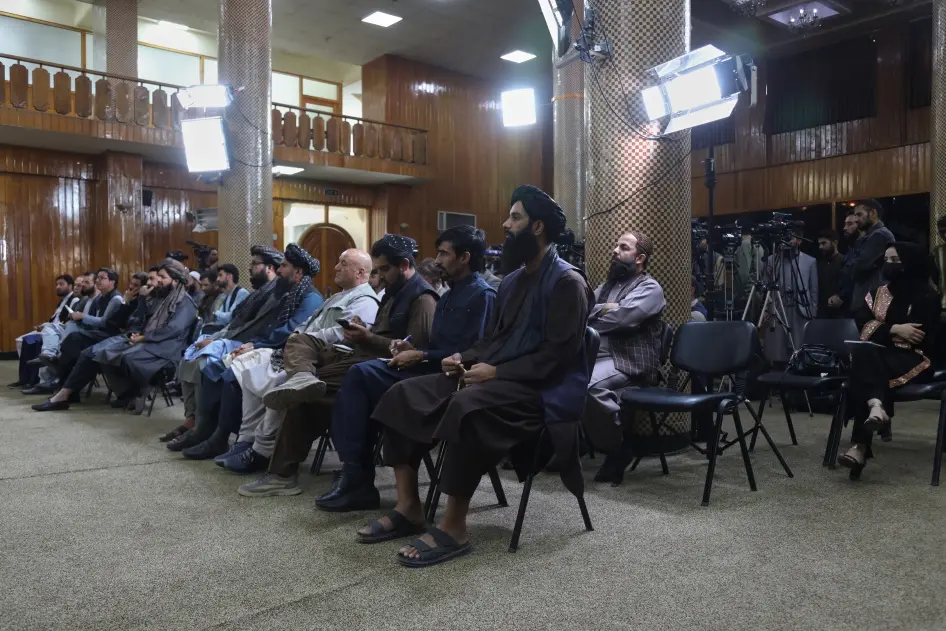
A new report by Radio Free Europe/Radio Liberty reveals growing threats to press freedom and free expression across Central Asia, where governments are tightening control over independent media and silencing critical voices through legal, political, and economic pressure. In countries such as Kazakhstan, Kyrgyzstan, Uzbekistan, Turkmenistan, and Tajikistan, journalists face increasing censorship, surveillance, and intimidation. Authorities are introducing new legislation to control online content, revoke media licenses, and criminalise what they label as "false information." These laws are often vague and open to interpretation, allowing governments to arbitrarily target reporters and outlets that challenge official...
Brazil’s Intelligence Agency Illegally Spied on Journalists Under Bolsonaro, Police Say
Brazil’s Federal Police have uncovered a sweeping illegal surveillance operation by the country’s intelligence agency, ABIN, during the presidency of Jair Bolsonaro. According to police findings, ABIN used a tracking system called FirstMile to monitor the locations and communications of at least 12 journalists, as well as judges, lawmakers, and civil society members, between 2019 and 2021. Over 60,000 illegal searches were conducted using the software, which was originally acquired to track criminals. Among the journalists targeted were prominent reporters Monica Bergamo and Reinaldo Azevedo. Authorities say the intent was to discredit reporters and gain...
Netanyahu vs. the Israeli Media: A Struggle Over Press Freedom
Prime Minister Benjamin Netanyahu’s government is intensifying its efforts to control and suppress critical media voices in Israel, especially amid the ongoing conflict in Gaza. This crackdown marks a significant challenge to press freedom in a country with a long tradition of vibrant journalism. One of the main targets is Haaretz, Israel’s oldest liberal newspaper. The government has imposed a boycott, instructing officials to avoid the outlet and cutting off state advertising revenue. This economic pressure aims to weaken Haaretz’s influence due to its critical stance on Netanyahu’s policies and war management. Foreign media outlets...
Digging Up Justice: American Journalists Reopen Civil Rights-Era Killings
Two investigative journalists have breathed new life into long-dormant civil rights-era murder cases. Independent reporter Ben Greenberg revisited the 1965 killing of John Wesley Wilder in Ruston, Louisiana, initially ruled a justified police shooting, by poring over neglected police and highway patrol archives and uncovering inconsistencies. His findings prompted the FBI to reopen the case. Meanwhile, Sandra Chapman, a reporter with WISH‑TV in Indianapolis, took on the 1968 murder of Carol Jenkins in Martinsville, Indiana. She traced a key witness, Shirley McQueen—the estranged daughter of a suspect—whose detailed recollection and corroborative documents led to the...
UNESCO Handbook Empowers Journalists to Combat Disinformation and Rebuild Trust
UNESCO’s handbook, part of the Global Initiative for Excellence in Journalism Education, provides a comprehensive framework for educators and practicing journalists to address misinformation and disinformation effectively. Drawing from leading experts, it combines theoretical grounding with practical modules, enabling adaptation for individual courses or standalone use. Structured around multiple modules, the guide starts with Truth, Trust, and Journalism, highlighting the value of skepticism over cynicism and equipping journalists to distinguish genuine reporting from deceptive content. It explores how digital transformation and social media have weakened legacy media business models, eroding newsroom resources and public trust....
Latin America Sees Deadliest Year Yet for Journalists
Journalist killings in Latin America have already surpassed last year’s total, according to a midyear report by Reporters Without Borders (RSF), marking 2025 as one of the most dangerous periods for the press in the region. As of July, 14 journalists have been killed, compared to 11 throughout all of 2024. RSF warns that these figures reflect a deepening crisis of violence, impunity, and state failure to protect media workers. Mexico, Colombia, Guatemala, and Honduras are among the deadliest countries, but the danger extends across the continent. Most of the journalists killed were local reporters...
New Hulu Docuseries Revisits Disappearance of Iowa News Anchor Jodi Huisentruit
Jodi Huisentruit, a 27-year-old news anchor for KIMT (Iowa Minnesota Television) in Mason City, Iowa, vanished on June 27, 1995, while en route to work. Initially considered a missing person case, authorities soon suspected foul play after discovering her items scattered near her car and signs of a struggle at the scene. Despite extensive investigations, numerous leads, and public appeals, Huisentruit was never found, and no arrests were made. In 2001, she was declared legally dead at age 32. A new three-part docuseries, Her Last Broadcast: The Abduction of Jodi Huisentruit, premiered on Hulu on...
Dramatic Rise in Journalist Killings: Press Emblem Campaign Report
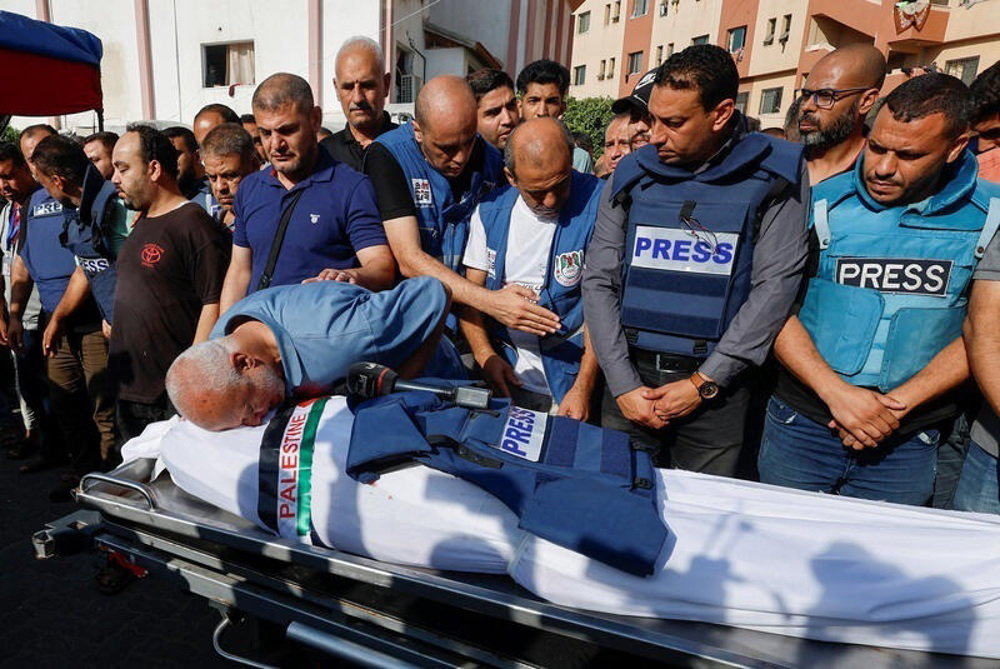
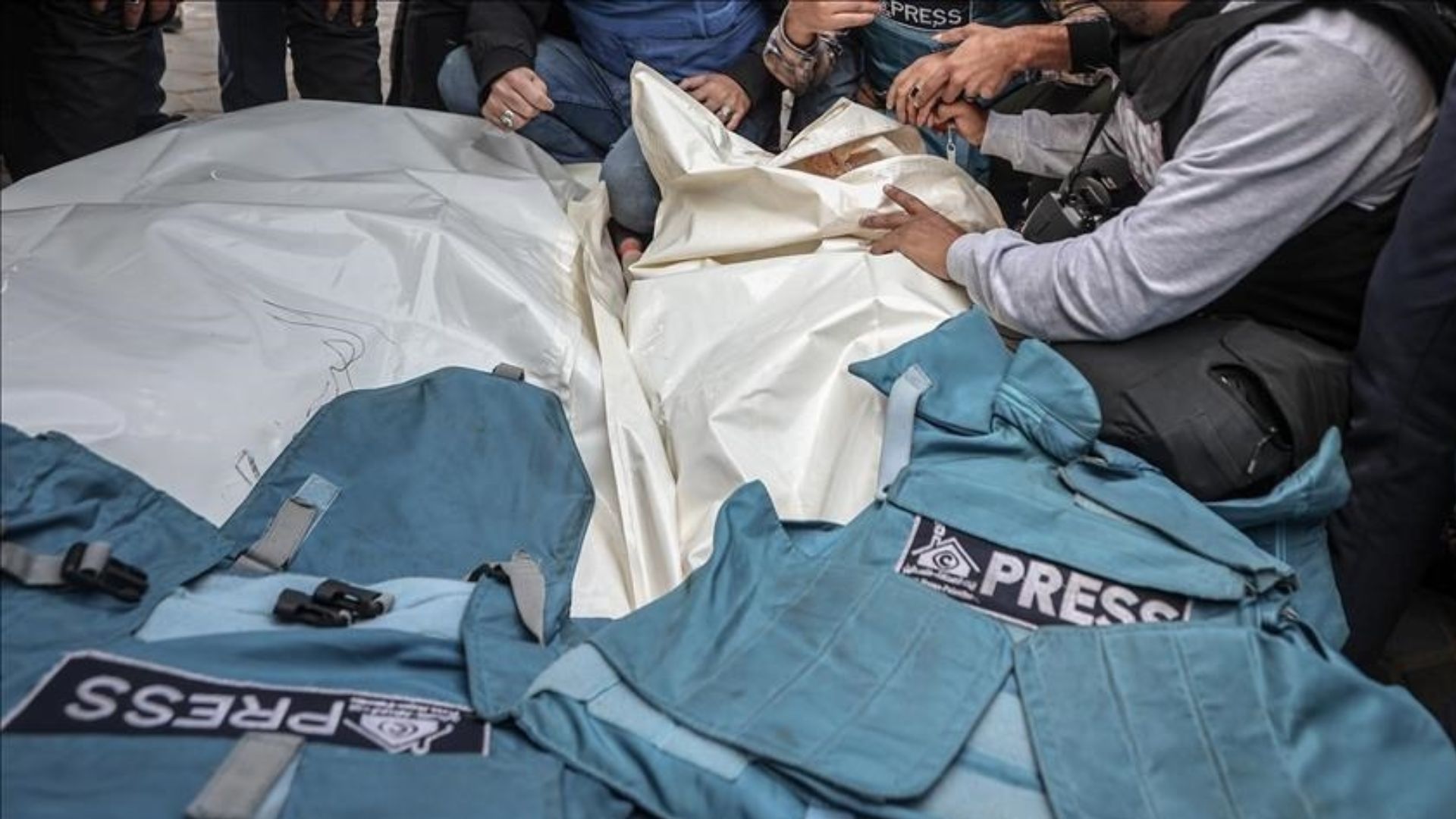
In the first half of 2025, 86 journalists were killed worldwide, marking a 16% increase from the same period last year, according to a report by the Press Emblem Campaign (PEC). This alarming rise is largely driven by the ongoing conflict in Gaza, where Israeli forces killed 31 Palestinian journalists. Since October 2023, nearly 200 journalists have been killed in Gaza alone. Other deadly countries for journalists this year include Sudan, Mexico, and the Ukraine-Russia conflict zone, each recording 6 deaths. Iran followed with 4 journalists killed in Israeli airstrikes in June. In South Asia,...
Hunger as a Weapon: A New Frontier in War Crimes Reporting
The Global Investigative Journalism Network (GIJN) has released a new chapter in its Reporter’s Guide to Investigating War Crimes, focusing on the deliberate use of starvation in armed conflict. Written by Pulitzer Prize-winning journalist Maggie Michael, the chapter explores how starvation is increasingly being deployed not as a side effect of war but as a calculated method of warfare, one that qualifies as a war crime under international law. The guide outlines how legal frameworks such as the Rome Statute and Geneva Conventions define starvation as a violation when food, water, medicine, or humanitarian aid...
Diana Turbay: The Journalist Caught in Colombia’s Darkest Hour
Diana Turbay’s life and tragic death remain one of the most haunting chapters in Colombia’s turbulent history of drug violence and political terror. As a prominent journalist and television news director, Turbay dedicated her career to reporting with integrity during a time when Colombia was held hostage by powerful drug cartels, most notably Pablo Escobar’s Medellín Cartel. Born in 1950, Diana Turbay was the daughter of former Colombian President Julio César Turbay Ayala. Despite her privileged background, she chose a demanding path in journalism, committed to uncovering truths in one of the world’s most dangerous...
UNESCO Report Exposes Global Abuse of Financial Laws to Silence Journalists
The UNESCO report titled “The Misuse of Financial Laws to Pressure, Silence and Intimidate Journalists and Media Outlets” highlights a concerning global trend: the weaponization of financial legislation to suppress press freedom. Authored by Edward Pittman and Elisa Juega, the report is part of UNESCO’s World Trends in Freedom of Expression and Media Development series. The report identifies eight categories of legal threats commonly employed against journalists, including allegations of tax evasion, money laundering, extortion, blackmail, terrorism financing, fraud, embezzlement, and illegally receiving foreign funds. These charges are often levied without a direct connection to...
UNESCO Report Warns of Escalating Threats to Journalists Covering Environmental Issues
A new UNESCO report titled Press and Planet in Danger reveals a disturbing rise in violence, harassment, and repression targeting journalists who cover environmental issues worldwide. The report, released in 2024, documents how reporters investigating climate change, pollution, illegal mining, deforestation, and land disputes are increasingly threatened, censored, or even killed for their work. Between 2009 and 2023, at least 749 attacks were recorded against environmental journalists, including murders, arbitrary detentions, legal harassment, and digital surveillance. Alarmingly, 44 journalists were killed during this period in connection with their ecological reporting, often in regions rich in...
India Strikes Back: Operation Sindoor and the Long Road to Justice for Daniel Pearl
India's recently launched Operation Sindoor has reverberated far beyond the borders of South Asia. Framed as a counter-terrorism response to the April 22 massacre in Pahalgam, where 26 Hindu pilgrims were brutally killed, this military operation has now taken on deeper symbolic meaning: a long-delayed act of justice for American journalist Daniel Pearl, who was kidnapped and murdered in Pakistan over two decades ago. On May 8, India carried out coordinated airstrikes targeting terrorist infrastructure in Pakistan and Pakistan-administered Kashmir. Among the key sites was the Markaz Subhan Allah seminary in Bahawalpur, a known stronghold...
RSF World Press Freedom Index 2025: economic fragility a leading threat to press freedom
The 2025 RSF World Press Freedom Index shows a historic decline in global press freedom, driven mainly by worsening economic conditions. Financial instability, ownership concentration, shrinking ad revenue, and opaque public funding are threatening editorial independence worldwide. The economic indicator has reached its lowest point, pushing the global situation into a “difficult” category for the first time. Media outlets are shutting down in nearly a third of countries, including democracies like the U.S., where local journalism is collapsing. Tech giants dominate ad revenue, while media ownership concentration and editorial interference are rising across regions. All...
Press Release: Decreasing Support for Journalists’ Protection will Undermine Media Freedom in Germany and Europe
The plan for the Saxony Budget 2025/2026 reduces financial support for the European Centre for Press and Media Freedom (ECPMF) by two-thirds. This poses a significant threat to the stability of the only European civil society organisation operating within the state. The ECPMF acknowledges the difficulty of navigating a state budget amid economic uncertainty. However, in times when public interest journalism and democratic discourse are under severe pressure – facing economic constraints, pressures, disinformation campaigns, a reduced readership, and attacks from the far-right – a strong protection mechanism and unwavering support for press and media freedom in Saxony, Germany, and...
Gaza journalists’ challenging mission: Report on the war, and survive it
After 18 months of war, photojournalist Abdul Raouf Shaath thought he had seen everything. Mr. Shaath was taking a nap in a tent encampment near Khan Yunis’ Nasser Hospital April 6 after a long day documenting missile strikes, when an Israeli airstrike shook the ground and sent shrapnel flying. He rushed outside to find a local news outlet’s tent in flames.   Why We Wrote This A story focused on Courage Gaza journalists continue to don their press vests and report – even as Israel blurs the line between media workers and military targets and...
Tracking US Migrant Detention Data: What Journalists Need to Understand
The number of people held in immigration detention by US Immigration and Customs Enforcement (ICE) essentially flatlined this month. The total detained population — counted as beds occupied at midnight on a single day — barely increased from 47,892 to 47,928 between March 23 and April 16, an increase of 36. There’s more than meets the eye, however. Journalists should not interpret this as evidence that ICE is not arresting and detaining people. In fact, this gives us an opportunity to level up our understanding of detention data. Let’s dive into it. While the decline...
Who is Joakim Medin, the Swedish journalist who could face over 27 years in Turkish prison?
Joakim Medin, special correspondent for the Swedish media Dagens ETC, has been held since 30 March in the high-security Marmara prison in the Silivri district of Istanbul and will appear in court on 30 April. Reporters Without Borders (RSF) calls on the authorities to release the journalist, who specialises in Kurdish issues, and to end the crackdown on news professionals.  Arrested on 27 March upon his arrival in Istanbul, Joakim Medin has been accused of “insulting the president,” Recep Tayyip Erdogan, “belonging to an armed terrorist organisation,” and “spreading terrorist propaganda.” The charges are linked to his...
Americans largely foresee AI having negative effects on news, journalists
Artificial intelligence is already affecting the way news is produced and received in the United States. But Americans are pessimistic about its long-term effect on the news people get and on the already-embattled journalism profession. Roughly half of U.S. adults say that AI will have a very (24%) or somewhat (26%) negative impact on the news people get in the U.S. over the next 20 years. Just 10% say it will have a very (2%) or somewhat (8%) positive effect, according to a summer 2024 Pew Research Center survey. About a quarter (23%) say AI’s impact in this area will be...
Remembering Sivaram – 20 years since the killing of leading Tamil journalist
Today marks the 20th anniversary since the abduction and murder of Tamil journalist Dharmeratnam Sivaram. Sivaram, popularly known under his nom-de-plume Taraki, was abducted in front of Bambalipitiya police station in Colombo on April 28 and was found dead several hours later in a high security zone in Sri Lanka's capital, which at the time had a heavy police and military presence due to the ongoing conflict. His killers, highly suspected to be linked to the government of then-president Chandrika Kumaratunga, were never caught. Read his last article, written just days before he was murdered here....
The safety threats experienced by UK journalists and their physical, emotional, and mental well-being
Source: Reuters Institute -   6.1 Introduction This chapter outlines our findings concerning the safety threats that UK journalists1 experienced, from surveillance and hate speech to legal threats and sexual harassment. Firstly, we explain why this topic was introduced into the survey for the first time, and how it was approached and measured. Secondly, we report how frequently UK journalists said they experienced various safety threats and felt stressed at work. Thirdly, we describe how worried they were about their physical, emotional, and mental well-being. Next, we highlight how gender, the medium, and journalists’ seniority affected their experience of safety...
Young UK journalists lean towards activist roles, away from objectivity – new survey
The role of journalists has been changing for some time now. Due to the rise of social media, journalists no longer hold the monopoly on informing the public and holding the powerful to account. Nor do they keep their role as exclusive gatekeepers for news. And many readers find that algorithms do a better job of selecting news than human editors. For a new report on the state of the journalism profession in the UK in the 2020s, my colleagues and I asked journalists what they think their role in society should be today. Facing a world of rising authoritarianism, war in...
Free to speak, free to expose: how corruption shapes media freedom
April 22, 2025 - Source: The Copenhagen Post -  “I reported on corruption. Now I’m paying the price,” Azerbaijani journalist Avaz Zeynalli, editor-in-chief of Xural, tells us from behind bars. Thousands of kilometers away in Denmark, Bernardo Basillici Menini, the editor-in-chief of The Copenhagen Post, reflects on a very different reality: “Here, journalism doesn’t need to fight to be heard.” These aren’t just personal anecdotes—they point to something deeper and measurable. Our research explores the connection between press freedom and corruption, using both the Press Freedom Index and the Corruption Perception Index across ten years of global...
Shot From Above: The Dangerous Work of Drone Journalists in Gaza
According to the Committee to Protect Journalists (CPJ), at least 165 Palestinian journalists have been killed since the Israel-Hamas war began in October 2023. In fact, according to CPJ, last year was the deadliest year for journalists worldwide since they began documenting deaths in 1992. Gathering aerial footage of Gaza is a dangerous task, and Bellingcat along with our partners at Forbidden Stories, Le Monde, Die Zeit, Der Standard, Paper Trail Media, Arab Reporters for Investigative Journalism (ARIJ) and RFI identified several cases where drone journalists were killed or injured shortly after capturing aerial images. The...
1 2 3 4 5 9