Artificial Intelligence and the Future of Public-Interest Journalism
May 24, 2026
How War Is Rewriting Journalism in Ukraine
May 25, 2026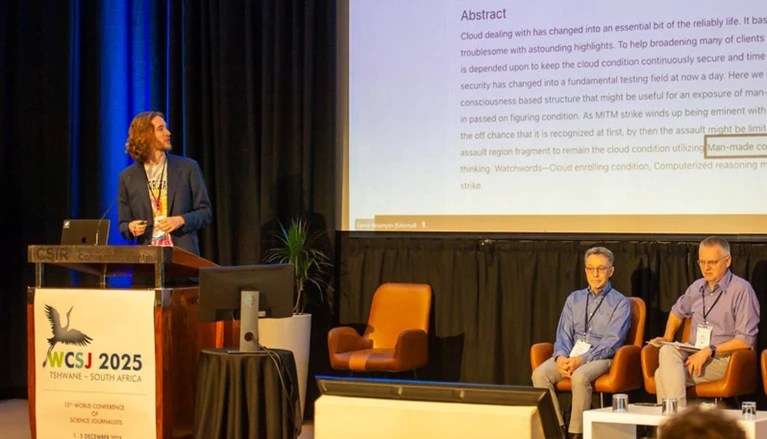
Collaboration between scientists and journalists is becoming increasingly important in protecting public-interest research, combating misinformation, and exposing scientific misconduct in an era shaped by political pressure, digital disinformation, and declining trust in institutions. A recent commentary published in Nature examined how stronger cooperation between researchers and investigative journalists can improve public understanding of science and strengthen accountability within academic systems.
The article was written by science sleuth Lonni Besançon following his participation in the 2025 World Conference of Science Journalists in Pretoria, South Africa. Besançon reflected on his experiences investigating problematic COVID-19 research papers and peer-review misconduct, arguing that scientists often misunderstand the role and needs of journalists covering scientific controversies.
According to the analysis, many scientists criticize media coverage for lacking nuance or oversimplifying research findings while simultaneously failing to engage directly with journalists. Besançon argued that journalists frequently require more than brief comments or quotations; they need context, technical explanation, critical analysis, and ongoing communication to accurately investigate complex scientific issues. He compared this relationship to academic collaboration, stating that journalists often need researchers to act as active investigative partners rather than passive contributors.
The commentary highlighted the difficulties investigative science journalists face when examining fraud, research misconduct, and unreliable studies. Investigations may involve months or years of document analysis, interviews, verification processes, and source protection. Besançon noted that investigative journalism often resembles scientific research itself because both rely heavily on evidence gathering, verification, and peer scrutiny.
One major theme explored in the article was the tension between transparency and investigative confidentiality. Open science advocates often promote immediate public disclosure of concerns surrounding flawed research, but journalists explained that premature publication of incomplete findings can damage ongoing investigations and reduce opportunities to uncover broader evidence. The article argued that confidentiality sometimes remains necessary to protect sources and preserve investigative integrity.
The report also examined how scientists and journalists share responsibility for maintaining public trust in research. During the COVID-19 pandemic, inaccurate or poorly reviewed studies received widespread media attention, contributing to confusion and misinformation. Besançon suggested that stronger communication between researchers and journalists could help prevent flawed science from being amplified without sufficient scrutiny.
The article further emphasized that financial pressures and political attacks targeting both science and journalism have weakened institutions responsible for informing the public. Cuts to investigative reporting, declining newsroom resources, and attacks on academic independence were identified as broader threats to democratic accountability and evidence-based policymaking.
The commentary concluded that protecting public-interest journalism and scientific integrity requires deeper collaboration between researchers and journalists. While the two professions operate differently, the article argued that both ultimately share a common responsibility: investigating evidence, exposing misconduct, and helping the public understand issues that affect society.
Reference –