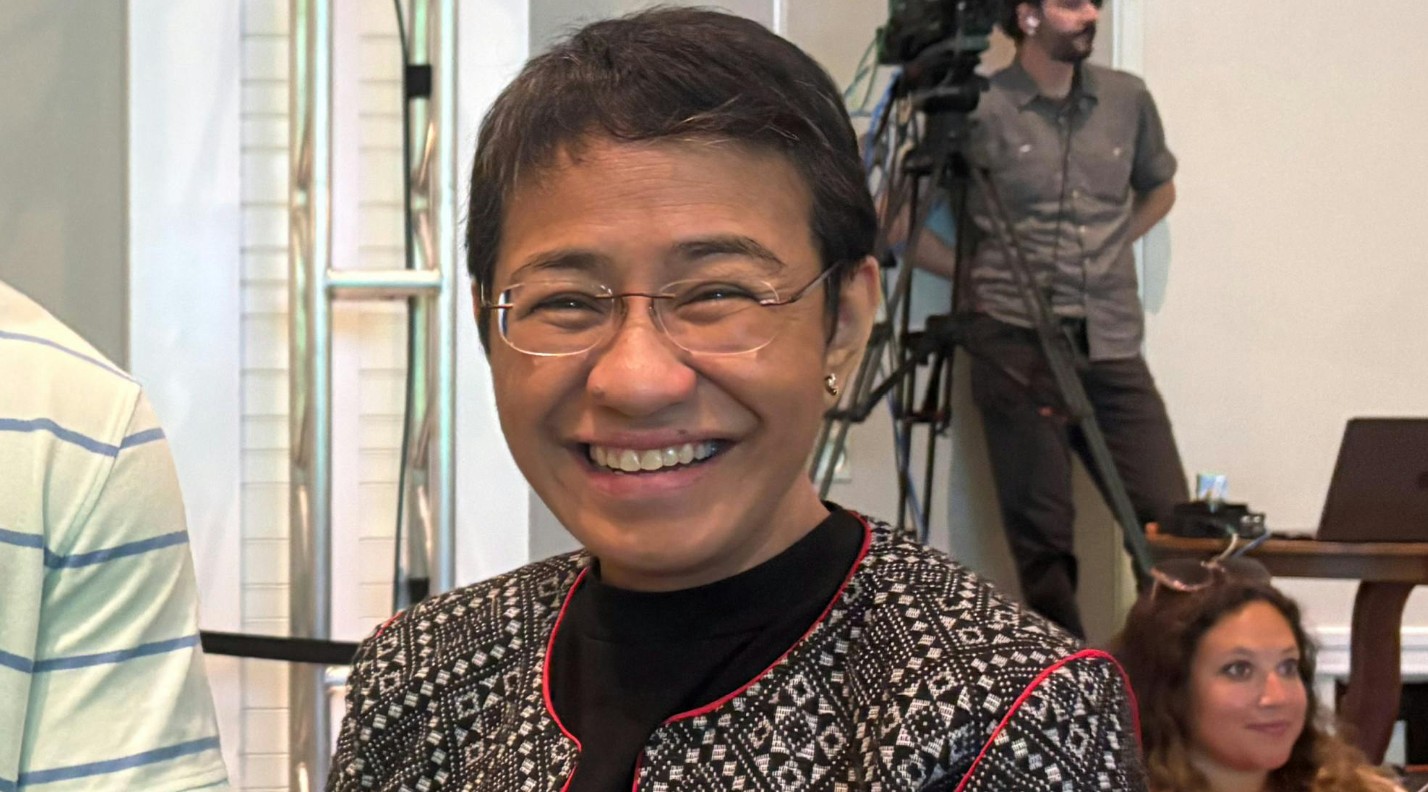
Filipino journalist and Nobel Peace Prize laureate Maria Ressa warned that journalism is facing an “existential” moment as disinformation, political pressure, and attacks on press freedom continue growing worldwide. Speaking during a visit to Dartmouth College, Ressa said the future of democracy increasingly depends on the survival of independent journalism and public trust in factual reporting.
Ressa visited Hanover on May 20 to deliver the keynote address for Dartmouth’s 2026 Social Justice Awards ceremony, hosted by the college’s Division of Institutional Diversity and Equity. The event recognized individuals and organizations committed to social justice, civil rights, and public advocacy.
During an interview with The Dartmouth, Ressa reflected on her career in journalism, the challenges facing press freedom, and her experiences as co-founder and chief executive officer of the Philippine news outlet Rappler. Before launching Rappler in 2012, Ressa worked as CNN’s bureau chief in Manila and Jakarta and became widely known for investigative reporting focused on terrorism, corruption, and political violence in Southeast Asia.
Ressa also discussed years of legal battles against her and Rappler under the Philippine government. Authorities filed multiple criminal cases against the journalist, including cyber libel and tax-related charges, after Rappler published investigations critical of former President Rodrigo Duterte and his administration’s anti-drug campaign. Ressa said most of the cases had since been dismissed or resolved in her favor, though she continued facing restrictions and legal pressure.
Speaking about the state of journalism globally, Ressa argued that social media algorithms and technology platforms increasingly reward anger, disinformation, and manipulation over factual reporting. She said the collapse of trust in information ecosystems has weakened democratic institutions and intensified polarization worldwide.
Ressa described the current period as both “the best and the worst time to be a journalist,” emphasizing that younger reporters would play a crucial role in rebuilding the industry. She argued that journalism remains essential for holding governments and powerful institutions accountable despite growing political and technological challenges.
The Nobel laureate also warned that attacks on journalists and democratic institutions are no longer isolated to authoritarian states. Referring to political developments in the United States and other democracies, Ressa said fear, online manipulation, and hostility toward independent media increasingly resemble trends previously experienced in countries such as the Philippines.
Ressa received the 2021 Nobel Peace Prize for what the Nobel Committee described as her efforts to safeguard freedom of expression in the Philippines. She has since become one of the world’s most prominent advocates for press freedom, democratic accountability, and regulation of technology platforms accused of spreading disinformation.