

Inside the Newsroom: A Research‑Focused Exploration of How Journalists Gauge Public Sentiment Without Polls
April 8, 2026
March Press Freedom Violations Report by MKG Highlights Multidimensional Suppression of Journalists
April 8, 2026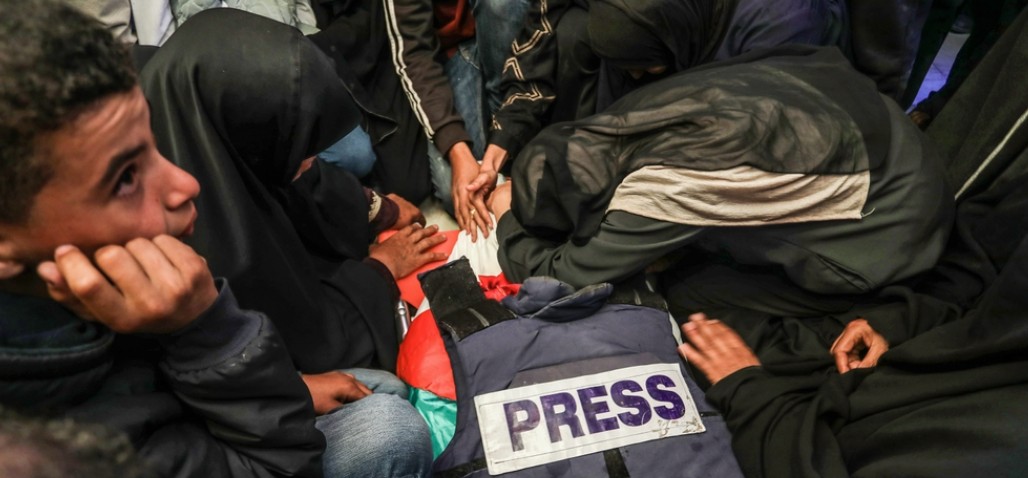
The continued conflict in Gaza has coincided with historically high journalist fatality rates, prompting urgent examination of implications for press freedom and accountability reporting. According to the Global Investigative Journalism Network, the killing of Palestinian journalists in Gaza — described as “unprecedented” — has made independent reporting and verification of events on the ground nearly impossible, significantly undermining traditional mechanisms journalists use to inform public discourse.
Quantitative data from multiple press freedom monitors corroborates the scale of journalist fatalities in Gaza. In 2025, the Committee to Protect Journalists (CPJ) documented a record 129 press members killed, with two‑thirds attributed to Israeli actions, marking the highest annual total in over three decades of CPJ data collection. Israel’s involvement in these deaths — particularly of Palestinian journalists — reflects an escalation that exceeds historical conflict reporting fatalities in wars such as those in Iraq or Afghanistan.
Longitudinal tracking of journalist deaths in Gaza shows that hundreds of Palestinian media workers have been killed since October 2023, with counts from the International Federation of Journalists (IFJ) and other bodies estimating well over 150 deaths, many while journalists were actively reporting or interviewing civilians. These figures suggest the Gaza conflict has become deadlier for journalists than any other contemporary war zone on record.
Beyond fatalities, structural constraints on information collection further hinder rigorous reporting. Access limitations imposed by military control of territory prevent independent observers from entering Gaza, while destroyed communications infrastructure and mass displacement have eroded traditional data sources and delayed contemporaneous documentation. In research contexts, similar barriers are linked to data attrition and reporting bias, complicating efforts to construct reliable narratives from conflict zones.
Qualitative media research underscores the interpretive challenges reporters face in conflict environments. Journalists embedded in a society without access to formal polling or independent verification must often resort to observational and ethnographic techniques — practices that, while valuable, are also vulnerable to information scarcity when infrastructure and personnel are lost. Gaza’s circumstances, marked by high casualty rates among media workers, amplify these methodological limitations.
The absence of accountability — with few transparent investigations or prosecutions related to journalist killings — underscores a broader threat to press freedom, as impunity erodes legal safeguards that underpin investigative reporting. Historical analyses show that where accountability mechanisms weaken, reporting quality and public trust decline correspondingly, creating environments where violence against journalists goes unchallenged.
Reference –
https://gijn.org/stories/unprecedented-killing-palestinian-journalists-gaza-press-freedom/