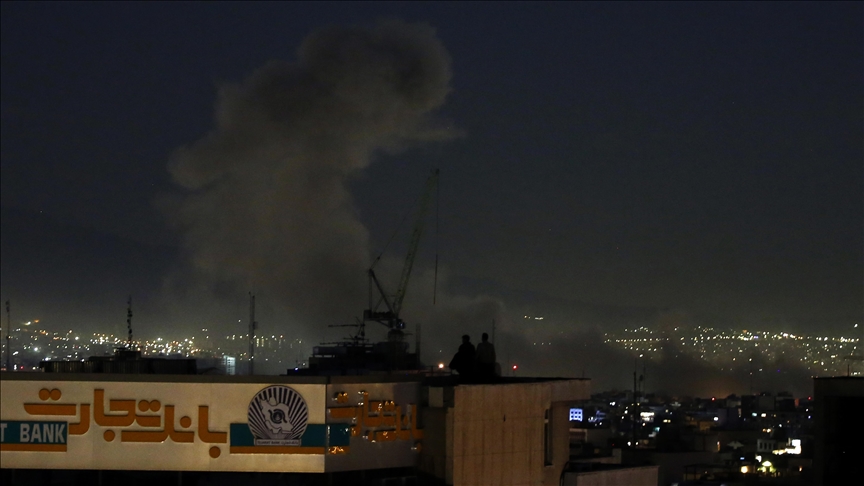
US and Israeli military forces carried out airstrikes on parts of Iran’s state television and radio headquarters in central Tehran, significantly escalating regional tensions and drawing widespread international reaction. Iranian state-run broadcaster Press TV reported that warplanes struck sections of the Islamic Republic of Iran Broadcasting (IRIB) complex on March 1, 2026, damaging facilities associated with the national media infrastructure as well as nearby residential areas. Iranian media said the broadcaster continues to operate despite the attacks.
The strikes were part of a broader joint offensive by the United States and Israel against multiple targets across Iran, described by officials as operations to counter Tehran’s perceived threats and curb its nuclear and military capabilities. Explosions were heard across several districts of the capital, and other targets reportedly included key government and military infrastructure. Both nations framed the action as necessary to degrade strategic capabilities, while Iranian authorities condemned the attacks as violations of national sovereignty.
The incident occurred amid one of the most intense chapters of the 2026 US-Israel military campaign against Iran, which has involved sustained bombardments and sharp retaliatory exchanges. State media and independent sources reported that the attacks hit various urban areas beyond the state broadcaster’s headquarters, with IRIB and other government facilities among the sites impacted by missiles and aerial bombardment.
Iranian officials responded to the strikes with strong denunciations, asserting that the actions violate international law and pledging to continue resistance. The broader conflict has spurred retaliatory missile and drone launches by Iran targeting Israel and US interests across the Gulf, and regional powers have expressed concern over the risk of further escalation. Calls for restraint have come from international bodies urging a de-escalation and protection of civilians and critical infrastructure.
The targeting of Tehran’s state broadcaster drew particular attention because media installations, while sometimes dual-use in contested environments, are traditionally protected under international norms. Observers noted that damage to such facilities can impede public communication and further inflame tensions within an already volatile regional context. Civilian areas in Tehran and beyond have continued to feel the impact of the strikes, contributing to heightened humanitarian concerns and diplomatic strains across multiple international actors.
Reference –
https://www.aa.com.tr/en/middle-east/us-israeli-strikes-hit-parts-of-iran-s-state-television-headquarters-in-tehran/3845492
US, Israeli strikes hit parts of Iran’s state television headquarters in Tehran