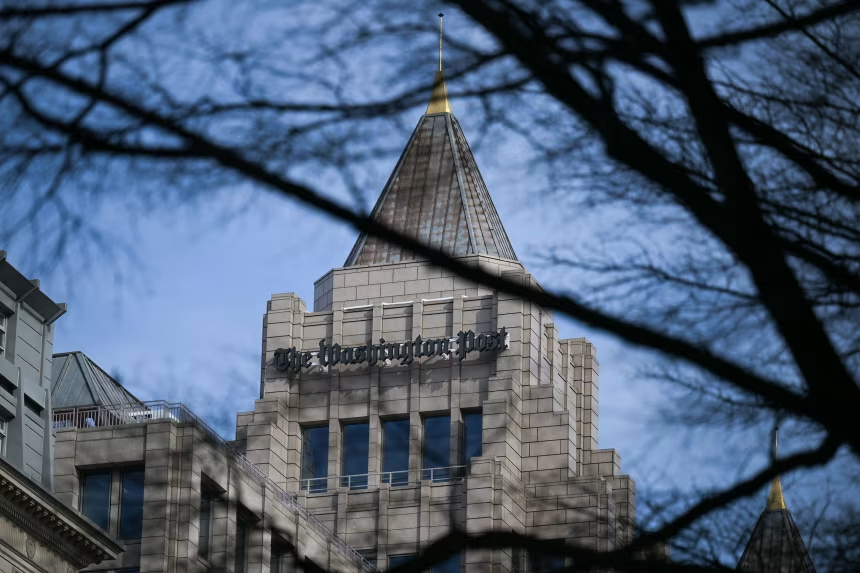
A federal magistrate judge in Virginia has ruled that the **U.S. government cannot conduct an independent search of electronic devices seized from Washington Post reporter Hannah Natanson as part of a classified information leak investigation, marking a rare legal rebuke to the Justice Department and raising fresh concerns about press freedom and source protection.
The case stems from a January 14 FBI raid on Natanson’s home, executed in connection with a probe into alleged leaks of national defense information by a Pentagon contractor. During that operation, authorities confiscated the journalist’s phone, two laptops, a recorder, a portable hard drive, and a smartwatch. Prosecutors sought to have a Justice Department “filter team” review the devices for evidence. Still, on February 24, U.S. Magistrate Judge William Porter rejected that request, instead appointing the court itself to examine the materials for anything relevant to the investigation.
In his decision, Judge Porter stressed that allowing the Justice Department to conduct an unsupervised, broad search would pose excessive risks to confidential sources and the practice of journalism, given the vast trove of unrelated communications on Natanson’s devices. He noted that seizing and reviewing a reporter’s work product could chill free speech. He said he would personally oversee a narrower, court-controlled review to strike a balance between national security interests and First Amendment protections.
Porter also sharply criticised the Justice Department for failing to inform the court about the 1980 Privacy Protection Act, which limits government searches of journalists’ work products and ordinarily requires a subpoena rather than a warrant in many cases. That omission, the judge said, undermined the court’s confidence in the government’s handling of the case.
Natanson and The Washington Post welcomed the ruling as a significant victory for press freedom, arguing that government access to her work devices would jeopardise the identities of more than a thousand confidential sources developed through years of reporting. The journalist has not been accused of criminal conduct himself; federal authorities maintain that only a small portion of the seized data is pertinent to the leak investigation and that the case involves national security concerns tied to alleged leaks by a contractor.
The fallout from the raid and the judge’s ruling has prompted broader debate about the Justice Department’s approach to leak investigations involving journalists, with advocates warning that aggressive tactics could deter sources and erode constitutional protections for the press.
Reference –
https://thehill.com/homenews/media/5753794-justice-dept-reporter-devices/
https://edition.cnn.com/2026/02/24/politics/washington-post-hannah-natanson-fbi-devices-seized
https://www.washingtonpost.com/national-security/2026/02/24/washington-post-reporter-search/