US Lawmakers and Rights Groups Intensify Calls for Accountability Over Israeli Attacks on Journalists
December 12, 2025
Ghanaian Journalist Honoured with Prestigious Africa Science Journalism Award for Environmental Reporting
December 12, 2025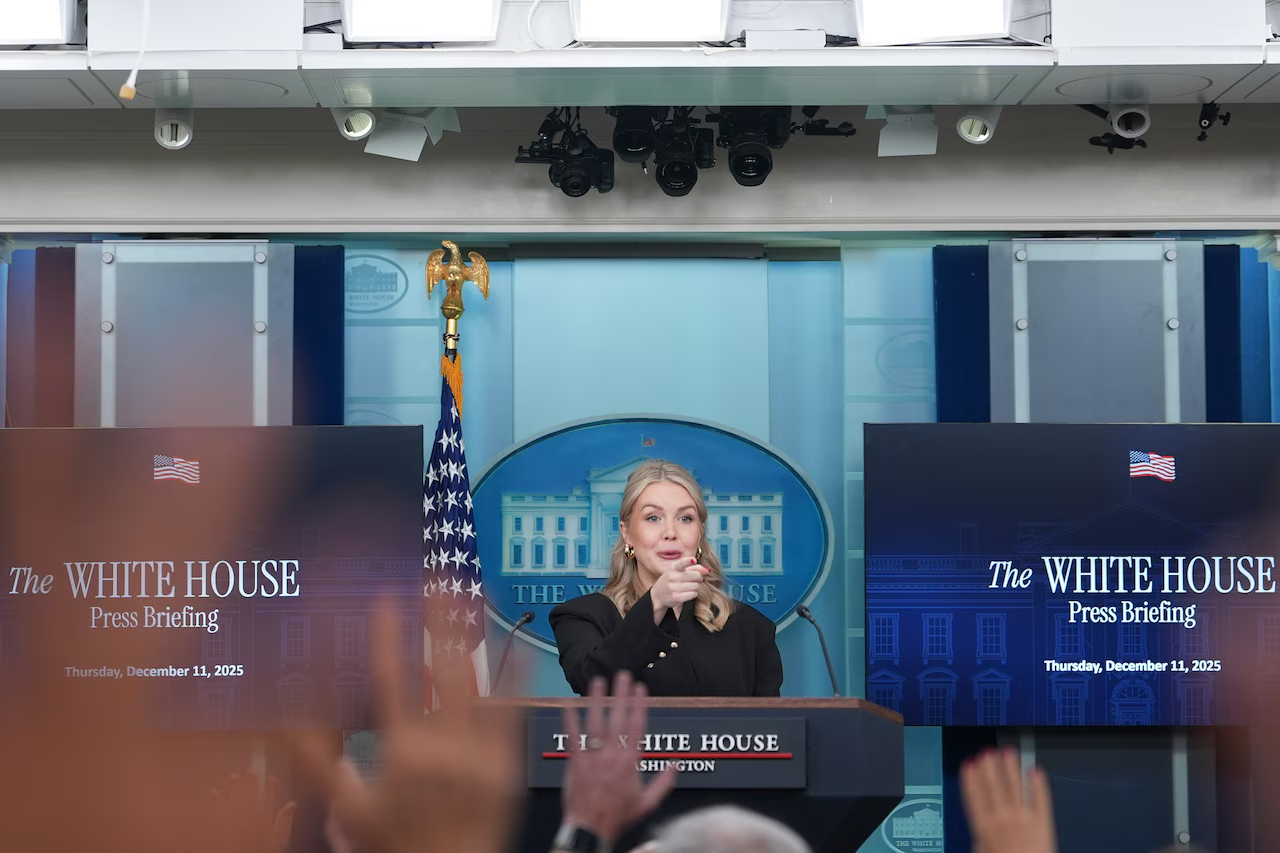
December 12, 2025 – USA –
A heated exchange between a CNN reporter and former President Donald Trump’s press secretary erupted during a chaotic White House briefing this week, underscoring growing tensions between the administration and segments of the U.S. press corps. The confrontation, which unfolded in front of cameras and fellow journalists, quickly drew national attention and renewed debate over press freedom, access, and the treatment of reporters during official briefings.
According to reports, the clash occurred when a CNN correspondent pressed the press secretary on inconsistencies in the administration’s messaging regarding recent policy decisions. The questioning prompted a sharp rebuke, with the press secretary accusing the reporter of attempting to “push narratives” rather than seek factual clarification. The exchange escalated as the reporter pushed back, asserting the legitimacy of the questions and emphasizing the role of journalists in holding public officials accountable.
Witnesses described the briefing as unusually disorderly, with raised voices and repeated interruptions. At one point, the press secretary cut off the reporter’s question mid-sentence, leading to audible frustration among journalists in the room. The moment highlighted the increasingly adversarial tone that has characterized some White House press interactions, particularly with outlets viewed as critical of the administration.
Coverage of the incident quickly diverged along partisan lines. Supporters of the administration defended the press secretary’s response, arguing that journalists should not editorialize during briefings and accusing CNN of bias. Conservative commentators framed the exchange as an example of the administration pushing back against what they describe as hostile media coverage.
Press-freedom advocates and media organizations, however, expressed concern that such confrontations risk undermining the purpose of press briefings. They warned that dismissing questions as “narratives” can discourage rigorous inquiry and contribute to a climate where reporters feel pressured or marginalized. Several journalism groups noted that confrontational rhetoric toward specific outlets may erode public trust in the press while simultaneously weakening transparency.
The incident comes amid broader scrutiny of the administration’s relationship with the media, including disputes over press access, accusations of favoritism, and concerns about the tone used toward journalists during official engagements. Analysts say such moments resonate beyond the briefing room, shaping public perceptions of both government accountability and the role of journalism in a polarized political environment.
As debate continues, the exchange has become a flashpoint in ongoing discussions about the boundaries between forceful questioning and perceived bias, and about how democratic institutions should engage with a free and independent press.
Reference –