Bangladeshi Journalist Anis Alamgir Arrested Under Anti-Terror Law, Raising Press Freedom Fears
December 15, 2025
UNESCO Launches Psychosocial Support Initiative to Strengthen Resilience of Journalists in Gaza
December 15, 2025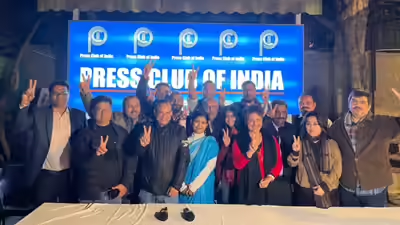
December 15, 2025 – India –
Senior journalist Sangeeta Barooah Pisharoty has been elected the first woman president of the Press Club of India (PCI), marking a historic milestone for one of the country’s most influential journalistic institutions and for women in Indian media.
Pisharoty secured the position following elections held in New Delhi, breaking a decades-long pattern in which the leadership of the Press Club had been exclusively male. Her election has been widely welcomed by journalists’ associations, media professionals, and civil society groups as a significant step toward greater gender representation in newsroom leadership and media institutions.
A respected journalist with decades of experience, Pisharoty is known for her reporting and analysis on politics, governance, social justice, and the Northeast of India. Over the years, she has contributed to several leading national and international publications and has been recognized for her independent voice and commitment to public-interest journalism. Colleagues describe her as a strong advocate for press freedom and ethical reporting.
In her first remarks after the election, Pisharoty emphasized inclusivity, solidarity, and the protection of journalistic rights. She said her presidency would focus on strengthening the Press Club as a safe and representative space for all journalists, particularly women, freelancers, and reporters working under precarious conditions. She also underscored the need for unity within the media community at a time when journalists face increasing pressure, legal challenges, and threats.
The Press Club of India, founded in 1958, serves as a key platform for journalists working across print, broadcast, and digital media. It has historically played an important role in defending press freedom, facilitating professional dialogue, and engaging with policymakers. Pisharoty’s election is being seen as a reflection of evolving attitudes within the profession and growing recognition of women’s leadership.
Media observers note that while women have made significant strides in Indian journalism, leadership positions within press bodies and editorial hierarchies remain disproportionately male. Pisharoty’s appointment is therefore viewed not only as symbolic but also as an opportunity to push for structural change.
Journalists’ unions and women’s media collectives expressed hope that her tenure would prioritize issues such as workplace safety, gender equality, fair representation, and support for journalists facing harassment or legal intimidation. Many also highlighted the importance of mentoring younger journalists and addressing challenges faced by regional and freelance reporters.
As Pisharoty assumes office, her election stands as a landmark moment for Indian journalism — signaling a shift toward more inclusive leadership at a time when the role of a free, independent press remains under intense scrutiny.
Reference –