

How AI Tools Are Enhancing Journalism Without Replacing Reporters
February 3, 2026
Deliberate Targeting of Journalists in Armed Conflict: A Research Analysis of the 2012 Homs Strike
February 4, 2026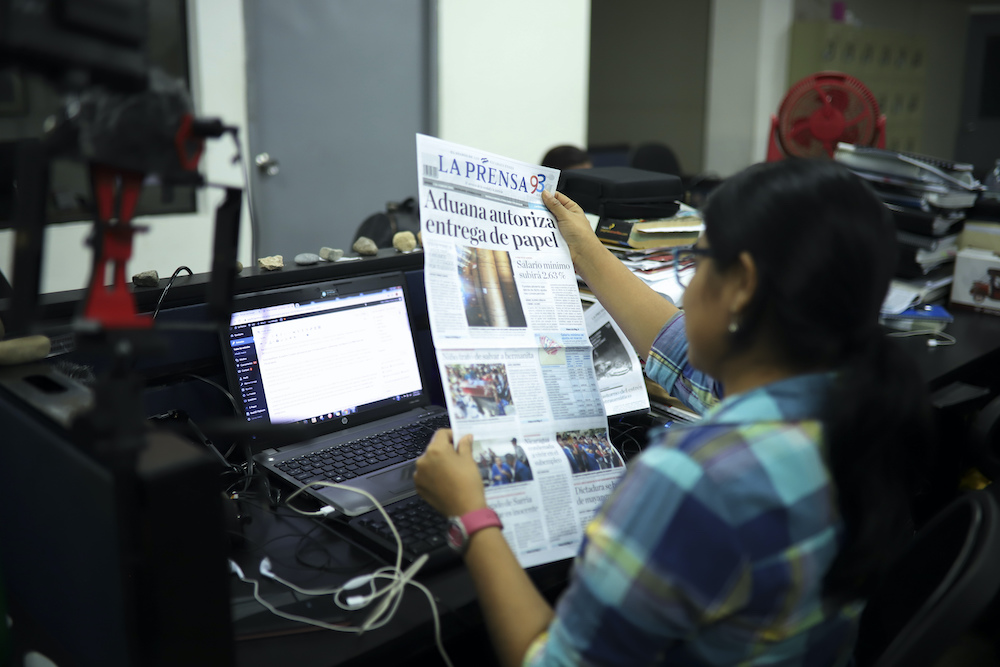
A journalist holds up a copy of La Prensa independent newspaper with a headline that reads in Spanish; "Customs authorizes release of printing paper," in Managua, Nicaragua, Friday, Feb. 7, 2020. La Prensa had announced Wednesday that the government had agreed to unblock the newspaper's printing materials held up since August 2018. It said the Vatican's top diplomat in Managua, Waldemar Stanislaw Sommertag, had intervened on its behalf. (AP Photo/Alfredo Zuniga)
In January 2026, federal agents under the Trump administration’s Department of Justice (DOJ) arrested prominent journalist Don Lemon, a former CNN anchor, along with independent journalist Georgia Fort, in connection with coverage of a protest at Cities Church in St. Paul, Minnesota. The protest targeted federal immigration enforcement actions and involved demonstrators interrupting a church service. The DOJ charged Lemon and others with federal violations, including conspiracy to deprive rights and interfering with religious freedom, tying the arrests to actions during the protest that prosecutors characterised as a “takeover-style attack.” Lemon was taken into custody in Los Angeles and later released on personal recognisance bond; his return to federal court is scheduled for February 2026.
Legal and Press Freedom Implications —
The Lemon and Fort case underscores growing concerns about the criminalisation of journalistic activity in the context of protest coverage. Earlier in the process, a federal magistrate judge declined to authorise initial arrest warrants due to insufficient probable cause, reflecting judicial reluctance to equate reporting with criminal conduct. Nevertheless, prosecutors secured a grand jury indictment, prompting criticism from press freedom advocates and civil liberties organisations, who argue that prosecuting reporters for documenting public events sets troubling precedents for the First Amendment protections. Lemon and Fort’s attorneys maintain that their work was constitutionally protected newsgathering, and that criminal charges against journalists threaten the foundational role of a free press in democratic societies.
Administrative and Political Dynamics —
Observers suggest the aggressive pursuit of charges against Lemon — including deploying federal agents for his arrest despite earlier judicial resistance — reflects a broader pattern of politicisation in how protests and media coverage are treated by law enforcement. Critics frame the case as part of a wider strategy that may intimidate journalists and chill independent reporting on contentious public events, especially where such coverage challenges government narratives or officials. This pattern has drawn commentary from free expression advocates, civil liberties groups, and some elected officials, who view the prosecutions as an escalation in government-media tensions.
Press Freedom and Public Trust —
Research on press freedom law emphasises that robust protections for journalists — including clear distinctions between journalism and participation in criminal acts — are essential for transparency, accountability, and public trust. The Lemon and Fort arrests resonate beyond the specific legal charges, prompting analysis of how legal frameworks and enforcement practices can either support or undermine democratic norms. Research also notes the potential chilling effect when journalists are treated as defendants rather than observers, particularly in protest situations where accurate reporting serves public interest and facilitates informed debate.
Conclusion —
The arrest and indictment of Don Lemon and Georgia Fort illustrate complex interactions between law enforcement, media rights, and political dynamics in the United States. While authorities assert their actions are grounded in law enforcement objectives, civil liberties experts and press freedom scholars warn that prosecuting journalists for coverage activities can weaken constitutional protections and disincentivise critical reporting during high-stakes public events, with long-term implications for democratic accountability.
Reference –
This is what it looks like when a government tries to intimidate reporters