
Safety of Women Journalists: A Human Rights Imperative
December 8, 2025
2025 Global Press-Freedom Report: How Hatred and Impunity Made This a Deadly Year for Journalists — A Research Overview
December 11, 2025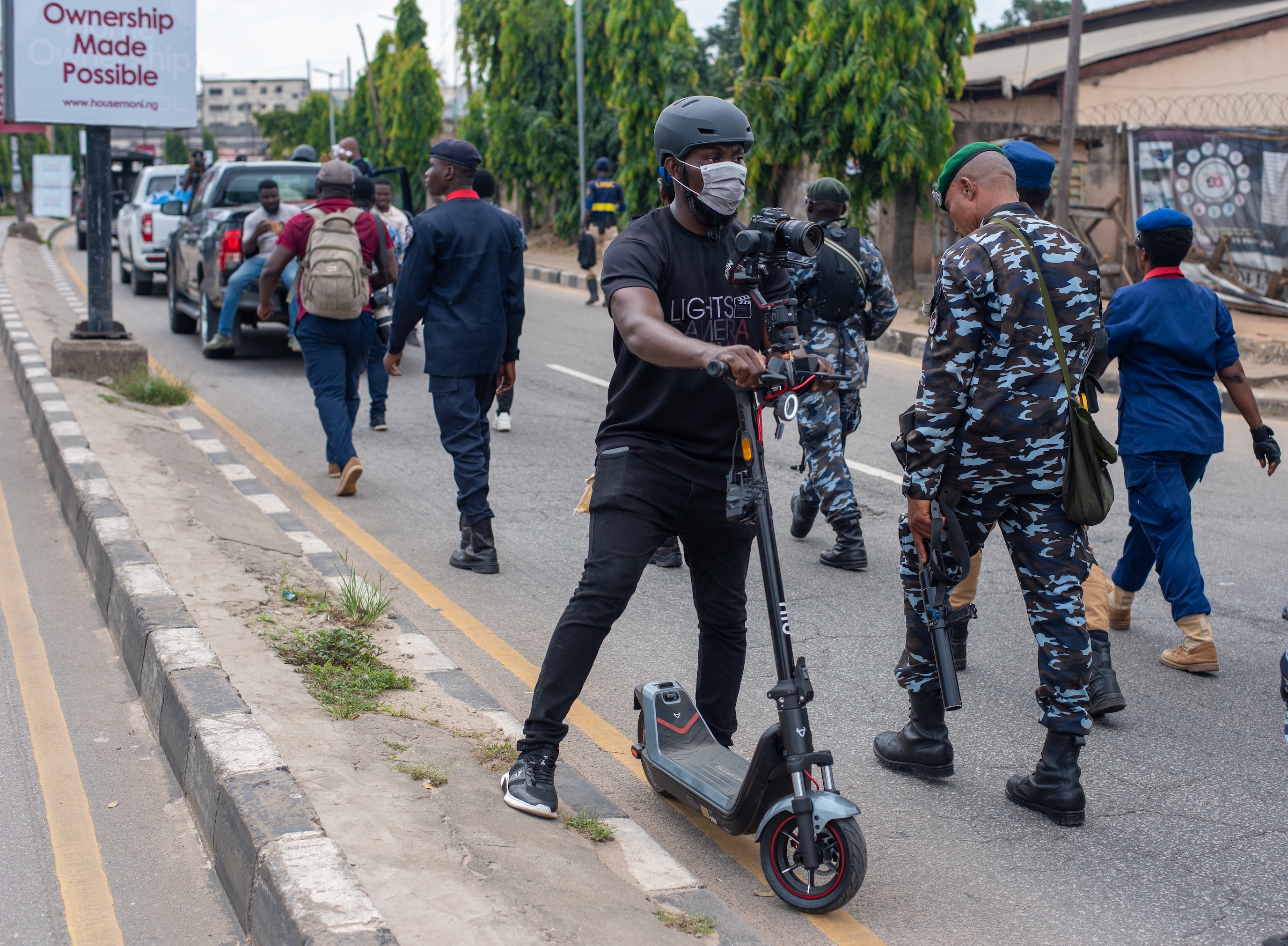
A Journalist documents a protest with his camera attached to a scooter in Lagos Nigeria, Tuesday, October 1, 2024. Nigerians are out on Independence Day to protest bad governance; Shutterstock ID 2555023047; purchase_order: Media Institute; job: Al Jazeera; client: Al Jazeera Journalism Review; other:
Across Africa, journalists who dare to expose corruption, challenge power, and hold authorities accountable are confronting a severe and evolving crisis that threatens press freedom and personal safety. According to a recent analysis by Al Jazeera Journalism Review, reporters in countries from Ethiopia and Nigeria to Malawi, Benin, Sudan, Uganda, and Kenya are facing a brutal mix of harassment tactics — including arrests, torture, digital surveillance, and financially draining lawsuits — that are designed to silence independent reporting.
Veteran Ethiopian investigative journalist Ermias Mulugeta vividly recounts the danger of his work exposing a major drug trafficking network. After receiving anonymous intimidation, he was abducted and beaten by intelligence officers who refused to explain his alleged offence, illustrating how journalists can become targets simply for probing powerful interests.
Even in countries with relatively stronger democratic institutions, legal instruments such as Nigeria’s Cybercrime Act are increasingly leveraged to suppress critical journalism. Local media monitoring shows multiple cases where reporters were threatened, prosecuted, or coerced through these laws, which are ostensibly aimed at regulating cyberspace but are being used to stifle dissent.
In Malawi, intimidation took the form of masked men forcing a state broadcaster’s director to deliver a forced apology on live television for comments made during a campaign broadcast — a stark example of how political power can influence media conduct. Unchecked online harassment, coordinated smear campaigns, and threats from security agencies compound the pressure, pushing many journalists into self-censorship or exile.
The emotional toll is significant. Reporters working in conflict zones such as Sudan describe daily fears of arrest, disappearance, or worse, with international organizations reporting that the vast majority of journalist killings worldwide go unpunished — a stark indicator of impunity.
Despite these grim conditions, pockets of resilience and solidarity are emerging. Cross-border collaborations, supported by networks such as the Organised Crime and Corruption Reporting Project (OCCRP) and the Global Investigative Journalism Network (GIJN), are helping journalists operate more safely through legal aid, digital security training, and shared platforms for investigative work.
For many African journalists, survival now means making difficult choices: continue reporting amid pervasive danger, retreat into silence, or flee into exile. Yet, even in exile, reporters like Mulugeta remain committed to exposing injustice and ensuring that the truth continues to be told — a testament to the enduring spirit of journalism in the face of relentless intimidation.
Reference –