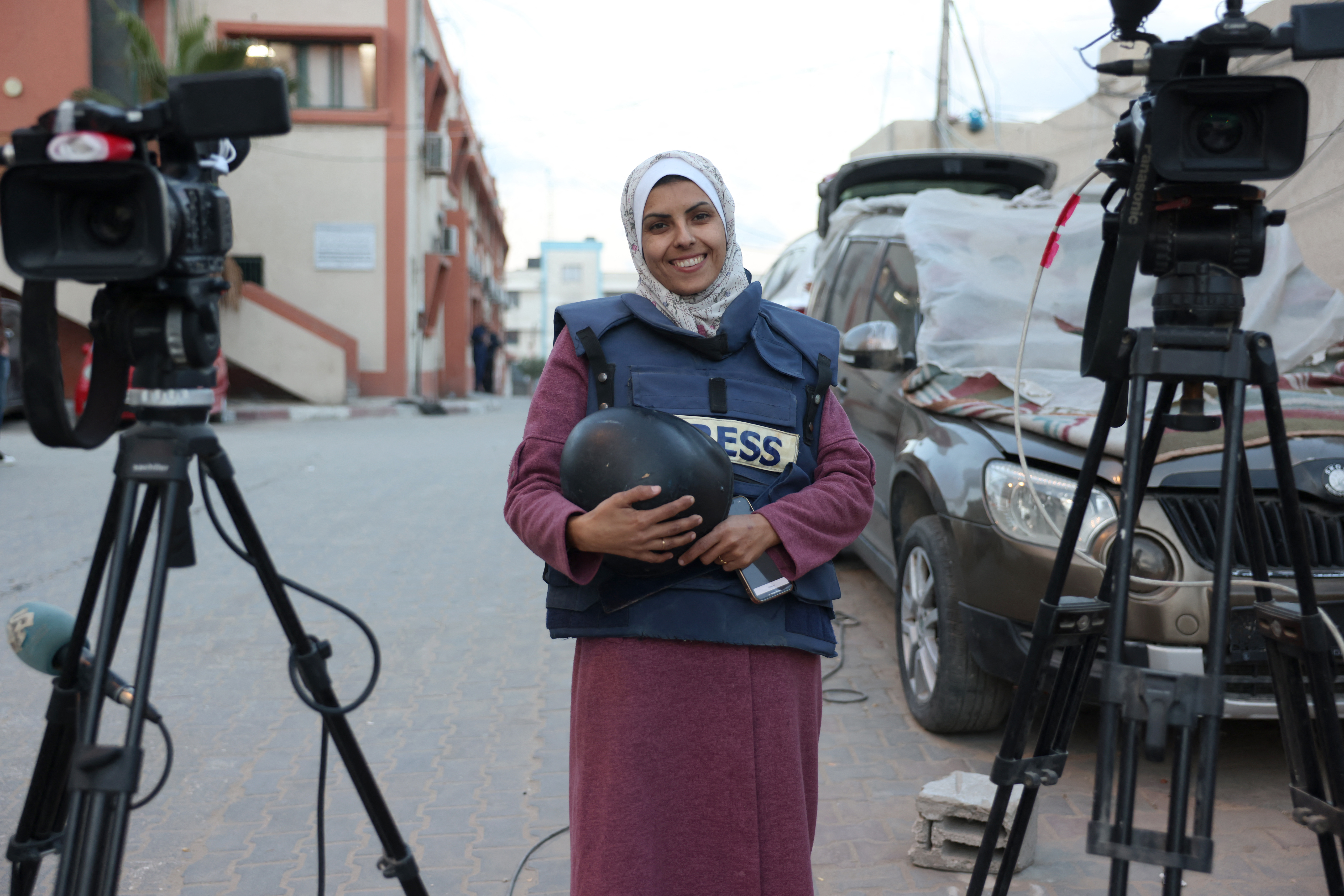
Palestinian visual journalist Mariam Abu Dagga was posthumously named a 2026 George Polk Award winner in the category of photojournalism in recognition of her powerful documentary work capturing the humanitarian crisis in the Gaza Strip. The announcement was made public on February 19, 2026, highlighting Dagga’s contribution to visual reporting under extraordinarily difficult conditions.
Dagga, a freelance photographer who contributed to outlets including the Associated Press and Independent Arabia, was killed on August 25, 2025, during the Israeli-Palestinian conflict when a second strike hit Nasser Hospital in Khan Yunis, southern Gaza. She and several colleagues were reporting on the aftermath of an initial attack when they were killed, underscoring the grave risks journalists face in conflict zones.
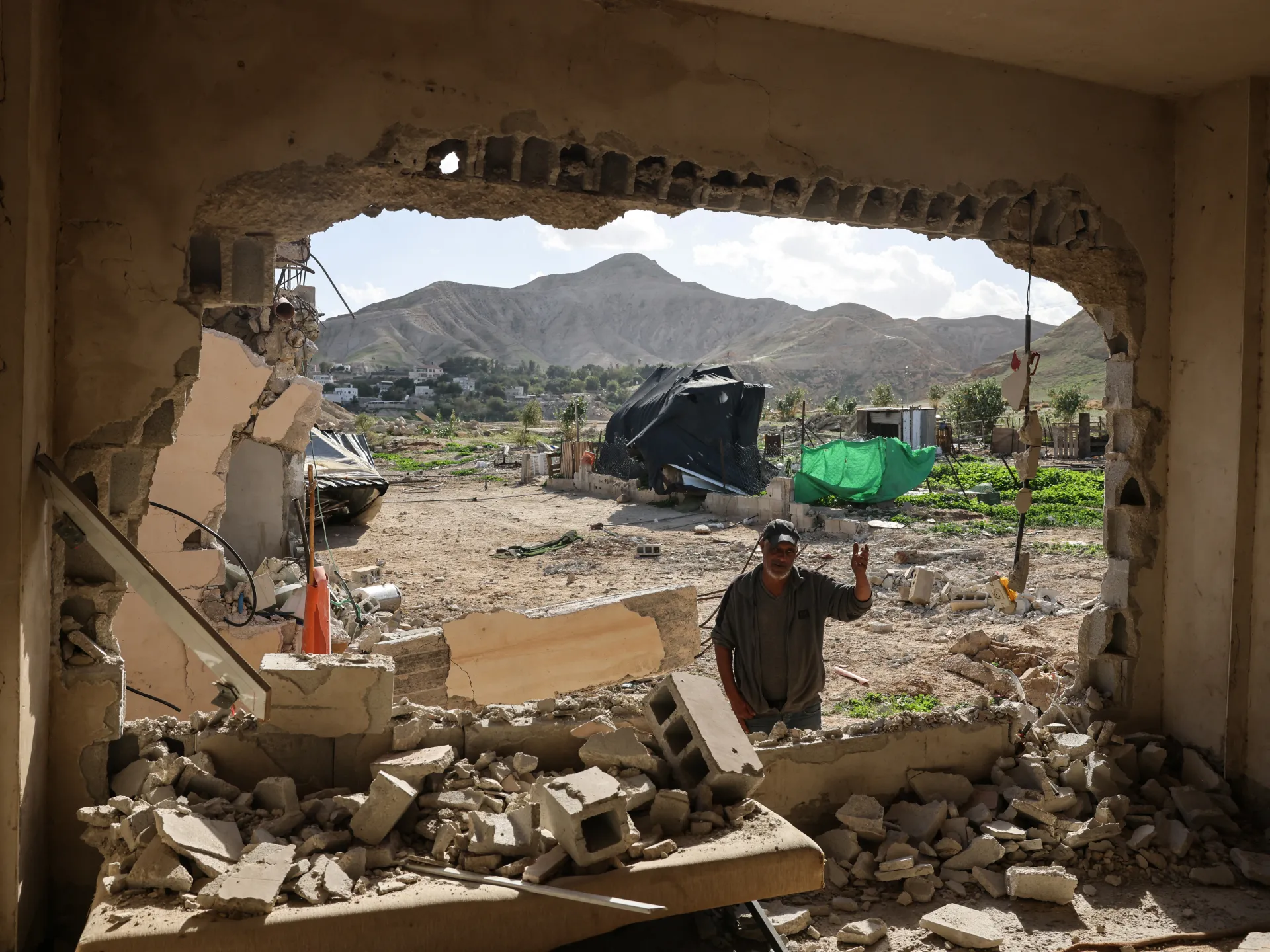
Her award-winning body of work drew global attention for its stark portrayal of civilian suffering amid acute shortages of food and medical supplies, especially among children and families enduring prolonged hostilities. Dagga’s photographs documented scenes of desperation and resilience, bringing humanitarian issues to wider international audiences through compelling visual narratives that transcended language and borders.
The George Polk Awards are among journalism’s most prestigious honours, recognising courageous reporting and impactful storytelling. Dagga’s selection as a recipient posthumously honours both her professional achievements and her dedication to bearing witness in environments where independent reporting was fraught with danger. Media rights advocates and press freedom organisations have emphasised that her recognition serves not only as a celebration of her work but as a reminder of the human cost borne by journalists covering armed conflict.
Colleagues and peers have described Dagga as a fearless photojournalist committed to amplifying the voices and experiences of civilians affected by war. Her career, which began before the latest Gaza conflict, was marked by a focus on telling stories that might otherwise be overlooked, even as she worked under the constant threat of violence, displacement, and perilous conditions on the ground.
The posthumous award adds Dagga’s name to a legacy of journalists whose work has illuminated crises around the world, and it underscores ongoing international calls to protect journalists and ensure their crucial role in documenting human rights issues is respected and safeguarded.
Reference –
https://www.democracynow.org/2026/2/19/headlines/palestinian_photographer_mariam_dagga_posthumously_wins_2026_polk_award_for_photojournalism