Attacks on Media and Journalists Highlight Growing Global Threat to Freedom of Expression
April 14, 2026
Veteran NBC Journalist Jay Gray Joins Scripps News as Senior National Correspondent
April 14, 2026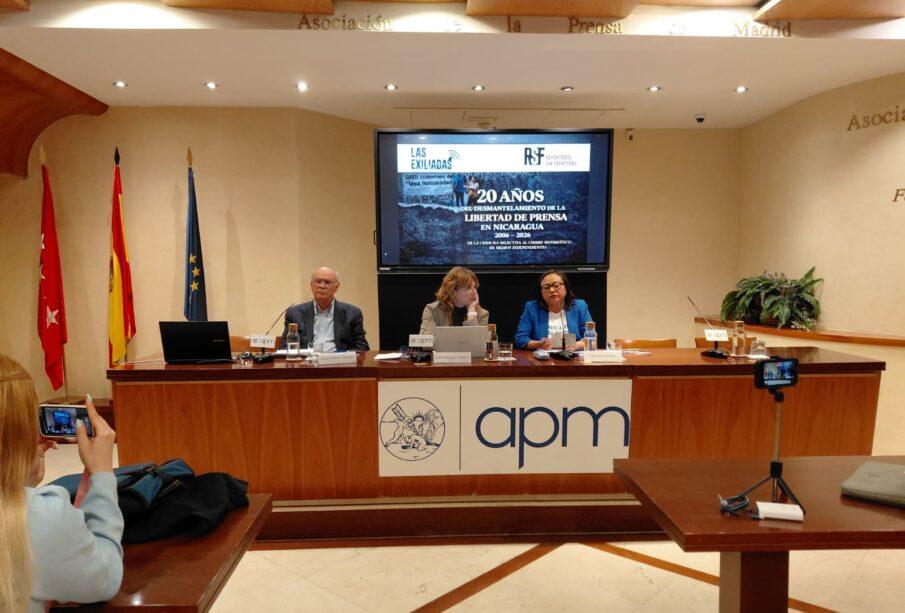
April 14, 2026 – Nicaragua –
A new report compiled by the Nicaraguan journalist collective “Las Exiliadas Nicas” with support from Reporters Without Borders (RSF) Spain details what it describes as a two-decade-long, systematic dismantling of independent journalism in Nicaragua under the government of Daniel Ortega and Rosario Murillo. The findings were presented in Madrid and published across press freedom platforms, highlighting an accelerating collapse of media independence in the country.
The report concludes that Nicaragua has undergone a sustained strategy aimed at eliminating critical journalism as an independent democratic force. It documents the closure or confiscation of at least 61 media outlets, the imprisonment of journalists, and the forced exile of more than 300 media workers. It also states that roughly 65 percent of the country has become a “news desert,” where independent reporting is effectively absent.
According to the findings, repression has intensified significantly since the 2018 anti-government protests, which marked a turning point in state–media relations. Following those events, authorities allegedly expanded the use of criminal charges, administrative pressure, and legal restrictions to silence critical reporting. These measures are described as part of a broader system designed to remove independent journalism from public life.
The report also emphasizes the scale of exile as a defining feature of Nicaragua’s media landscape. Hundreds of journalists have been forced to continue their work from abroad, particularly in Costa Rica, Spain, and the United States, often under precarious conditions. Many have reportedly faced additional consequences such as loss of nationality, confiscation of property, and ongoing surveillance or intimidation targeting both journalists and their families.
It further highlights how independent outlets now operate almost entirely outside Nicaragua, with exiled journalists attempting to maintain reporting networks remotely. Despite these constraints, the report notes that these media actors continue to function as alternative sources of information for Nicaraguan audiences inside and outside the country.
The authors argue that the combined effect of closures, exile, legal pressure, and digital surveillance has created one of the most restrictive media environments in the world. Nicaragua is described as a case study in long-term authoritarian consolidation over information systems, where press freedom has been steadily eroded through layered and evolving tactics rather than a single legislative crackdown.
Overall, the report frames Nicaragua’s media environment as a deeply entrenched crisis in which independent journalism has been systematically displaced, leaving exile as the primary mode of survival for reporters and media organizations.
Reference –
Report details Ortega-Murillo regime’s strategy to eradicate independent journalism in Nicaragua