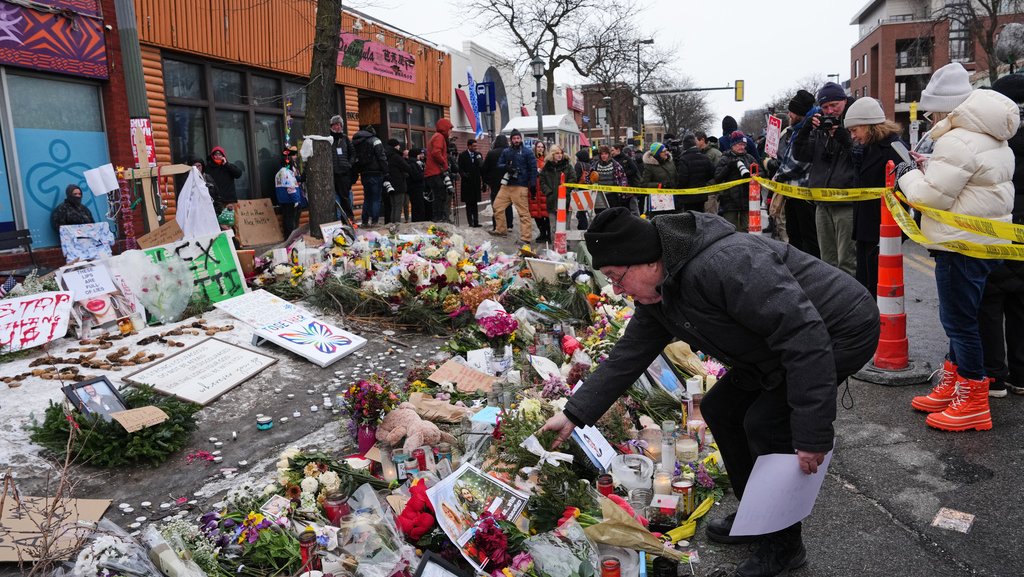
The Freedom of the Press Foundation (FPF) and other media freedom advocates have characterized the killing of Alex Pretti—a bystander whose fatal shooting by US Immigration and Customs Enforcement (ICE) agents in Minneapolis in late January 2026—as not only a tragic loss of life but as part of a broader attack on press freedom and independent documentation of news, particularly in environments where official narratives and government actions are under intense public scrutiny. Critics argue that such targeting of those who record events with cameras or mobile phones chills journalistic and citizen reporting essential to transparency and accountability.
Pretti’s death occurred amid heightened public debate over law enforcement conduct and the role of citizen videographers in documenting state actions. Footage circulating online showed authorities responding to an incident involving Pretti, and the clarity of the recording played a key role in the rapid revision of initial official statements. The FPF commentary notes that the shift in the narrative—away from early suggestions that Pretti posed a violent threat—illustrates how cellphone videography serves as a crucial source of evidence and counterbalance to official accounts. Media experts and advocates have highlighted that those capturing footage, whether professionally credentialed journalists or ordinary observers, contribute materially to the broader news ecosystem by providing raw documentation that trained reporters can amplify.
The discussion around Pretti’s murder extends to larger concerns about how governments and law enforcement treat individuals who document newsworthy events, with the FPF warning that attacks, killings, or suppression of people who film public incidents equate to assaults on press freedom itself. The foundation’s analysis draws parallels between traditional investigative journalism and modern practices of real-time documentation, noting that the ubiquity of phones equipped with high-quality cameras has made video evidence a central part of how news is gathered and shared today.
FPF’s commentary also addresses broader patterns whereby authorities in various contexts classify peaceful recording or dissemination of information as security threats, leading to tactics that range from intimidation and equipment seizure to lethal force. Such responses, the foundation contends, have a deterrent effect on those who might come forward with firsthand accounts of government or law enforcement conduct, ultimately weakening independent oversight and the public’s access to unvarnished information.
The framing of Pretti’s death as an attack on press freedom underscores evolving debates about the definition of journalism and the protections afforded to those who bear witness to events — especially when official narratives and public concerns are at odds.