UK Minister Accused of Smearing Journalists With False Kremlin Claims
February 21, 2026
American Journalist Reza Valizadeh Remains in Limbo as U.S.–Iran Relations Influence His Fate
February 21, 2026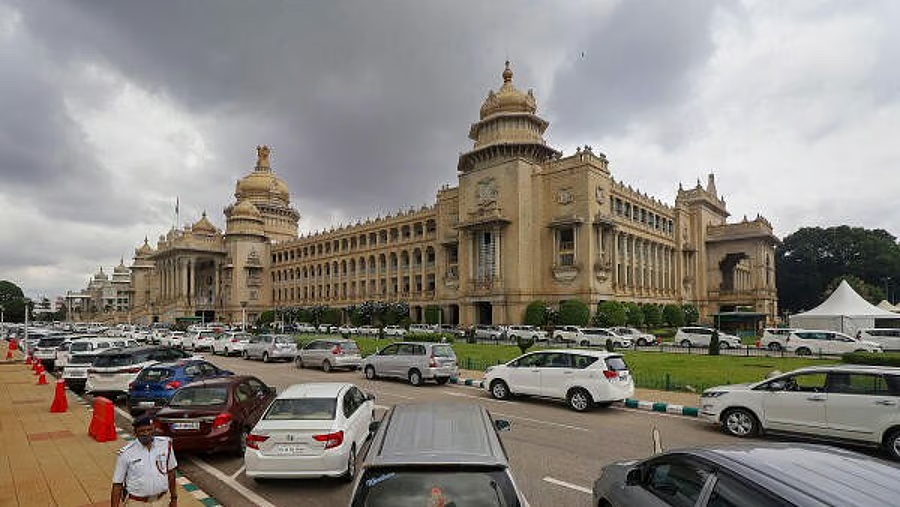
February 21, 2026 – |ndia –
Journalists in Bengaluru, Karnataka, protested this week against a government directive that significantly restricts their movement and reporting access inside the Vidhana Soudha legislative complex, sparking a broader debate about press freedom and transparency in a key Indian state. The controversy, which has drawn sharp political criticism and formal objections from media bodies, opposition parties, and civil society groups, has become a flashpoint in the ongoing dialogue over democratic access and security policy.
The Karnataka government’s Department of Personnel and Administrative Reforms (DPAR) issued a letter earlier this month instructing that journalists may only solicit comments and interviews from the Chief Minister, Deputy Chief Minister, ministers and lawmakers at a specific location — the west side portico (Kengal Gate) of the Vidhana Soudha — rather than freely moving through corridors and shared spaces to gather reactions during legislative sessions. The move also restricts reporters from following elected officials to other parts of the building to obtain sound bites, with officials citing security and administrative concerns as the rationale for the change.
In response, a delegation of journalists staged a symbolic protest outside the Gandhi statue at Vidhana Soudha and submitted a memorandum to Chief Minister Siddaramaiah demanding the withdrawal of the order, asserting that the restrictions jeopardise routine reporting practices and hinder real-time interaction with legislators. Reporters pointed out that long-standing norms of unfettered access within the legislature have been crucial to timely, accurate coverage of debates and policy developments.
The directive has drawn fierce political pushback, particularly from the opposition Bharatiya Janata Party (BJP), which has labelled the restrictions an “anti-democratic” attempt to silence independent reporting. BJP leaders, including Leader of the Opposition R. Ashoka and state party president B.Y. Vijayendra, accused the Congress-led government of trying to stifle scrutiny of its administration under the guise of security, arguing that the Vidhana Soudha is a public institution and not a partisan space where press freedoms should be curtailed.
The state government has maintained that the measures are intended to streamline coverage and enhance safety within the legislative precincts, but has yet to reverse the order. Journalists and advocates for media freedom warn that the restrictions could set a worrying precedent for how political reporting is conducted in India’s federal institutions if not addressed, and are pushing for clear, participatory guidelines that balance security with democratic access.
Reference –