
Algeria Re-Arrests Journalist Hassan Bouras Amid Renewed Pressure on Independent Voices
April 16, 2026
Palestinian Journalist Islam Hisham Qaneeta Killed in an Israeli Airstrike on a Cafe in Gaza
April 16, 2026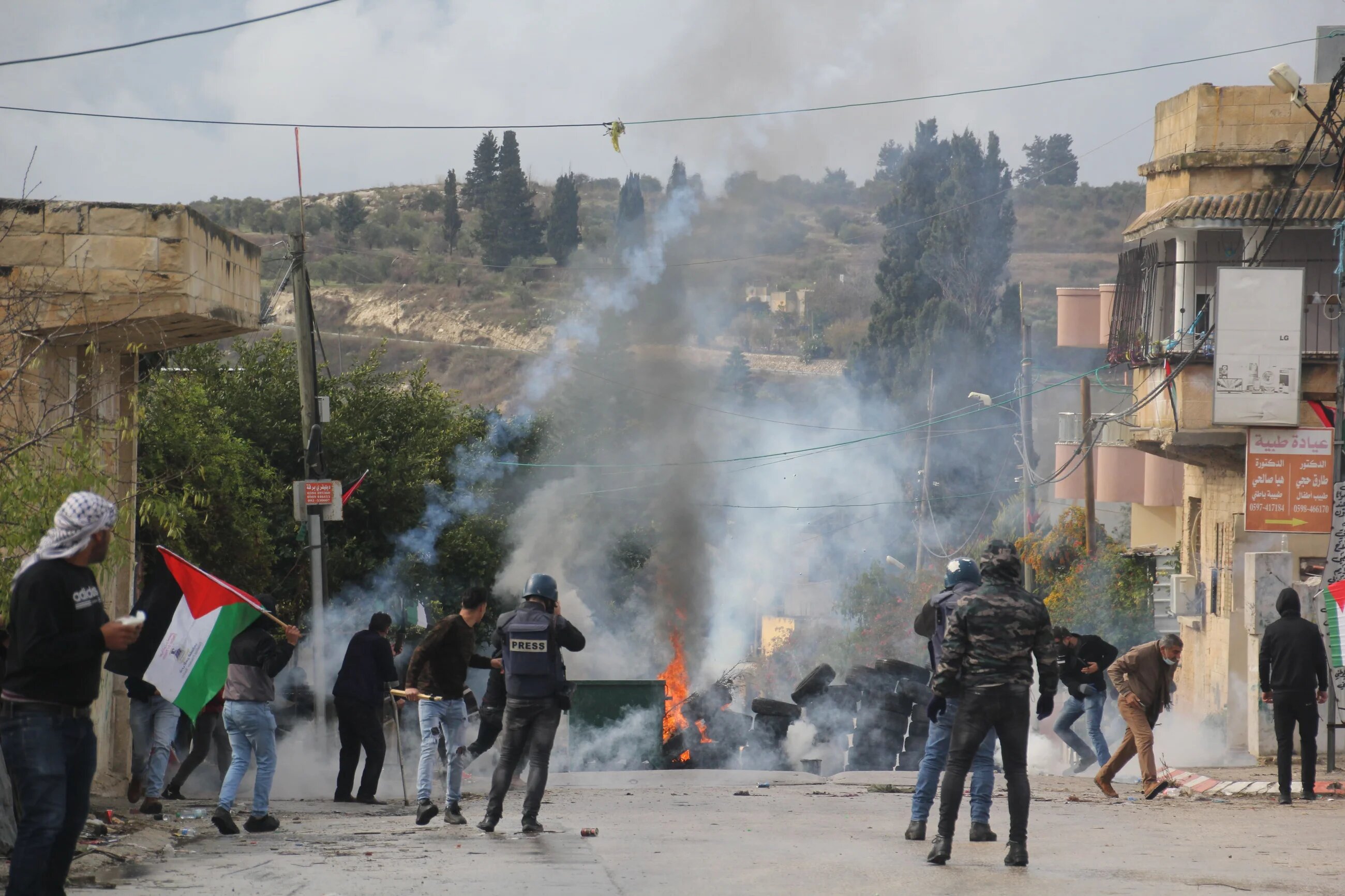
April 16, 2026 – Palestine –
Israeli forces fired stun grenades at journalists reporting on a military operation in the occupied West Bank city of Nablus, according to video footage and eyewitness accounts, raising renewed concerns about the safety of media workers covering events in conflict zones.
The incident occurred during an Israeli raid in Nablus, where journalists had gathered to document the operation and its impact on residents. Footage shared by media outlets shows reporters wearing clearly marked press vests as stun grenades were deployed in their direction, forcing them to retreat from the scene.
According to reports, the journalists were positioned at a distance from the main confrontation area when the grenades were fired, suggesting they were not directly involved in any clashes. No serious injuries were immediately reported, though the use of crowd-control weapons in proximity to media workers has drawn criticism from press freedom advocates.
The Israeli military has not issued a detailed public explanation regarding the specific incident. In similar cases, authorities have stated that such measures are used to manage crowds and maintain operational security during raids, particularly in areas where tensions are high and confrontations may escalate quickly.
Press freedom organisations argue that the deployment of stun grenades near journalists, especially when they are clearly identifiable as members of the press, risks undermining protections afforded to media workers under international law. They stress that journalists must be allowed to carry out their work without being exposed to unnecessary harm or obstruction.
The incident adds to a broader pattern of risks faced by journalists covering military operations in the occupied Palestinian territories, where reporters frequently operate in volatile and unpredictable environments. Media workers have reported instances of being obstructed, harassed, or injured while documenting raids, protests, and clashes.
Advocates warn that such incidents can contribute to a chilling effect on coverage, limiting the ability of journalists to report independently on developments in conflict zones. They continue to call for clear protocols to ensure the safety and protection of journalists, as well as accountability in cases where media workers are exposed to harm.
The episode in Nablus underscores ongoing tensions between security operations and press access, highlighting the challenges journalists face in documenting events on the ground while navigating risks posed by active military environments.
Reference –


