Turkish First Lady Condemns Israel Over Targeting of Journalists in Gaza
December 10, 2025
Iran Detains Iraqi-Kurdish Journalist and Crew While Covering Cultural Festival
December 10, 2025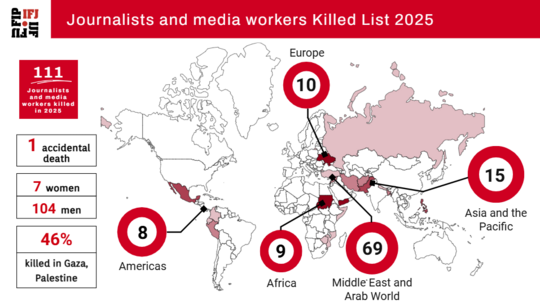
December 10, 2025 – General –
New data from major press-freedom organisations portrays 2025 as one of the deadliest years on record for journalists worldwide, with more than 110 media workers killed and a sharp rise in attacks linked to hate, conflict, and diminishing legal protections. The figures, released by the International Federation of Journalists (IFJ) and Reporters Without Borders (RSF), highlight mounting dangers for journalists — particularly those covering wars, political unrest, and crime — and the urgent need for stronger protections and accountability.
According to the IFJ’s annual tally, 111 journalists lost their lives in connection with their work in 2025, including journalists, media staff, and citizen reporters who were killed while reporting or directly targeted because of their coverage. The organisation emphasised that the victims span diverse regions, reflecting threats not only in conflict zones but also in environments where political violence, organised crime, and harassment against media workers are escalating.
RSF’s global press-freedom report similarly underscores a grim trend of violence and impunity. The watchdog identified multiple contexts where journalists were killed in active conflict — with the Gaza Strip emerging as the deadliest location, accounting for a significant proportion of fatal attacks this year — while other journalists were slain in assaults by armed groups, crime networks, or during protests. RSF’s analysis stresses that journalists are frequently not simply caught in crossfire, but deliberately targeted for their reporting, particularly when exposing abuses, corruption, or human-rights violations.
Beyond the fatalities, both reports highlight worrying levels of impunity. In cases where killers have been identified, prosecutions remain rare and convictions even rarer, according to RSF. This lack of accountability emboldens further attacks, creating a climate in which threats against journalists go unchallenged, and perpetrators feel free to act without fear of consequences.
Analysts also note that the 2025 figures understate the full scale of the crisis, as many attacks go unreported or are difficult to verify in regions where independent media have limited access. In highly repressive states or active war zones, tracking journalist deaths and disappearances is especially challenging, leaving significant gaps in global data.
Press advocacy groups are urging governments, international bodies, and media houses to respond with concrete measures that protect journalists on the ground, reinforce legal safeguards, and support comprehensive investigations into crimes against the press. Without such interventions, the trend of violence and impunity threatens not only individual media workers but the broader ability of societies to access independent information, document abuses, and uphold accountability in the face of war, repression, and organised crime.
Reference –
https://rsf.org/en/2025-deadly-year-journalists-where-hate-and-impunity-lead