
AI-Powered Investigative Journalism Initiative Aims to Redefine Data-Driven Reporting at Northwestern
May 14, 2026
Medical Journal Retracts Stent Study Nine Years After Journalist Investigation
May 17, 2026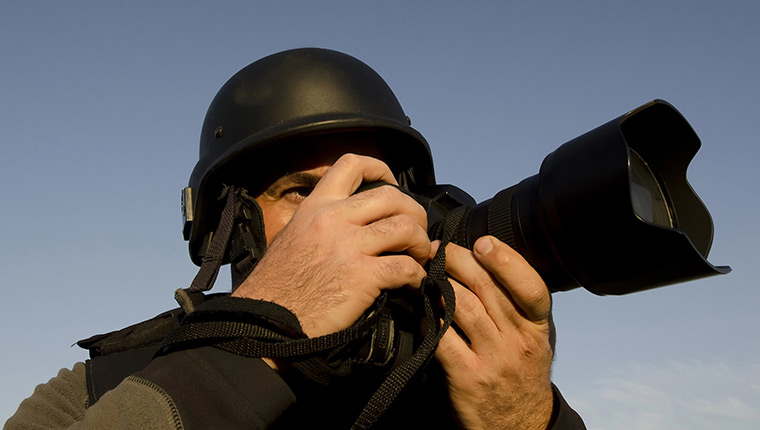
War journalism has undergone a structural shift in the digital era, driven primarily by the rapid expansion of social media platforms, user-generated content, and real-time information flows. Contemporary reporting on armed conflict is no longer confined to embedded correspondents or traditional editorial pipelines, but increasingly shaped by decentralized networks of civilians, soldiers, and digital audiences who actively produce and circulate information.
Research on conflict reporting indicates that social media has significantly increased the speed and volume of war-related information available to journalists, enabling near real-time updates from multiple sources across conflict zones. However, this immediacy introduces persistent challenges around verification, accuracy, and contextualisation, as journalists must assess fragmented and often unverified material under time pressure.
A key development highlighted in academic studies is the growing reliance on user-generated audiovisual content as a core component of war coverage. Journalists frequently use platforms such as Telegram, Facebook, and other social networks to access footage and eyewitness material from inaccessible or dangerous areas, expanding the range of perspectives available in reporting. At the same time, these materials require rigorous verification processes, including cross-referencing official sources, geolocation, and digital forensic techniques to mitigate misinformation risks.
The integration of social media into war reporting has also altered newsroom workflows and professional norms. Journalists now operate in an environment where breaking news often emerges first on digital platforms, forcing traditional media to adapt by incorporating rapid verification systems and hybrid editorial models that combine professional reporting with citizen-sourced data streams.
At the same time, the information environment surrounding conflicts has become increasingly unstable due to the proliferation of manipulated content, including edited videos, miscaptioned imagery, and AI-generated material. This “fog of war” is intensified by algorithmic amplification on social platforms, making it more difficult to distinguish verified information from disinformation at scale.
Despite these challenges, social media has also expanded journalistic reach and audience engagement, enabling more pluralised narratives and direct access to on-the-ground voices in conflict zones. Citizens can act as early witnesses, while journalists function as curators and verifiers of dispersed information ecosystems rather than sole gatekeepers of war narratives.
Overall, research suggests that war reporting in the social media age is defined by a dual dynamic: increased informational access and immediacy on one hand, and heightened complexity in verification, ethics, and information integrity on the other. This transformation requires journalists to balance speed with methodological rigor while navigating an increasingly fragmented and contested digital information landscape.
Reference –
Challenges and changes of reporting on war in a social media age