Tunisian Appeals Court Upholds Prison Sentences in Ongoing Crackdown on Journalists
May 13, 2026
Trump Urged to Confront Xi Over Jimmy Lai as Global Press Freedom Pressure Intensifies
May 14, 2026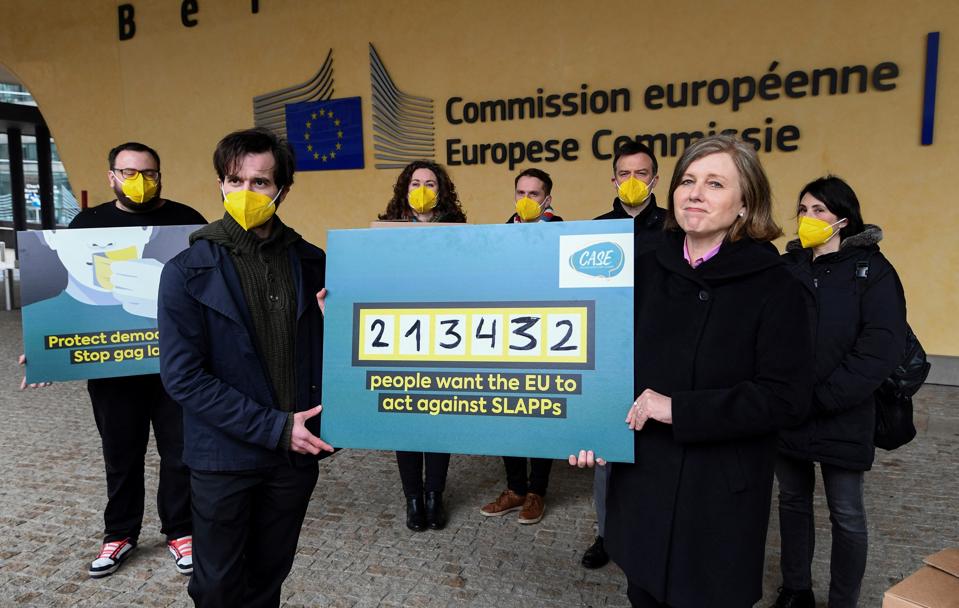
May 13, 2026 – Europe –
A recent Reporters Without Borders (RSF) analysis highlights that two years after the European Union adopted its anti-SLAPP directive, many member states have still not properly implemented the law, leaving journalists exposed to abusive legal actions designed to intimidate and silence public interest reporting.
According to RSF, EU countries had until 7 May 2026 to transpose the directive into national law, but only a small number have fully complied. The directive was intended to protect journalists, media organisations, and civil society actors from Strategic Lawsuits Against Public Participation (SLAPPs), which are often filed by powerful individuals or entities to drain resources and discourage scrutiny.
The report explains that while the directive represents a major step in principle, its practical impact remains limited due to slow and uneven implementation across Europe. In many cases, national governments have delayed reforms or introduced partial measures that fall short of the directive’s intended safeguards.
RSF notes that SLAPP cases continue to rise in multiple EU countries, with journalists facing lawsuits linked to investigations into corruption, political influence, and corporate misconduct. These legal actions often impose significant financial and psychological pressure even when cases do not succeed in court, creating what advocacy groups describe as a chilling effect on investigative reporting.
Press freedom organisations argue that a key weakness of the directive is its limited scope, as it primarily targets cross-border cases while many SLAPPs are domestic in nature. As a result, critics say national legal systems remain the main battleground for journalists facing intimidation through litigation.
The report also points to uneven political commitment among EU member states, with only a handful introducing stronger protections that go beyond the minimum requirements. In most countries, reforms are still ongoing or stalled, raising concerns that legal safeguards will remain inconsistent across the bloc.
Advocacy groups, including RSF and other media freedom organisations, are calling for faster and more comprehensive implementation, warning that delays risk weakening the directive’s effectiveness and leaving journalists vulnerable to continued legal pressure.
Overall, the findings suggest that despite legislative progress at the EU level, the gap between policy and enforcement remains significant, and journalists across Europe continue to face substantial risks from abusive litigation intended to silence critical reporting.
Reference –