
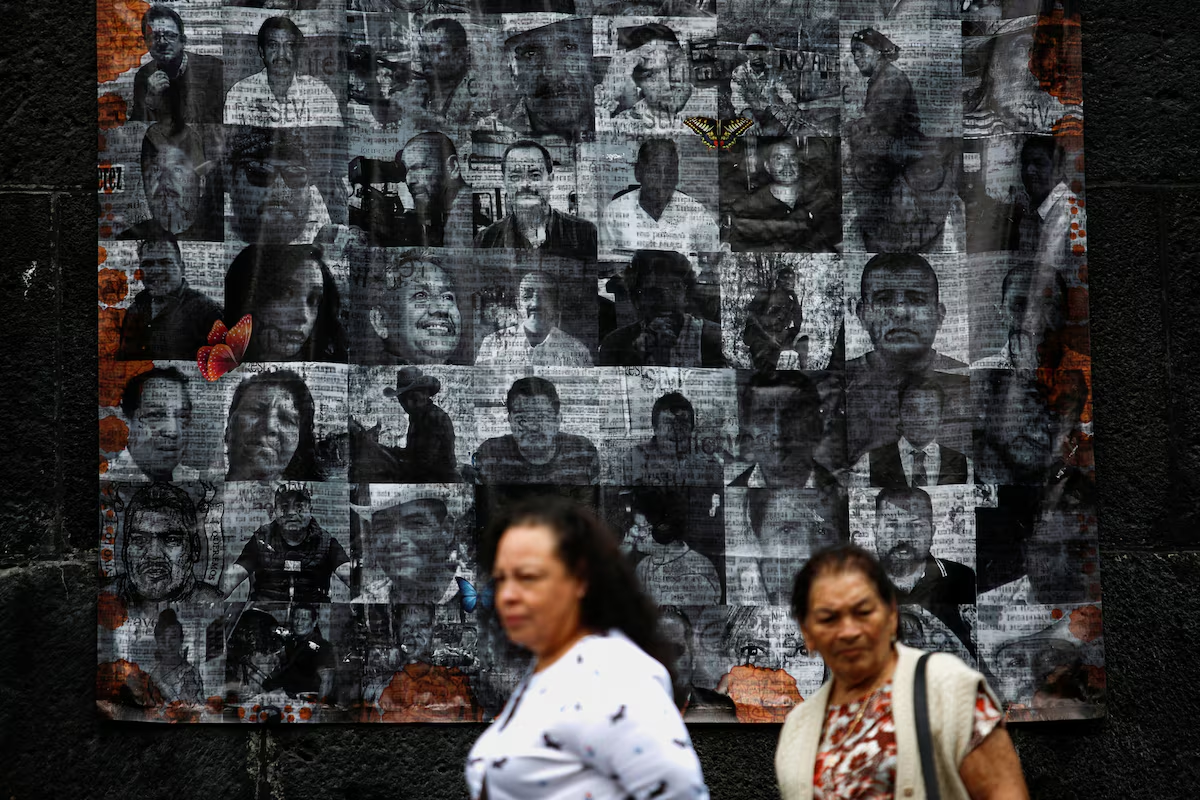
Mexico Sees Sharp Rise in Journalist Killings and Abductions in 2025, Advocacy Report Warns
May 10, 2026
Reconfiguring Journalism in the Digital Age: Power, Regulation, and Media Autonomy Under Pressure
May 11, 2026
A regional press freedom analysis highlights a persistent and worsening crisis for journalists in Nigeria, where decades of violence, intimidation, and systemic impunity have created one of the most dangerous environments for media workers in West Africa.
According to reporting referenced by Impact Policies, at least 28 journalists have been killed in Nigeria since 1986, beginning with the high-profile assassination of investigative journalist Dele Giwa in a parcel bomb attack in 1986. That case remains one of the country’s most emblematic unsolved crimes against the press and is often cited as the starting point of a broader pattern of violence against journalists.
The report situates these killings within a wider context of sustained attacks on media professionals over nearly four decades. Data from journalism monitoring organizations indicate that, beyond fatalities, hundreds of journalists have been subjected to physical assaults, arrests, harassment, and threats while carrying out their work, reflecting a long-term deterioration in press safety conditions.
More recent monitoring further shows that the risk environment remains acute. In 2025 alone, dozens of incidents of attacks against journalists and media organizations were documented across Nigeria, including arrests, detentions, and physical violence, with state security forces frequently identified among those responsible.
Press freedom advocates argue that the persistence of such abuses is closely linked to weak accountability mechanisms. Investigations into attacks on journalists are often delayed or inconclusive, and prosecutions remain rare even in cases involving serious violence. This has contributed to what rights groups describe as a culture of impunity that enables repeat offenses against media workers.
The broader trend also reflects structural pressures on journalism in Nigeria, where reporters frequently face risks while covering elections, protests, corruption, and armed conflict. In many documented cases, journalists have been targeted not only by non-state actors but also by security personnel and political figures, further complicating efforts to ensure independent oversight and protection.
Advocacy organizations emphasize that the cumulative effect of killings, attacks, and legal harassment has created a chilling environment for press freedom. Self-censorship and reduced investigative reporting are increasingly reported outcomes, particularly in regions affected by insecurity and political tension.
Overall, the findings underscore a long-standing and unresolved crisis in journalist safety in Nigeria, marked by recurring violence, insufficient accountability, and continued risks for media professionals operating in both urban and conflict-affected areas.
Reference –