Two Haitian Journalists Killed Within Days as Violence Against Media Intensifies Amid National Crisis
May 8, 2026
Fresh Concerns Over Journalist Safety in Albania After Suspected Arson Attack on Media Worker’s Vehicle
May 8, 2026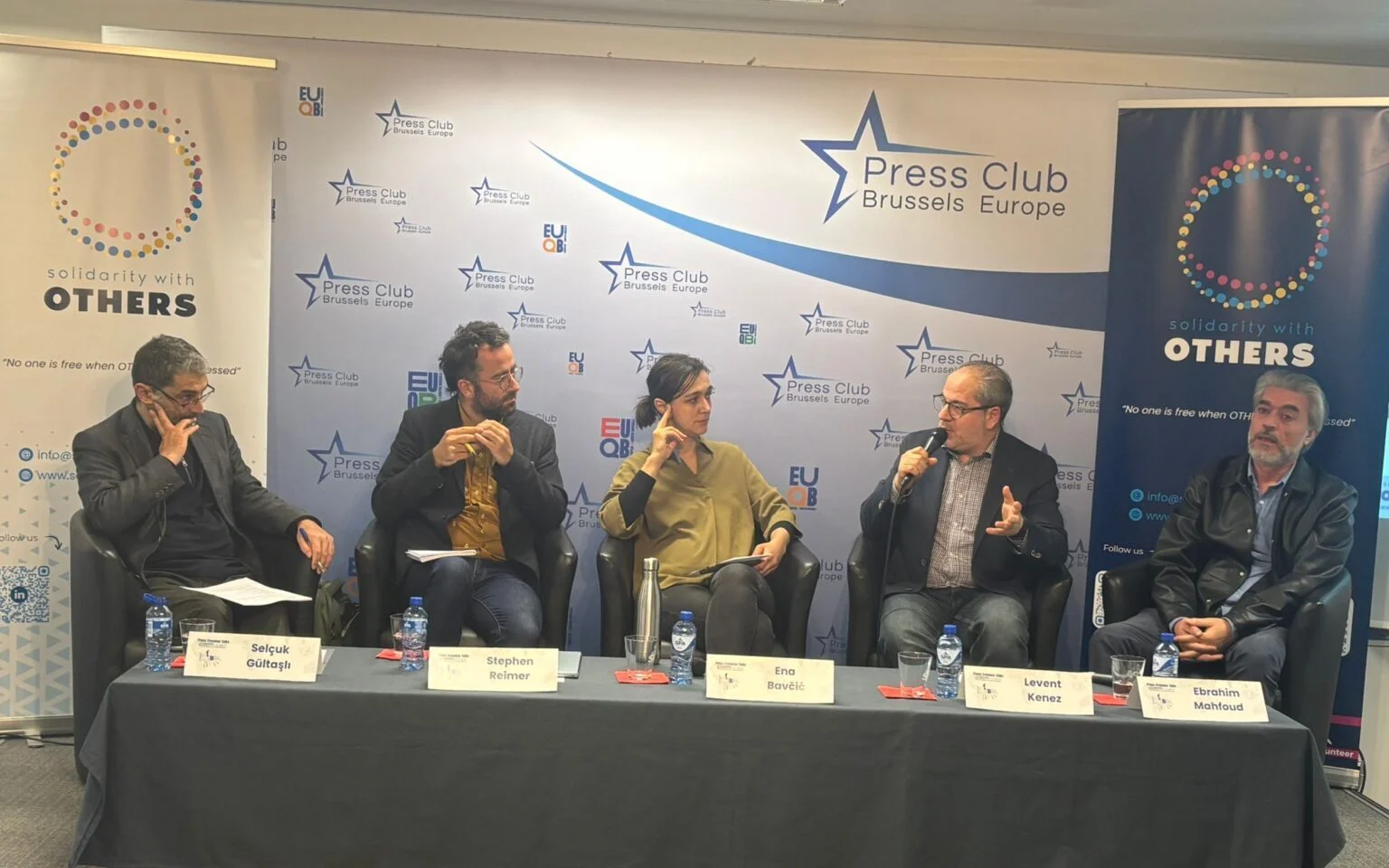
May 08, 2026 – Belgium –
A panel discussion in Brussels has highlighted how journalists forced into exile continue to face intimidation, surveillance, and political pressure from their countries of origin, with experts warning that leaving home does not end the risks to press freedom.
According to reporting from Turkish Minute and event summaries from the Press Club Brussels Europe, the discussion brought together exiled journalists, researchers, and press freedom advocates to examine the growing phenomenon of transnational repression targeting media workers abroad. The event marked World Press Freedom Day and focused on how authoritarian practices increasingly extend beyond national borders.
Speakers at the panel described a range of pressures faced by journalists in exile, including digital surveillance, online harassment, legal intimidation, and threats directed at family members remaining in their home countries. They argued that these tactics are used to silence critical reporting, even after journalists relocate to perceived safe countries in Europe.
One key theme discussed was how governments use international legal and administrative mechanisms, such as extradition requests and policing tools, to pursue journalists abroad. Participants noted that such systems can create ongoing legal uncertainty for exiled reporters, even when they have been granted asylum.
The panel also examined the role of digital platforms in enabling or amplifying repression, with speakers warning that social media surveillance, coordinated harassment campaigns, and spyware technologies have made it easier for states to monitor journalists globally. Some participants described this trend as “platform-enabled repression,” where online infrastructure is used to restrict journalistic activity beyond borders.
Exiled journalists themselves shared personal accounts of professional and personal hardship, including difficulties in continuing their work, securing employment, and maintaining contact with audiences in their home countries. Some also described ongoing fear due to surveillance and intimidation linked to their reporting.
Press freedom advocates emphasized that these challenges are not isolated but part of a broader global trend affecting journalists from multiple countries, including Turkey, Syria, Belarus, and Russia, where political pressure has increasingly extended beyond national borders.
The discussion concluded with calls for stronger international protections, improved asylum and legal safeguards, and greater accountability for states engaging in cross-border harassment of journalists.
Experts warned that without coordinated action from governments and institutions, exile will continue to offer only partial safety, as repression increasingly follows journalists wherever they go.
Reference –
Journalists living in exile are targets of authoritarian repression, Brussels panelists say