
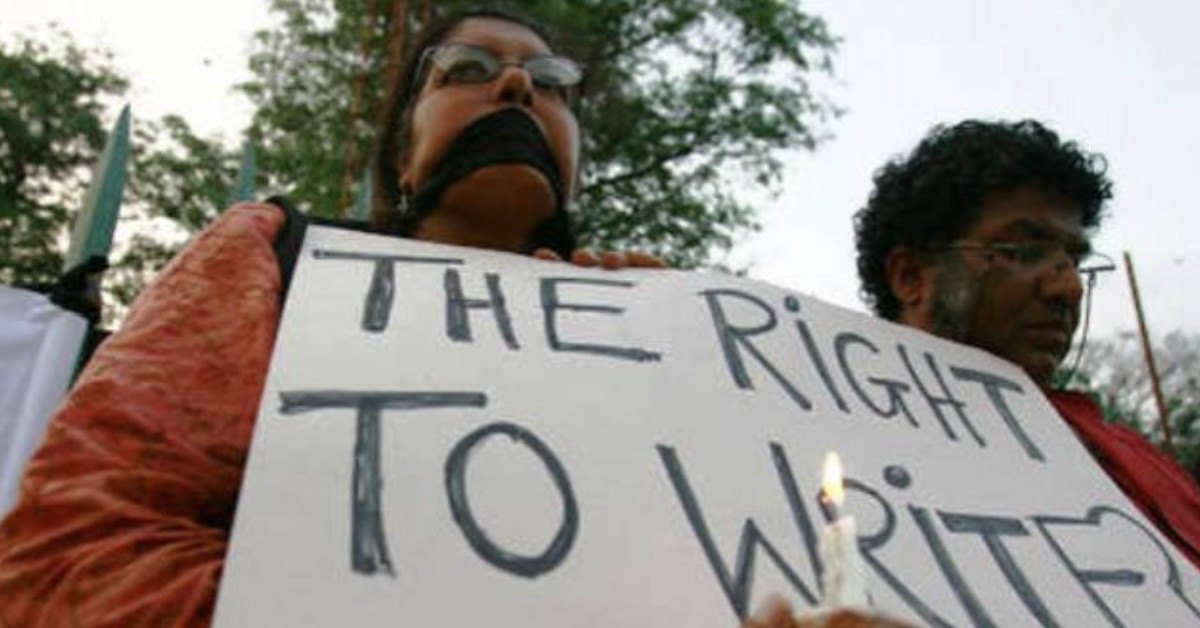
The Vanishing Women in Journalism — A Structural Disappearance From Pakistan’s Newsrooms
April 12, 2026
Independent Journalism Is Mission-Driven but Financially Precarious, New Report Finds
April 15, 2026
The article from the Al Jazeera Journalism Review examines how contemporary journalism is evolving under pressure from political polarization, technological disruption, and shifting audience expectations, arguing that the profession is increasingly moving from simple reporting toward a more reflective and analytical mode of practice. It situates journalism not only as a mechanism for information delivery but also as an interpretive system shaped by institutional constraints and power relations.
A central theme is the growing tension between traditional journalistic objectivity and the demand for deeper contextualization. The piece highlights how reporters are no longer just observers of events but are often required to interpret complex social, political, and economic systems in real time, especially in conflict and crisis environments. This shift is presented as both an expansion of journalistic responsibility and a challenge to established norms of neutrality.
The analysis also explores how newsroom structures and editorial hierarchies influence what becomes visible in public discourse. It argues that journalism is not produced in a vacuum but is shaped by funding models, institutional priorities, and geopolitical framing, all of which can narrow or distort coverage if left unexamined. This structural lens positions journalism as a mediated form of knowledge rather than a direct reflection of reality.
Another key dimension is the impact of digital platforms, which have altered both the speed and conditions under which news is produced and consumed. The article notes that journalists now operate in an environment of constant circulation, where narratives are rapidly reshaped by audiences, algorithms, and competing information flows. This has increased pressure on newsrooms to balance accuracy with immediacy while maintaining credibility.
The piece also emphasizes the importance of methodological awareness in journalism, suggesting that reporters must increasingly understand the tools, biases, and frameworks that shape their own reporting practices. This includes recognizing how language, sourcing, and framing choices influence audience perception and policy interpretation.
Ultimately, the article argues for a more self-aware form of journalism that acknowledges its own limitations while strengthening its role in democratic accountability. Rather than abandoning objectivity, it calls for a redefinition of it as transparency about process, perspective, and constraint. In this view, journalism becomes not only a record of events but also a critical examination of how those events are constructed and understood.
Reference –