
Belarus Releases Jailed Journalist in Rare Wave of Pardons Amid Ongoing Crackdown
March 20, 2026
Ecuadorian Journalist Shot After Being Lured by False Tip Raises Alarm Over Targeted Attacks
March 21, 2026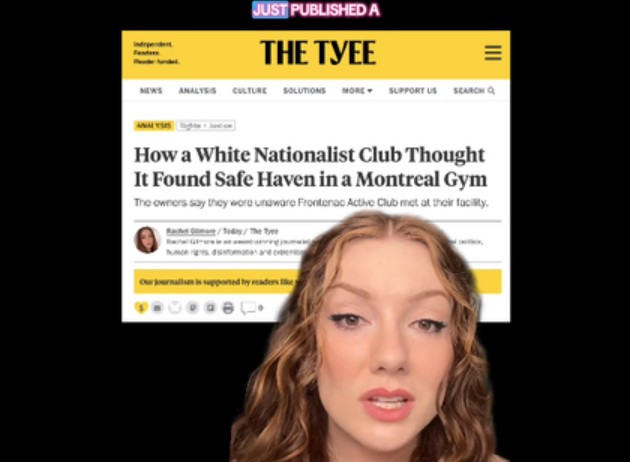
March 21, 2026 – Canada –
A Canadian journalist has faced intimidation and harassment after publishing an investigation into a white nationalist group operating in Montreal, prompting renewed concern over the growing threats journalists face when reporting on extremism.
Independent journalist Rachel Gilmore reported that she was approached and intimidated by two men linked to the Frontenac Active Club, a white nationalist group in Canada, shortly after publishing an exposé about the organization’s activities. The incident reportedly took place at a music venue in early March, where the men confronted her in person in what press freedom advocates described as an attempt to intimidate her over her reporting.
The confrontation followed Gilmore’s investigation, revealing that members of the group had been using a Montreal gym for training sessions and gatherings. Her reporting identified links between the club and extremist ideology, including Nazi symbolism and organized recruitment activity. According to subsequent accounts, the investigation led the gym’s owners to sever ties with a coach who had allegedly facilitated access for members of the group without disclosing its true nature.
Gilmore later said the harassment did not end with the in-person confrontation. Press freedom groups and journalists’ unions stated that she had also been subjected to continued threats and intimidation after the story was published, adding to longstanding concerns about the harassment of journalists, particularly women, who investigate far-right networks.
The International Federation of Journalists (IFJ), along with affiliated unions in Canada, condemned the incident and called for a full police investigation. Advocacy groups stressed that efforts to intimidate reporters for exposing extremist activity represent a direct attack on press freedom and the public’s right to know. They also warned that such incidents reflect a broader deterioration in working conditions for journalists covering politically sensitive or dangerous subjects.
Gilmore has reported on right-wing extremism in Canada for several years and has previously spoken publicly about threats she has received because of her work. Her case has therefore become emblematic of the increasingly hostile environment facing journalists who investigate hate groups and online radicalization.
The incident highlights how journalists covering extremist movements are increasingly exposed not only to online abuse but also to real-world intimidation. Press freedom advocates argue that without stronger protections and serious law enforcement responses, such harassment risks deterring critical public-interest reporting and allowing extremist groups to operate with less scrutiny.
Reference –