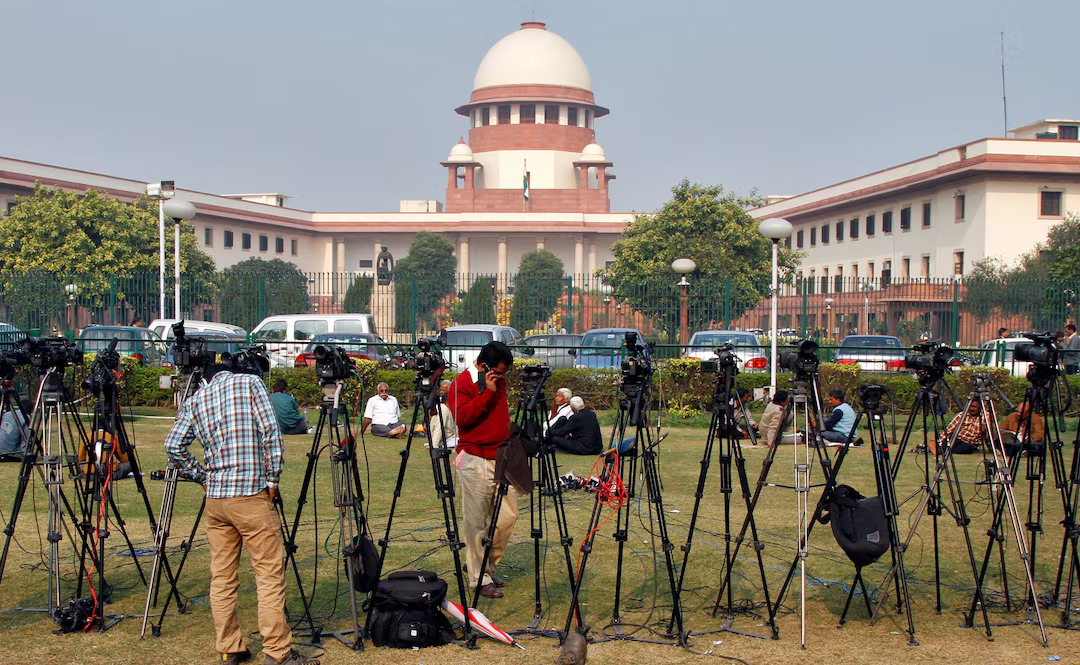
India’s new data privacy law is facing a major legal challenge from transparency activists and journalists, who argue that it could significantly weaken public access to information and undermine investigative reporting. The dispute is now headed to the Supreme Court, where several petitions are set to challenge recent changes introduced under Prime Minister Narendra Modi’s government.
At the center of the controversy is the Digital Personal Data Protection Act, which came into force in late 2025 and amended India’s long-standing Right to Information (RTI) framework. Critics say the law now gives authorities broader grounds to deny access to information by classifying more material as “personal information,” even in cases where disclosure may serve the public interest. Journalists and civil society groups warn that this could obstruct reporting on government decisions, public spending, and possible misconduct.
Those challenging the law argue that the amendment marks a serious rollback of India’s transparency standards. Activists say the revised language could make it harder to obtain details such as the identities of officials or contractors linked to public projects, even where accountability concerns are involved. For journalists, the concern is not only restricted access to records but also the broader chilling effect the law could have on public-interest reporting.
Media organizations and legal observers have warned that the changes may have far-reaching consequences for watchdog journalism in India, where access to official documents has often been central to exposing corruption and administrative failures. The absence of a clear public-interest safeguard has become a key point of contention, with critics arguing that the law prioritizes privacy in a way that may shield state institutions from scrutiny.
The Indian government has defended the legislation, maintaining that it strikes an appropriate balance between the right to privacy and the right to information. Officials have insisted that the law does not eliminate legitimate transparency mechanisms and remains consistent with constitutional protections.
The case is being closely watched because its outcome could shape the future of access to information in India. For journalists and transparency advocates, the court battle represents more than a legal dispute over privacy. It has become a wider test of whether democratic accountability and independent reporting will retain meaningful space under an increasingly restrictive information environment.
Reference –
https://www.reuters.com/world/india/indian-transparency-activists-journalists-set-court-fight-over-modis-privacy-law-2026-03-20/
https://www.magzter.com/stories/newspaper/The-Straits-Times/INDIAN-TRANSPARENCY-ACTIVISTS-JOURNALISTS-SET-FOR-COURT-FIGHT-OVER-MODIS-PRIVACY-LAW?srsltid=AfmBOooy0WTUScc8fGAwicg0pVacAQNopWQDP_n66ZZORkmoMGIkWEF7
https://www.tradingview.com/news/reuters.com,2026:newsml_L6N4080L9:0-indian-transparency-activists-journalists-set-for-court-fight-over-modi-s-privacy-law/
https://www.telegraphindia.com/india/rti-dilution-row-activists-journalists-move-supreme-court-against-modi-governments-privacy-law/cid/2152674