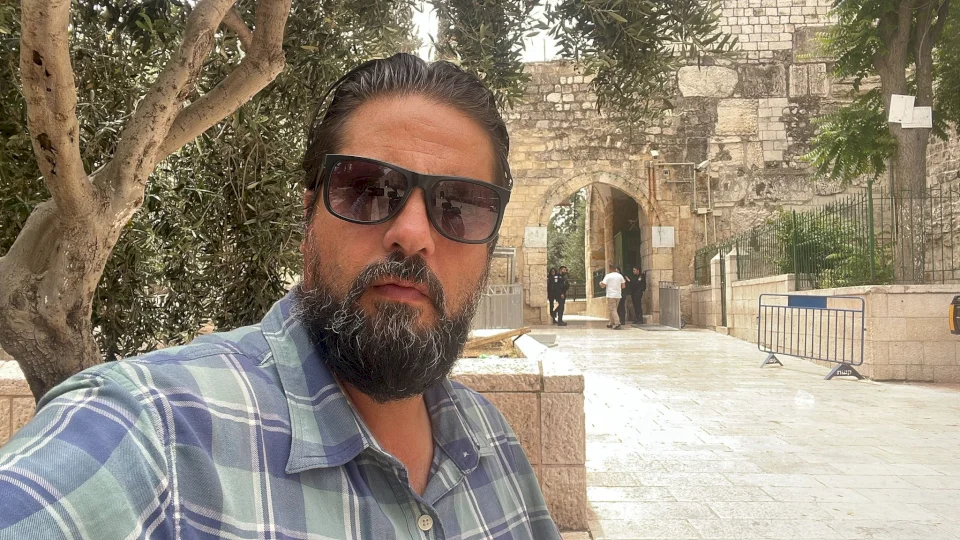
Israeli occupation forces detained Palestinian journalist Ahmad Jalajel inside the courtyards of the Al-Aqsa Mosque compound in occupied East Jerusalem on the evening of February 26, 2026, in an arrest that local press bodies have condemned as part of a widening campaign against Palestinian media workers. Jalajel was seized by troops while present at the revered holy site and taken to an Israeli detention centre, according to local officials and Palestinian sources.
The arrest follows a previous detention on February 25, when photojournalist Ibrahim Al-Sanjlawi was also apprehended inside the Al-Aqsa courtyards but released later under a temporary ban from entering the mosque for one week, a restriction that can be renewed. The Palestinian Journalists’ Union sharply criticised both actions, describing them as part of an “escalating targeting campaign” by Israeli forces that jeopardises the safety and independence of journalists working in Jerusalem.
Press freedom advocates say Jalajel’s arrest reflects a broader pattern of harassment against Palestinian journalists, particularly Arab media professionals covering sensitive sites such as Al-Aqsa, one of the most contested and symbolic locations in the occupied city. The Jerusalem Governorate noted that Israeli authorities have issued hundreds of exclusion orders and bans on journalists’ access to the Al-Aqsa compound and other areas in recent months. This practice, rights groups argue, is designed to curb independent reporting and public scrutiny of state actions.
The detentions have drawn condemnation from media organisations and human rights bodies, which warn that limiting journalists’ ability to document events — especially in flashpoints like Al-Aqsa, where tensions frequently erupt — undermines press freedom and the public’s right to information in a region already marked by intense conflict and political volatility.
While authorities have not detailed specific charges against Jalajel, the repeated arrests and ban orders imposed on Palestinian journalists have fuelled concerns that security justifications are being applied to suppress reporting rather than to address legitimate threats. The Palestinian Journalists’ Union has called for immediate international intervention to safeguard media workers and halt what it describes as arbitrary restrictions and intimidation tactics linked to their professional duties.