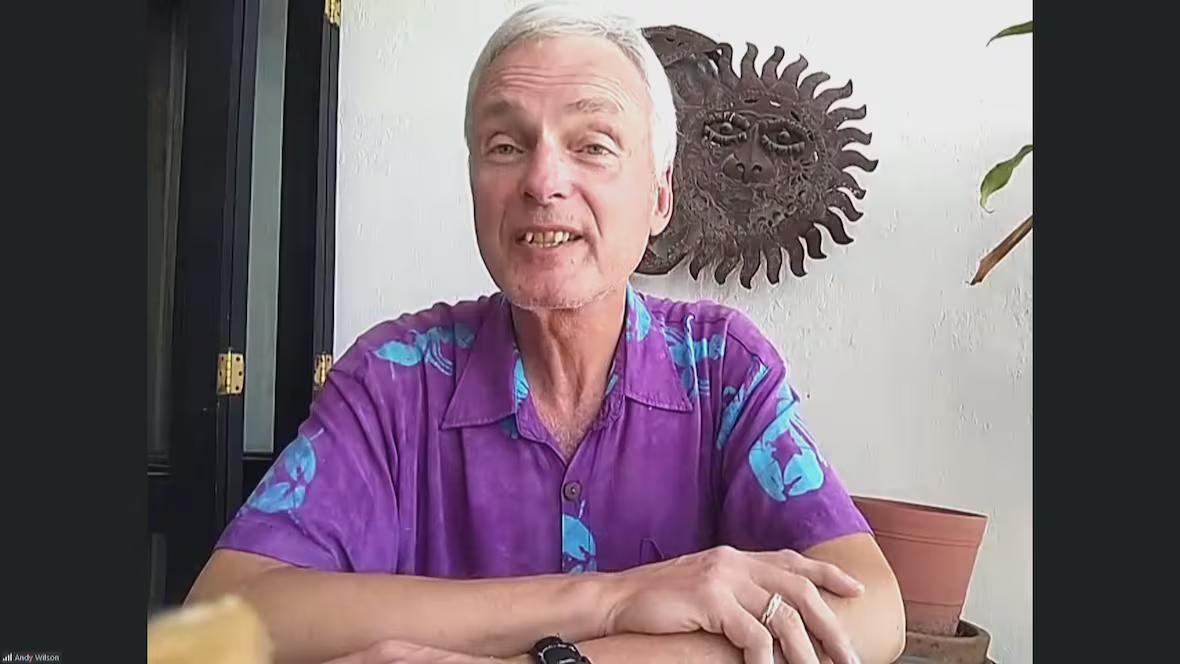
Canadian Journalist Andy Wilson Describes Explosions and Gunfire in Puerto Vallarta Violence
February 24, 2026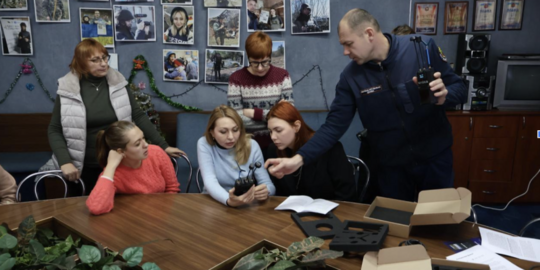
Ukrainian Journalists’ Solidarity Centers Face Funding Crunch as Support Appeal Launched
February 24, 2026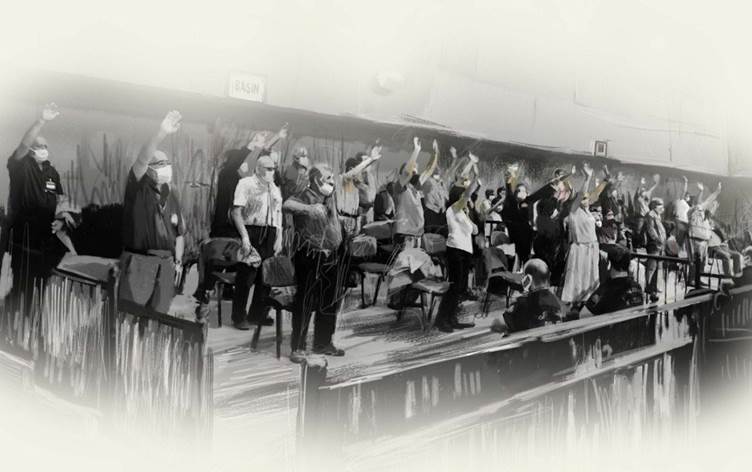
February 24, 2026 – Turkey –
An Ankara criminal court of peace has sentenced seven journalists to 18-day prison terms after convicting them of unlawfully recording audio or video during the Kobani trial’s final hearing held on 16 May 2024, a ruling that has alarmed press freedom advocates and expanded concerns about judicial restraint on independent reporting. The sentences were handed down on 24 February 2026 after a summary procedure, with reductions applied to the initial penalties.
The journalists convicted include Damla Kırmızıtaş, Derya Okatan Albayrak, Fatih Polat, Fırat Can Arslan, Handan Ceren Bayar, Hüseyin Hayatsever, and Kaan Can Bircan, who were charged with recording audio or video during the high-profile Kobani trial hearing held at the Sincan Prison complex in Ankara. Police reports indicated the use of mobile devices to take recordings inside the courtroom, an allegation the court accepted as sufficient evidence in its ruling.
Under Article 286/1 of the Turkish Penal Code, the defendants were initially sentenced to one-month prison terms, but discretionary and procedural provisions reduced the sentences to 18 days for most, with some converted to judicial fines of 900 Turkish lira (about $20). Kırmızıtaş received a suspended sentence, while the others face short custodial terms or fines.
Defence lawyers strongly contested the verdict, arguing that the journalists were present solely in their professional capacity covering the proceedings and that no direct evidence — such as a forensic analysis of devices — proved that recording had taken place. They maintained that the police report was insufficient to justify a conviction and described the ruling as disproportionate interference with freedom of expression and press freedoms.
The broader investigation originally targeted 21 journalists, including correspondents from Hürriyet, Anka Agency, Ulusal Kanal, SZC TV, Voice of America, Gazete Duvar, Evrensel, Reuters, and Medyascope, though many opted for summary prepayment procedures to avoid criminal prosecution. Those who declined to prepay faced formal criminal charges, resulting in the current trial and ruling.
The case arises against a backdrop of continued judicial pressure on journalists in Turkey, where prosecutors and courts have increasingly applied legal restrictions tied to reporting on politically sensitive trials, protests, and Kurdish-related issues. Rights organisations have criticised such legal actions as part of a wider trend of shrinking media freedom, with Turkey ranked near the bottom of press freedom indices in recent years.
The Kobani trial itself relates to protests that broke out in Turkey in October 2014 after the Islamic State’s siege of Kobani, and the subsequent prosecution of Kurdish and pro-Kurdish politicians. The trial has been politically charged and has drawn attention from domestic and international observers for its treatment of defendants and the broader implications for political dissent.
Legal appeals and reactions from media freedom defenders are expected as the journalists decide how to proceed in response to the convictions.
Reference –
Court sentences 7 journalists to 18 days over photos taken at Kobani hearing


