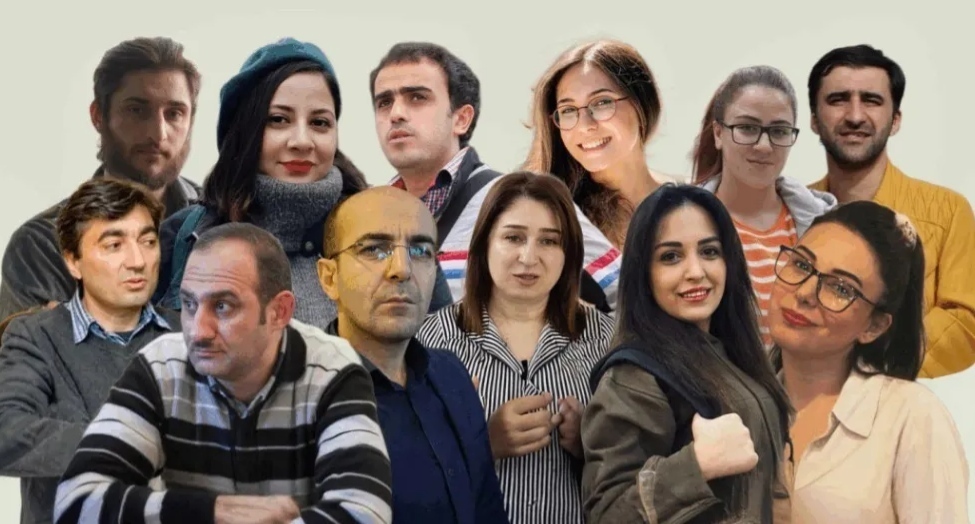
Journalists accused in the politically charged Meydan TV case protested restrictions on their participation during a court hearing, drawing attention to the ongoing suppression of independent media figures in Azerbaijan. At the hearing on 13 February 2026, defendants expressed outrage after judges blocked their microphones and limited access to legal counsel, prompting security forces to label their actions a disturbance of the peace.
The defendants — among a group of media professionals arrested since December 2024 on charges including currency smuggling and additional criminal counts — demanded that observers be permitted to film the proceedings, saying transparency was essential to a fair trial. Their request was denied, and journalists confined behind a glass cage in the courtroom protested by banging their hands against it and demanding the right to speak and sit beside their lawyers.
According to reports, authorities lodged an official report accusing the journalists of obstructing the prosecutor’s speech and creating noise, effectively treating the courtroom protest as a violation of order. The defendants stated that being denied basic participation — such as functioning microphones and movement within the courtroom — signalled continued discrimination against independent media voices in legal settings.
The Meydan TV case has become emblematic of Azerbaijan’s widening crackdown on independent journalism. What began with six journalists detained in late 2024 expanded over subsequent months, with more than a dozen suspects identified and charged with additional offences. Defendants and rights advocates alike argue that the charges are politically motivated and aimed at silencing critical reporting rather than enforcing impartial justice.
Journalists from other outlets, including Abzas Media, Toplum TV, and Kanal-13, have also faced persecution, with several sentenced to lengthy prison terms in related cases. Critics contend that the Baku judicial apparatus — from investigators to judges — operates under political influence, undermining the rule of law and deepening fears among independent journalists.
The courtroom protest and ensuing official report highlight broader concerns over press freedom and judicial transparency in Azerbaijan. International observers and media rights groups continue to monitor the Meydan TV proceedings, urging fair trial standards and urging authorities to allow open, unimpeded coverage of legal processes involving journalists.
Reference –
https://www.eng.kavkaz-uzel.eu/articles/72910