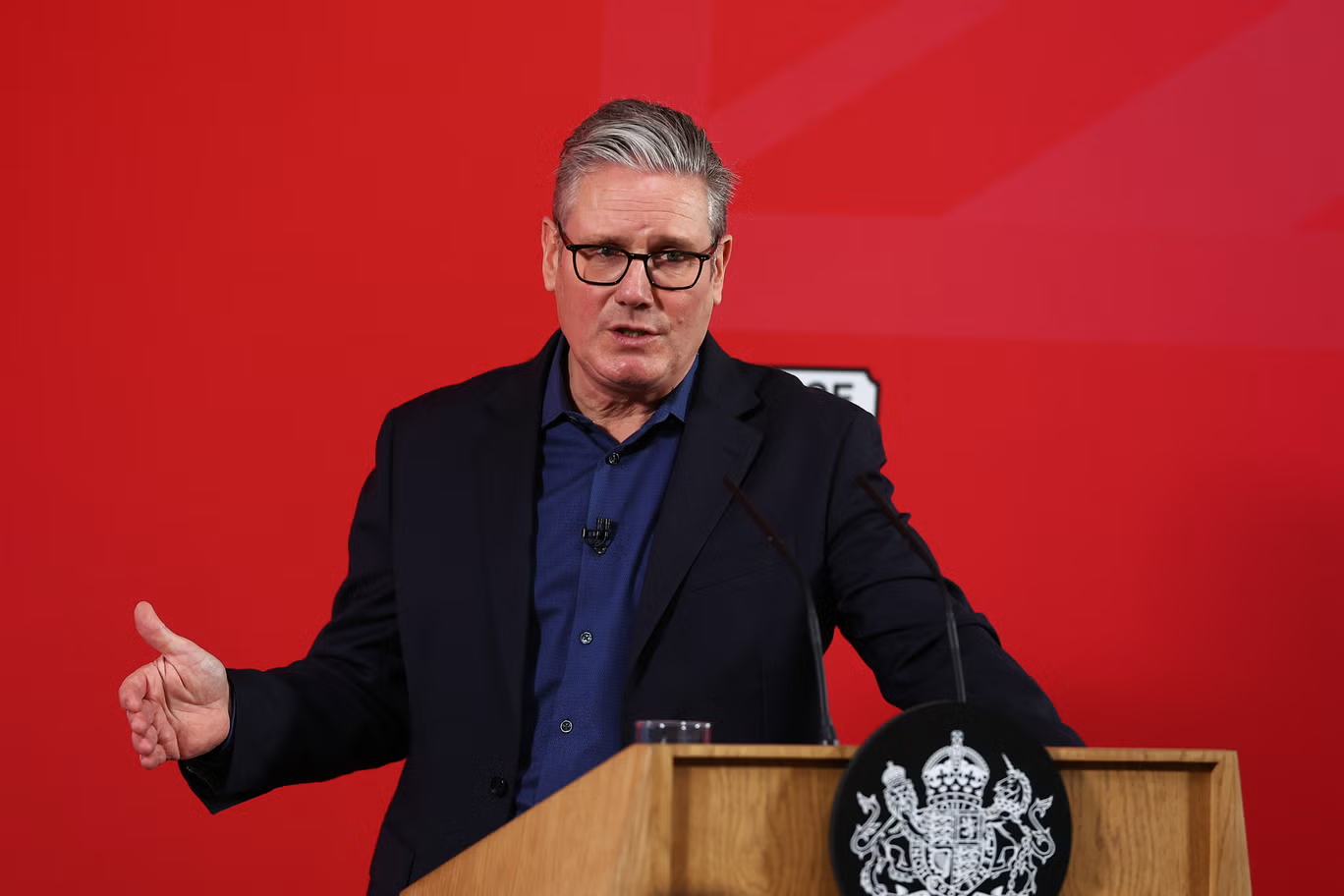
An official inquiry has concluded that Labour Together — a think tank closely linked to UK Labour leader Sir Keir Starmer — commissioned an external public relations firm to research journalists who reported critically on Starmer and the party, prompting accusations of undue influence and threats to press freedom. The findings, published on 15 February 2026, have sparked debate about political engagement with media and the appropriate boundaries for party-aligned organisations.
According to the inquiry reports and parliamentary coverage, Labour Together paid a PR firm to compile dossiers on several journalists whose reporting had focused on internal party debates and Starmer’s leadership. Critics say the research amounted to monitoring and gathering information on individual reporters rather than legitimate media tracking, raising concerns about whether such activity could chill journalistic independence and influence news coverage.
The controversy centers on engagement between Labour Together and Morgan McSweeney-linked communications consultants; correspondence and contract details reviewed during the inquiry revealed financial transactions tied to media analysis and ‘profiling’ of reporters. Although no direct allegation of wrongdoing by Sir Keir Starmer himself was made, opposition lawmakers and press advocates argue that the use of party-aligned funding to research journalists crosses ethical lines, even if it did not break explicit legal prohibitions.
Labour leaders defended the think tank’s actions as part of routine media monitoring — a practice common among political organisations seeking to understand press narratives — and denied that any material was used to target or intimidate individual journalists. A spokesperson said the research was intended to inform communications strategy and was not shared with senior party figures for punitive purposes.
Nevertheless, opposition parties seized on the inquiry findings, asserting that the practice undermines a free press and creates a perception that journalists who are critical of powerful political actors may be monitored or tacitly judged. Some lawmakers called for clearer ethical standards governing how political organisations engage with media analysis and for safeguards to protect journalists from unwarranted scrutiny by party-linked entities.
Media freedom organisations also weighed in, emphasising that journalists must be able to report critically without fear that their professional work will lead to targeted research or profiling by political actors. They urged political parties and affiliated think tanks to adopt transparent policies that distinguish legitimate media monitoring from activities that can be perceived as invasive or punitive.
The inquiry’s public report stops short of recommending legal action, given that no explicit legal breach was identified, but it calls for a voluntary code of conduct and clearer boundaries for political organisations’ interaction with the press. The Labour Party said it would review the findings and consider reforms to its internal communication and media strategy practices.
Reference –
https://www.bbc.com/news/articles/c0q3wx2j3x1o
https://www.independent.co.uk/news/uk/politics/starmer-labour-together-journalists-inquiry-mcsweeney-b2920828.html
https://www.theguardian.com/politics/2026/feb/15/labour-together-thinktank-inquiry-calls-journalists-investigation-keir-starmer