

Eyewitness Testifies in Salma Sultana Murder Case Nearly Eight Years After Journalist’s Killing
February 12, 2026
Judicial Harassment Against Kazakh Journalist Gulnara Bazhkenova Raises Press Freedom Concerns
February 12, 2026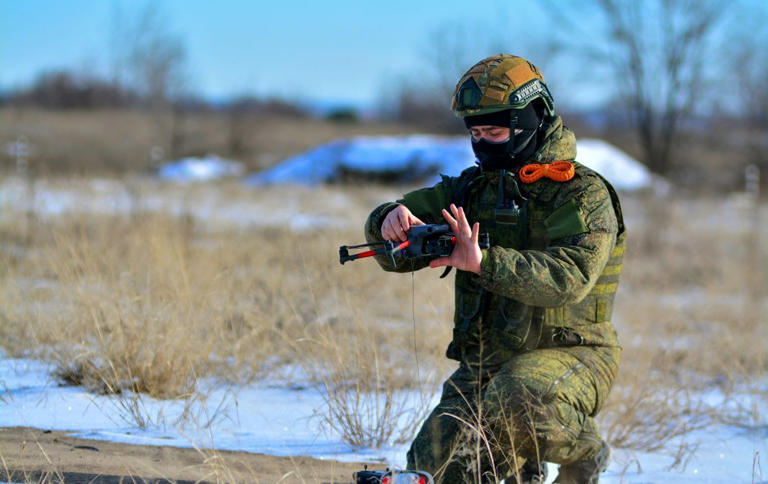
February 12, 2026 – Russia/Ukraine/Latvia –
Two Latvian news crew members were wounded after coming under FPV (first-person-view) drone fire from Russian forces while reporting near the front line in Ukraine’s Donetsk region, Ukrainian authorities and multiple international media outlets reported on 11 February 2026. The incident underscores the growing danger posed to journalists covering active combat zones, as drone technology increasingly figures in battlefield targeting.
The Latvian reporters were embedded with Ukrainian forces near Kupiansk-Vuzlovyi when Russian FPV drones — small, maneuverable, weaponised unmanned aerial systems — launched an attack on their position. According to Pravda and regional press accounts, the journalists were hit by shrapnel and blast effects from the strike but managed to avoid life-threatening injuries. Both were treated on site and later evacuated to a medical facility for further evaluation.
Video footage shared by Latvian public broadcaster LTV and described by Public Broadcasting of Latvia (LSM) showed the crew attempting to take cover as the FPV drones dove toward their location. Despite rapidly changing battlefield conditions and the risk of incoming fire, the reporters maintained situational awareness, enabling them to seek protection and minimise harm when the drones closed in.
The Donetsk Regional Military Administration confirmed the incident and condemned the targeting of journalists, emphasizing that independent reporting from conflict zones is a legitimate civilian activity. Officials said they were coordinating with Ukrainian media rights groups to track attacks on journalists and provide safety guidance. They also reiterated that Russia’s deployment of weaponised drones against non-combatants and frontline reporters violates international humanitarian norms.
FPV drones have become increasingly prominent on the battlefield, with both sides in the Ukraine war utilising them for reconnaissance and offensive operations. These small drones, which can travel at high speed and evade conventional air defenses, present acute risks to anyone in their flight paths. Press freedom advocates have repeatedly warned that journalists operating near combat zones face heightened dangers not only from traditional artillery and missiles but also from drone strikes that can emerge with little warning.
International reactions to the news included statements from Latvian and European media associations denouncing the attack and calling for better protective measures for journalists in conflict zones. Advocacy groups said the incident highlights the urgent need for enhanced training, safety equipment and reporting protocols tailored to confront modern battlefield technology. They stressed that journalists must be afforded all feasible protections to reduce harm while fulfilling their role of bearing witness to war and informing global audiences.
The FPV drone strike on the Latvian reporting team is the latest in a series of documented attacks on media personnel in the Russia-Ukraine conflict, where journalists have been injured, detained, or killed while covering frontline developments. These hazards illustrate the perilous intersection of technological warfare and independent journalism in active combat zones.
Reference –