
Canadian Broadcaster CBC Reports on Gaza Conflict and Israeli Journalists’ Access Restrictions
January 27, 2026
Belarus Recognises Daughter of Jailed Journalist as a Political Prisoner
January 28, 2026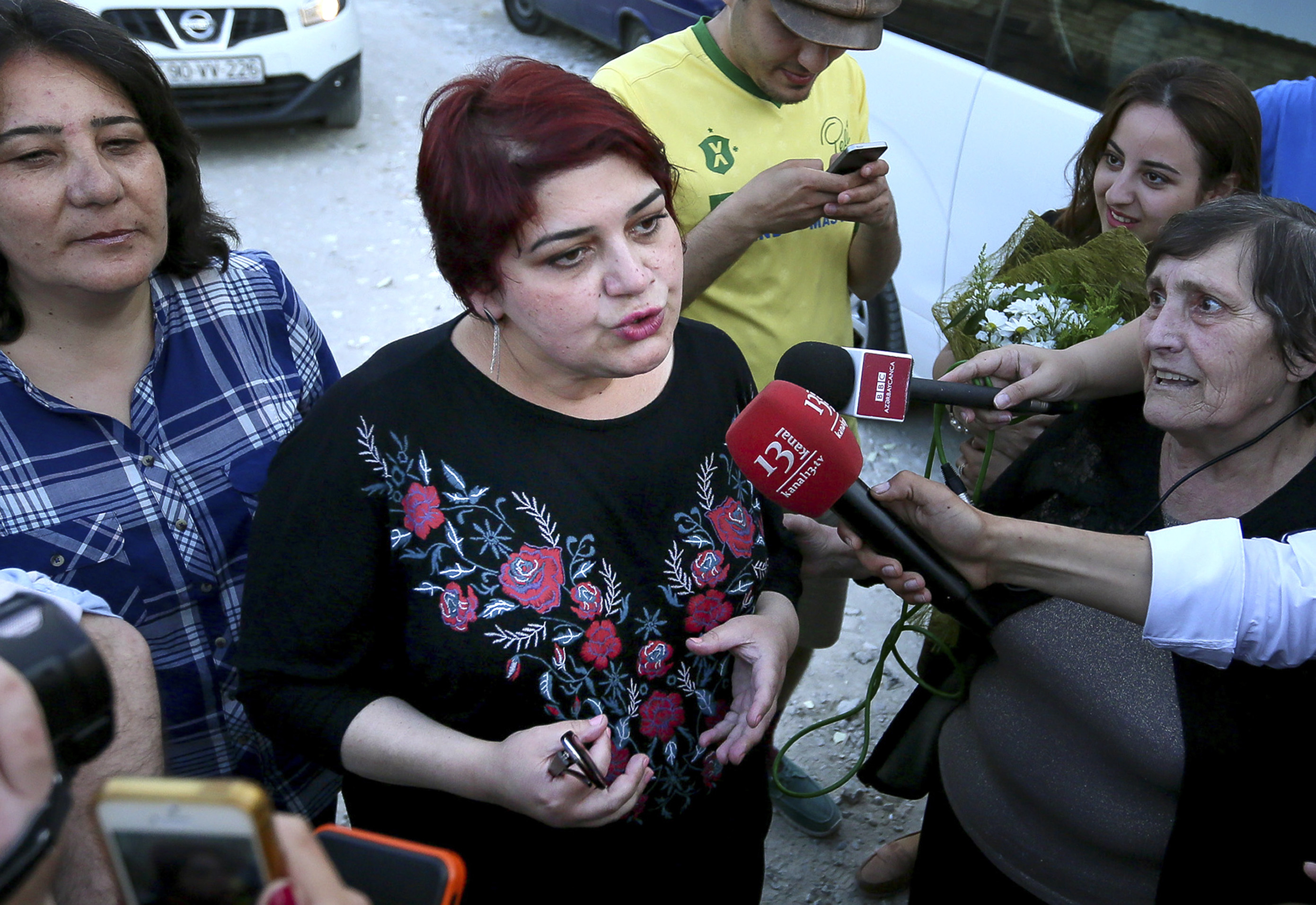
Azeri Khadija Ismayilova, center, a reporter for Radio Free Europe/Radio Liberty, who has become a symbol of defiance, praised by human rights and free-speech organizations around the world, speaks to journalists right after she has been released in Baku, Azerbaijan, Wednesday, May 25, 2016. A prominent, award-winning Azerbaijani journalist has been released on probation following a storm of international protests about her imprisonment. (AP Photo/ Aziz Karimov)
January 28, 2026 – Azerbaijan –
The European Court of Human Rights (ECHR) in Strasbourg has delivered a significant judgment against Azerbaijan, finding that the state used criminal prosecutions to retaliate against prominent investigative journalist Khadija Ismayilova and thereby violated her rights under the European Convention on Human Rights. The court’s decision, issued on January 27, 2026, underscores longstanding concerns about the misuse of law to target critical media voices and reaffirms press freedom protections across Council of Europe member states.
Ismayilova, well known for reporting on high-level corruption and power dynamics in Azerbaijan, was subjected to a series of criminal charges beginning in 2014–2015 that culminated in convictions for “illegal entrepreneurship” and “tax evasion.” Domestic courts also initially considered allegations tied to a former colleague’s suicide attempt, though that basis was ultimately dismissed. The ECHR determined that the prosecutions were not legitimate enforcement of business or tax law, but rather a deliberate strategy to punish her for her journalistic activities, in violation of her rights to a fair trial and freedom of expression.
In its ruling, the court found that Azerbaijan had breached several key provisions of the Convention, including Article 10 (freedom of expression), Article 6 (right to a fair trial), Article 7 (no punishment without law), and Article 18 (limits on restrictions on rights). Judges noted that the charges were framed in legal terms but lacked a clear basis in domestic law, particularly in treating accreditation requirements as criminal violations, and were pursued in a manner that skirted transparent legal standards. The court also concluded that domestic courts failed to properly consider Ismayilova’s challenges to the charges or to scrutinise the state’s narrative effectively.
As part of the judgment, the ECHR ordered Azerbaijan to pay Ismayilova €12,000 (about $14,400) in moral damages and an additional €4,000 for legal costs, reinforcing that the prosecution constituted improper retaliation rather than legitimate legal action.
Press freedom advocates and legal experts have welcomed the decision as a reaffirmation of core principles protecting journalistic work from politically motivated legal harassment, though some caution that compliance and enforcement remain ongoing challenges in jurisdictions where hostile environments for independent media persist.
The case marks another chapter in the legal struggles faced by Ismayilova, whose imprisonment and ongoing restrictions have made her a symbol of the risks confronting investigative journalism in contexts of concentrated political power. The ECHR’s ruling places responsibility on Azerbaijani authorities to remedy the violations and aligns with broader efforts to safeguard free expression across Europe.
Reference –
https://oc-media.org/journalist-khadija-ismail-wins-legal-battle-against-azerbaijan-at-echr/