The Enduring Power of Journalism in a World of Expanding Media and Shrinking Freedom
December 31, 2025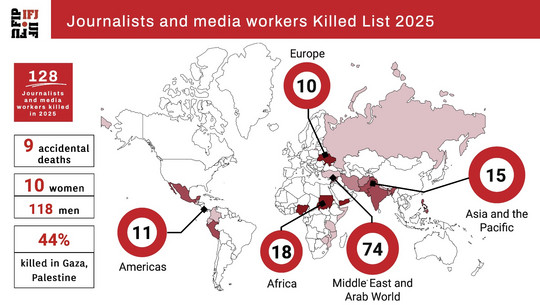
Global Report Finds 128 Journalists and Media Workers Killed in 2025, IFJ Warns of Escalating Risks
January 1, 2026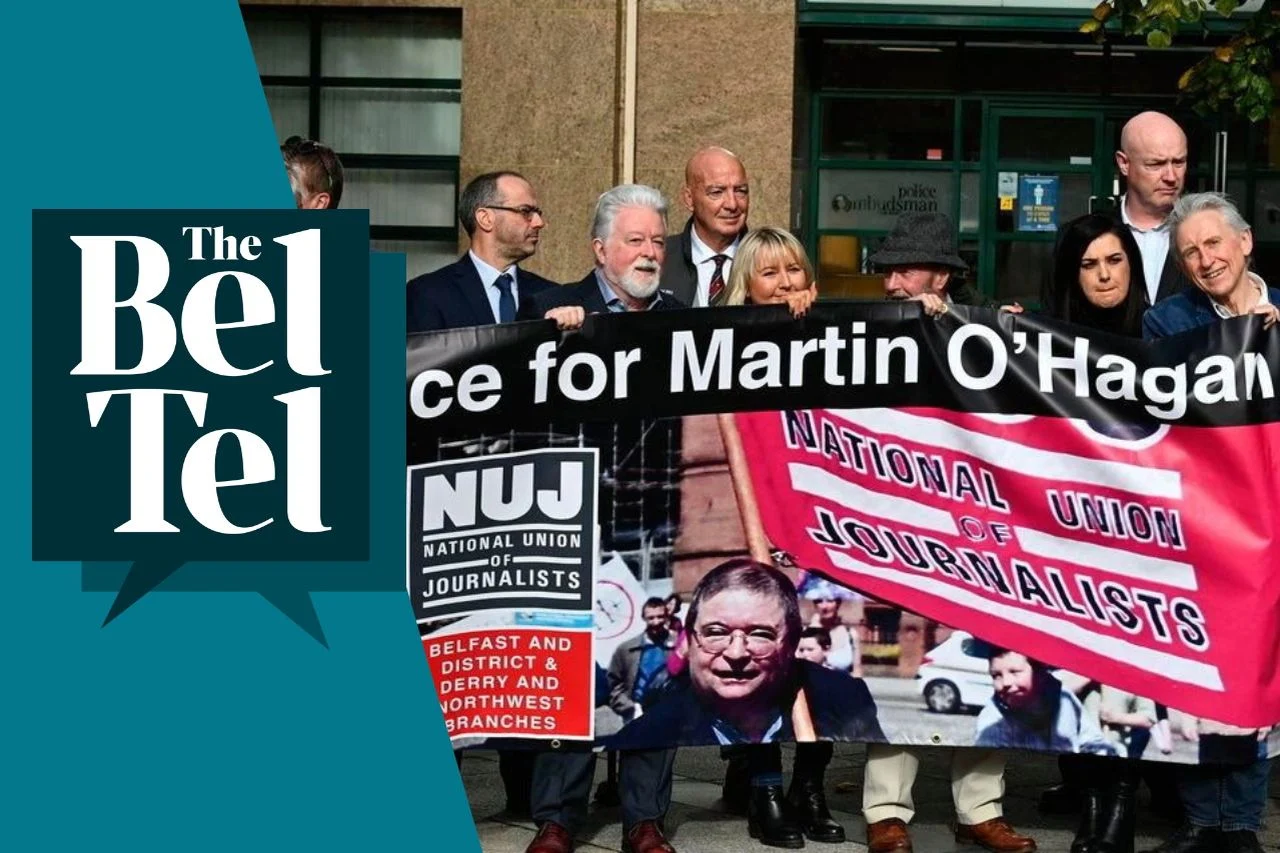
The assassination of investigative journalist Martin O’Hagan remains a defining and unresolved case, illustrating the persistent dangers faced by media professionals reporting on organised crime and paramilitary activity in Northern Ireland. O’Hagan, a seasoned reporter for the Sunday World, was fatally shot on September 28, 2001, by gunmen linked to the Loyalist Volunteer Force (LVF) while walking home with his wife in Lurgan, County Armagh. At age 51, he became the first journalist killed in Northern Ireland’s recent history as a direct result of his work, a crime that has never led to a successful prosecution.
O’Hagan’s career combined a background in local republican activism with a commitment to independent reporting. Having left violent politics in the 1970s, he pursued journalism that exposed criminal and paramilitary networks, delving into extortion, racketeering, drug trafficking, and allegations of collusion between armed groups and security forces. His investigations, including collaborations with programmes such as Channel 4’s Dispatches, earned him respect for rigor and fear from those whose activities he scrutinised.
Despite early threats from paramilitary figures and a previous kidnapping by the Provisional IRA aimed at forcing him to disclose sources, it was loyalist militants associated with the LVF who ambushed O’Hagan in 2001. The Red Hand Defenders, understood by authorities to be a cover name for LVF and Ulster Defence Association elements, claimed responsibility. Though arrests were made in the late 2000s against LVF suspects, prosecutions faltered after key witness testimony was judged unreliable, and no convictions have been achieved.
The ongoing absence of accountability has prompted repeated calls for justice from the National Union of Journalists (NUJ), human rights organisations, and press freedom advocates. Ahead of the 24th anniversary of his murder, the NUJ reiterated demands for an independent, international investigation, highlighting concerns about police investigative shortcomings and alleged collusion that may have hampered efforts to identify and prosecute the perpetrators. Amnesty International and other civil society groups similarly urge the publication of a long-delayed Police Ombudsman report and a fresh inquiry designed to break the long shadow of impunity.
The enduring impunity in O’Hagan’s case is widely seen as a deterrent to press freedom, reinforcing risks to journalists covering contentious issues in Northern Ireland and beyond. The unresolved nature of the murder underscores broader challenges in protecting journalists from violence and ensuring that attacks on media workers do not go unpunished, a principle fundamental to democratic societies and the rule of law.
Reference –