Investigating Government Spyware Targeting Journalists and Activists: A Research Overview
December 26, 2025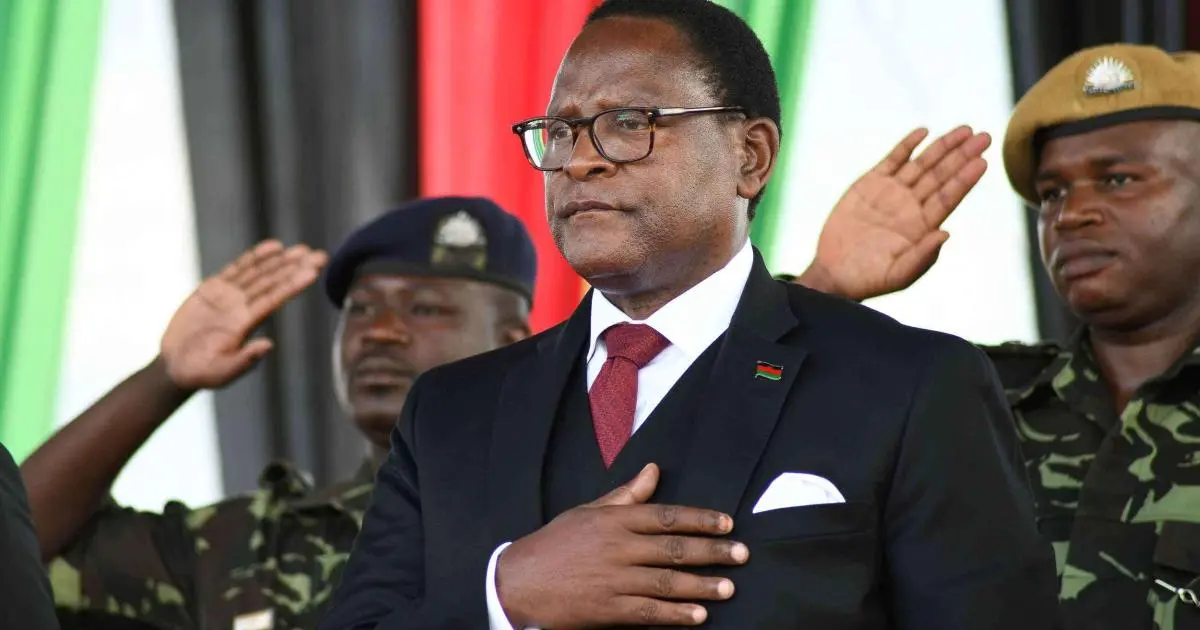
Surge in Attacks and Intimidation Against Journalists in Malawi Undermines Press Freedom
December 30, 2025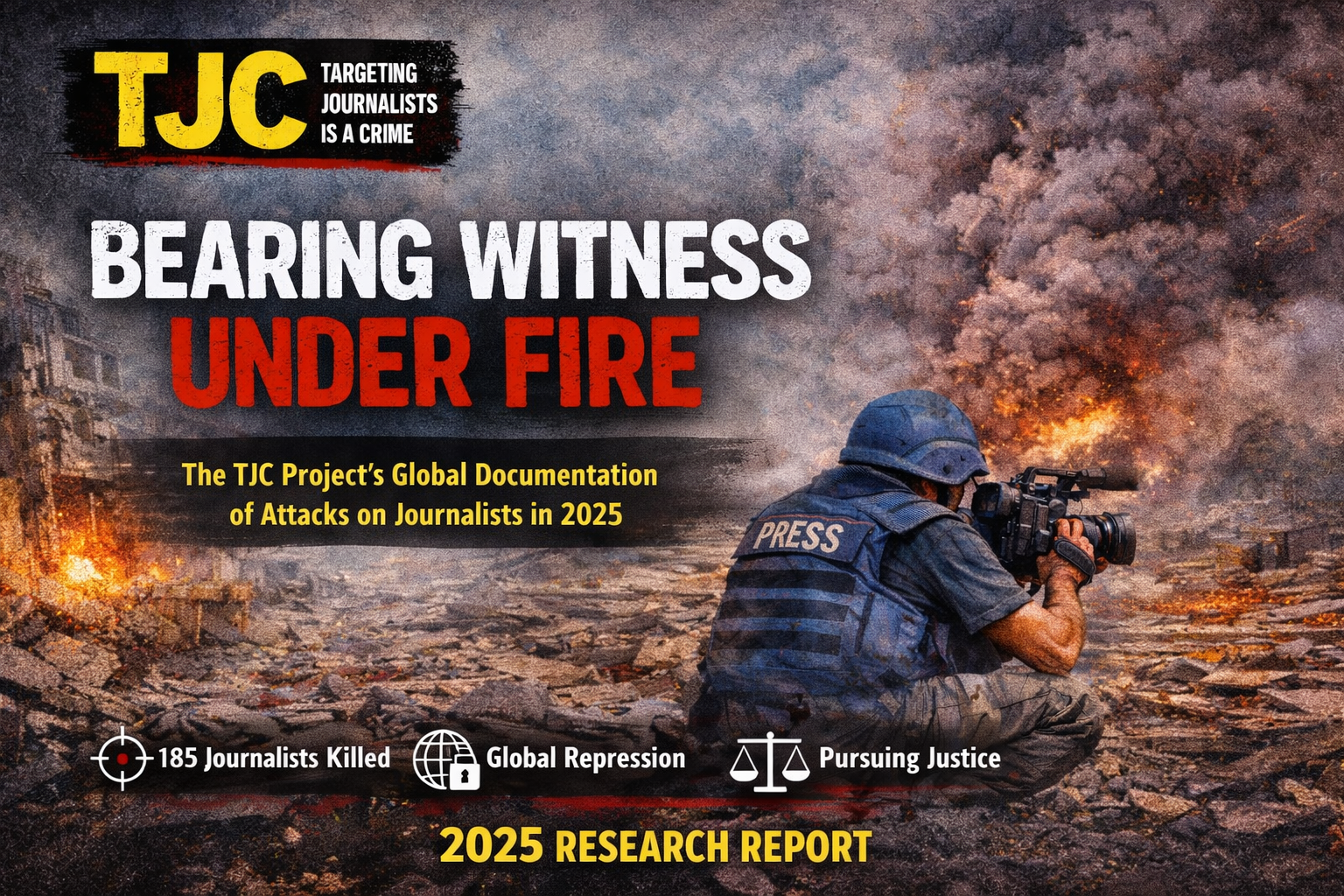
Targeting Journalists is a Crime (TJC) is a global alliance dedicated to safeguarding journalists and demanding accountability for attacks against them. In 2025, TJC tracked an alarming surge in violence, repression, and impunity impacting media workers worldwide. This research report compiles everything the TJC Project covered in 2025, highlighting key trends: a record number of journalist killings (driven largely by conflict zones), continued murders by criminal actors, widespread arrests and censorship, and some notable strides toward justice. The findings underscore TJC’s mission – “defending truth… demanding justice”– as urgent and vital in today’s press freedom landscape.
A Record Deadly Year for Journalists (2025)
2025 was one of the deadliest years on record for journalists. According to TJC’s documentation, 185 journalists were killed worldwide in 2025– a staggering toll far exceeding recent years. For comparison, the International Federation of Journalists (IFJ) confirmed 111 journalist killings (as of early December), and the Committee to Protect Journalists (CPJ) recorded at least 126 by December 10, 2025. (Differences stem from varying criteria; TJC’s count includes all war zone casualties, which explains the higher total.) Nearly half of the deaths occurred in conflict-torn Palestine (Gaza), making it the world’s most dangerous place for journalists. Indeed, CPJ noted that 2025 “led by Israel’s attacks on journalists in Gaza… stands at 126 [killings],” tying the previous year’s grim record. As CPJ’s director lamented, “journalists continue to be killed in record numbers” and too often “those responsible… get away with murder.”
Journalists Killed by Country in 2025 (TJC data, 2025):
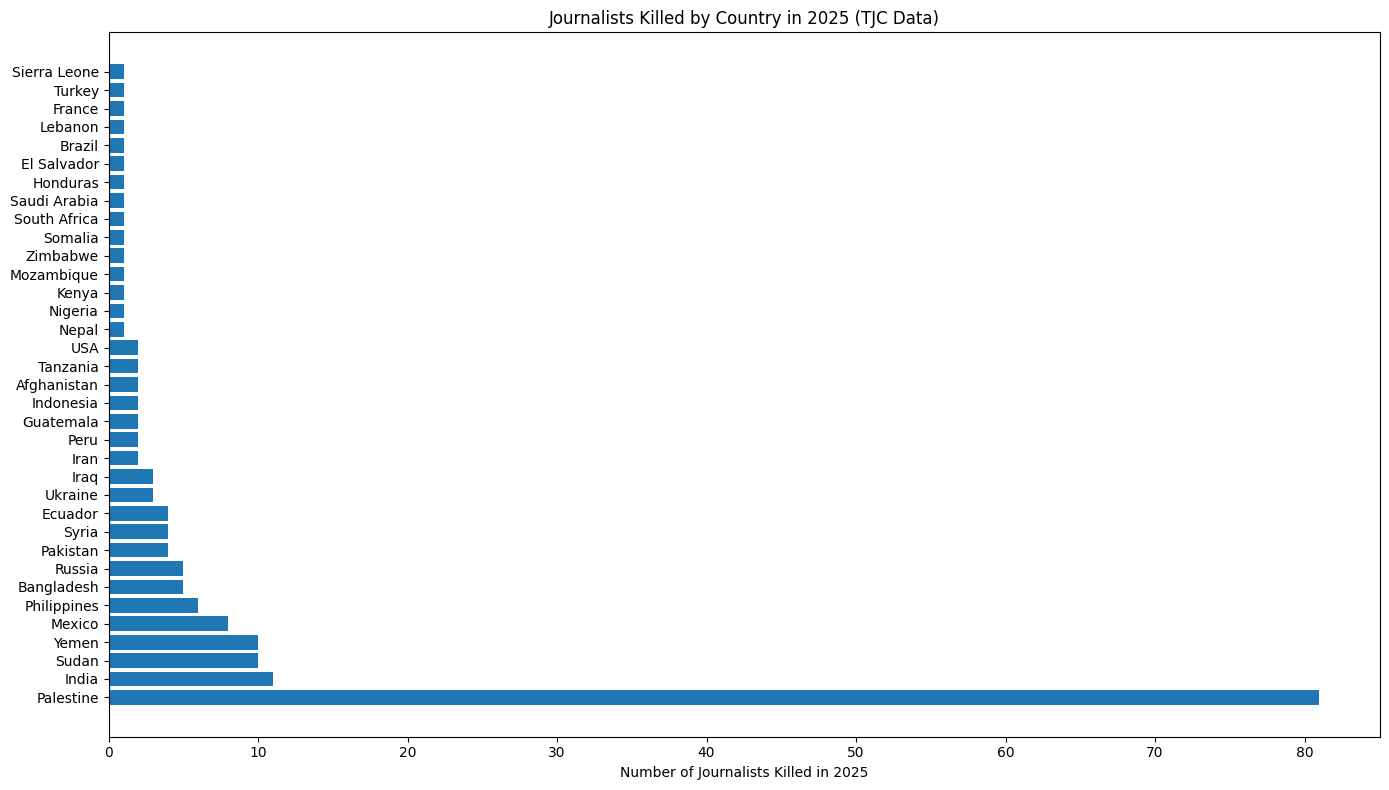
This grim roll call illustrates that violence against journalists spanned every region, from war zones in the Middle East to organized crime hot spots in Latin America and beyond. Below, we delve into the major factors behind these numbers and TJC’s coverage of each.
Conflict Zones: War on Journalists
Armed conflicts were the single greatest threat to media in 2025, with dozens of journalists killed while covering wars. Nowhere was this more evident than in Palestine (Gaza) during the Israel–Hamas war. Israeli forces killed scores of Palestinian journalists amid the Gaza bombardment – at least 86 journalists and media staff in 2025 alone, according to CPJ’s research. Many of these deaths were deliberate targeting of the press: CPJ and human rights experts have condemned Israel’s actions as an assault on journalism, even labeling it part of a “genocide” against those “witnesses to the truth”. One egregious example was an August 10, 2025, airstrike on a clearly marked press tent outside Al-Shifa Hospital, which assassinated four Al Jazeera journalists – Anas Al-Sharif, Mohammed Qreiqeh, Ibrahim Zaher, and Mohammed Noufal. Al Jazeera and press freedom groups blasted the attack as a “premeditated assassination” of journalists. This was not an isolated incident; reporters in Gaza faced constant bombardment, and even survival basics became weaponized. By late 2025, the last journalists in Gaza were reporting while starving, suffering dizziness and illness as food supplies ran out – a situation observers called a deliberate tactic “to silence independent reporting” rather than an accidental byproduct of war. Despite the mortal danger, many persisted in telling Gaza’s story. One slain Palestinian reporter, Anas Al-Sharif, left behind a haunting message: “If these words of mine reach you, know that [they] succeeded in killing me and silencing my voice… I never hesitated to convey the truth.” His words epitomize the courage of journalists in conflict zones.
Beyond Gaza, other Middle Eastern wars also proved deadly. In Yemen, which ranked second in journalist fatalities, a single military strike caused carnage: an Israeli army attack on a newspaper office in November killed 13 Yemeni journalists and media workers in one blow, described as one of the worst attacks in the media ever recorded. Yemen’s toll for 2025 reached at least 10 by TJC’s count, reflecting both this unprecedented incident and ongoing dangers from the region’s conflicts. Meanwhile, Sudan’s civil war – raging between the army and Rapid Support Forces (RSF) – claimed the lives of around 9–10 journalists in 2025, on top of several killed in 2024. Sudanese reporters have been “abducted, raped, and forced to flee” by combatants, particularly the RSF, in a climate of utter lawlessness. In Ukraine, the grinding war against Russia also continued to exact a price: at least 3–4 journalists were killed in Ukraine during 2025 (up from one the previous year), despite most frontline reporters taking precautions. One Ukrainian journalist, Victoria Roshchyna, was tortured and killed while held in Russian captivity; later in 2025 she was posthumously honored with her nation’s Order of Freedom for her unwavering courage. These cases underscore that in war, journalists are not just caught in crossfire – they are often targeted as enemies for bearing witness.
Murders, Crime, and Impunity
Outside of formal war zones, journalists continued to be murdered for exposing crime and corruption, perpetuating long-running cycles of impunity. Latin America remained especially perilous. Mexico saw at least 6–8 journalists killed in 2025, a slight rise from the prior year, as drug cartels and corrupt officials retaliated against investigative reporting. Disturbingly, “there have been no arrests” in any of the 2025 Mexican journalist murders– a pattern of impunity that has plagued Mexico for decades. Colombia, Honduras, Guatemala, and Brazil each lost multiple journalists to assassination as well (see list above), often in connection with reporting on local corruption, environmental crimes, or politics. The Philippines also suffered a resurgence of journalist killings – at least 3–6 Filipino journalists were slain during 2025, after having none in 2024. One Filipino radio broadcaster was shot dead on-air, and others were ambushed by unknown assailants. Philippine authorities made only one arrest in these cases, with no proof yet that the crime was work-related.
In South Asia, India had an especially deadly year with around 11 journalists killed (the highest outside the Middle East). These included reporters murdered for exposing local corruption or wrongdoing. In one shocking case on January 1, 2025, an Indian journalist named Mukesh Chandrakar was beaten to death with an iron bar and dumped in a septic tank – simply for his investigative reporting. India’s toll underscores a worrying trend of violence against the press in the world’s largest democracy. Neighboring Pakistan (4 killed) and Bangladesh (5 killed) also saw deadly attacks on journalists in 2025, alongside numerous non-fatal threats. For instance, between August 2024 and July 2025, at least 496 Bangladeshi journalists were harassed or assaulted – incidents ranging from arrests and intimidation to public humiliation. Rights groups warn that press freedom in Bangladesh is under “severe and escalating threat.”
Several African countries experienced journalist murders linked to militant violence or political unrest. In Somalia, for example, a veteran radio journalist was killed by a bomb, continuing Somalia’s notorious history of media being targeted by Al-Shabaab militants. In Cameroon and Nigeria, journalists faced deadly reprisals from both insurgent groups and government forces. Even relatively stable countries like Kenya and South Africa saw single journalist killings in 2025, reminding us that no region is completely safe. Russia tallied at least 5 journalist deaths, some occurring in Ukraine’s war theater and others under murkier circumstances inside Russia (such as unexplained fatalities of independent reporters). Each of these individual tragedies adds to the global impunity crisis – as of late 2025, most journalist murders in the past decade remain unsolved and unpunished. This climate of impunity emboldens perpetrators and chills watchdog reporting worldwide.
Crackdowns, Censorship, and Jailed Journalists
2025 also saw relentless crackdowns on press freedom, with hundreds of journalists jailed, attacked, or threatened by authoritarian governments. According to IFJ’s annual report, 533 journalists were imprisoned worldwide in 2025 simply for doing their jobs. China remains the world’s biggest jailer of journalists, with 143+ journalists behind bars (including those in Hong Kong) under harsh charges like “subverting state power.” Not far behind, Myanmar held 49 jailed journalists and Vietnam 37 as of late 2025 – stark figures reflecting ongoing repression in the Asia-Pacific. In the Middle East, at least 74 journalists were imprisoned – primarily by Israel (which was detaining 41 Palestinian journalists, mostly from the occupied territories), Egypt (15 jailed journalists), and Yemen (11). Authoritarian regimes in Iran, Turkey, Syria, Eritrea, Saudi Arabia, and Egypt continued to use spurious charges (like “spreading false news,” “terrorism,” or “inciting sedition”) to lock up reporters and intimidate the media.
TJC’s coverage in 2025 highlighted numerous cases of journalists arrested or persecuted for their reporting. For example, in Ethiopia, seven journalists from a prominent TV outlet were detained and accused of terrorism after airing a controversial story that embarrassed authorities. Rights groups like CPJ condemned the arrests as “an unjustified attack on press freedom,” noting Ethiopia’s government has increasingly used anti-terror laws to silence dissent since the Tigray conflict. In Turkey, two renowned investigative journalists – Timur Soykan of BirGün and Murat Ağırel of Cumhuriyet – were detained on April 10, 2025, over their reporting, exemplifying the Turkish authorities’ crackdown on critical media. Earlier in the year, Turkish police had also arrested editors of an opposition TV channel, showcasing a pattern of intimidation. Russia’s tightening grip on free expression led to outrageous sentences: in one instance, a Moscow court sentenced four journalists to 5+ years in prison simply for working with an “undesirable” media outlet critical of the government. And in Iran, while there was a glimmer of hope with the conditional release of journalist Vida Rabbani from Evin Prison in April, dozens of other Iranian journalists remained jailed in connection with 2022’s protest coverage and other banned topics.
Beyond imprisonment, many journalists were abducted or forced into exile in 2025. In the Democratic Republic of Congo (DRC), for example, reporter John Kabamba went missing after interviewing rebel fighters, feared kidnapped or killed for probing armed groups. Across Central America, a growing number of journalists (especially women) fled abroad to escape death threats from gangs or state actors, only to face persistent online harassment in exile. A LatAm Journalism Review study detailed how exiled women journalists from El Salvador, Guatemala, Honduras, and Nicaragua endure waves of misogynistic abuse and cyberstalking even after finding refuge abroad. These examples illustrate that censorship and persecution take many forms – from legal harassment and gag orders to violent abductions and digital intimidation – all aiming to silence the press.
Progress and Hope: Accountability Efforts in 2025
Amid the onslaught, 2025 also saw notable efforts to advance justice and press freedom, many of which TJC highlighted as signs of hope. In a landmark victory against impunity, two men were convicted and sentenced to life in prison for the assassination of Daphne Caruana Galizia. Daphne, a renowned Maltese investigative journalist, was killed by a car bomb in 2017; after years of campaigning, a Maltese court in 2025 finally jailed the perpetrators who had supplied the bomb, marking a step toward justice in a high-profile case. This outcome sends a message that even years later, justice can be served. Additionally, French anti-terrorism judges dropped the case against journalist Ariane Lavrilleux in January 2025, deciding not to indict her for reporting on secret French arms deals. Press freedom advocates hailed this as a win, since charging Lavrilleux would have set a dangerous precedent for criminalizing journalism in a democracy. And at the European Union level, a new Media Freedom Act came into force across all member states in August 2025. This EU law strengthens protections for journalists by promoting transparency, editorial independence, and restricting government spying and censorship – for instance, it bans abusive use of spyware against journalists and limits political interference in public media. Such legislative reforms address structural issues that affect press freedom and could serve as models beyond Europe.
There were also symbolic strides in recognizing journalists’ sacrifices and raising awareness. In Brussels, the European Parliament’s Info Hub hosted a poignant photo exhibition titled “Imprisoned” in April 2025, showcasing the faces and stories of jailed journalists from around the world. This exhibit aimed to humanize imprisoned reporters and rally public support for their release. Media organizations and unions ramped up campaigns – the IFJ, for example, continued pressing for a dedicated UN Convention to protect journalists, believing that international law could help curb rampant violence. And in Canada, a new advocacy group was launched to defend Palestinian journalists and document violations against them, reflecting the international outcry over the targeting of media in Gaza. Each of these developments – whether courtroom victories, new laws, or awareness campaigns – contributes to the “progress and justice” that TJC strives for. They demonstrate that even as threats escalate, there is a growing global recognition of the need to protect journalists and uphold the truth.
Conclusion
From the battlefields of Gaza and Sudan to the city streets of Mexico and Delhi, 2025 was a harrowing year for journalists, marked by tragedy but also by extraordinary bravery. 185 journalists lost their lives doing their duty – reporting news that the powerful often wanted suppressed. Hundreds more were imprisoned, attacked, or exiled in attempts to muzzle the free press. Yet, through initiatives like the TJC Project, these stories are not forgotten. TJC’s mantra that “targeting journalists is a crime” resonates loudly against the year’s events. By chronicling each attack and honoring each fallen journalist, TJC keeps a spotlight on abuses that many would prefer to hide. The hope is that this persistent documentation and advocacy will “amplify awareness and accelerate accountability”, pressuring authorities to bring killers to justice and to enact stronger protections for the press.
In summary, the TJC Project’s 2025 coverage paints a comprehensive – if sobering – picture: a world in which journalists faced unprecedented peril, but also one in which a united global community began to fight back, insisting that truth-tellers must be safeguarded, not silenced. The lessons of 2025 make it clear that the fight for press freedom and journalist safety must continue with renewed urgency into 2026 and beyond.