Report Documents Surge in Violence Against Journalists in the United States Amid Protests and Political Tensions
December 23, 2025
Top Bulgarian TV Anchor Removed from Air Amid Allegations of Political Interference
December 23, 2025
December 23, 2025 – USA –
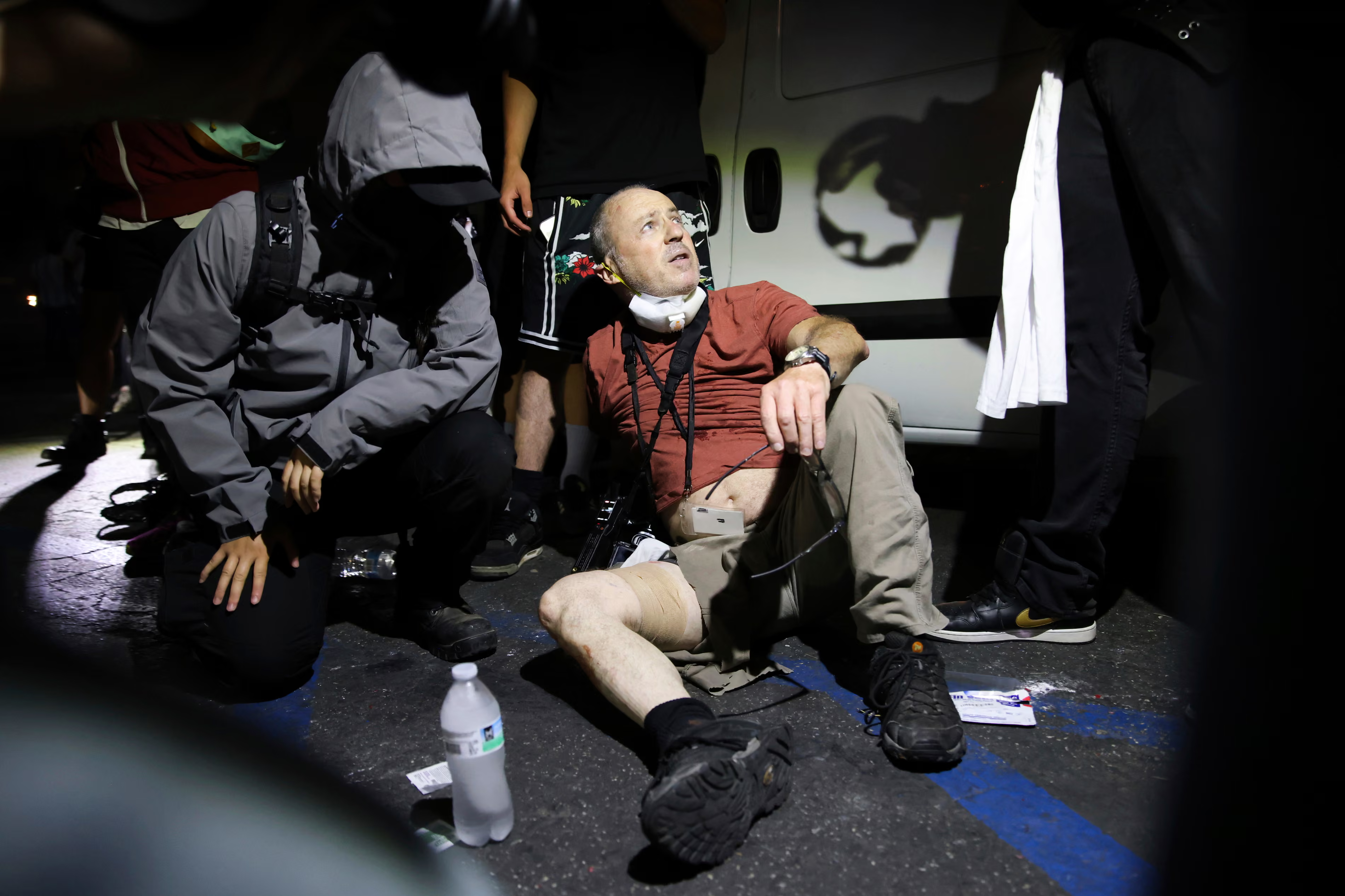
American journalist Dylan Collins was seriously injured while reporting near the Israel-Lebanon border, and is now calling on the U.S. government to provide clarity on the circumstances surrounding the incident and to ensure greater protection for journalists in conflict zones. Collins, a veteran foreign correspondent, was struck by shrapnel on December 13, 2025, while covering escalating cross-border hostilities between Israeli forces and Hezbollah-linked militants. He was embedded with a Lebanese news crew when an explosion occurred, inflicting wounds to his leg and shoulder.
Following several days of hospital treatment in Beirut, Collins returned to the United States for further medical care and rehabilitation. In interviews with U.S. media, he described the explosion as sudden and without clear warning, emphasising that he and his colleagues were clearly identified as journalists at the time of the incident. Collins said he is still processing both the physical and psychological impact of the injury, but that his priority now is to understand the chain of events that led to his being hit and to advocate for better safety measures for journalists covering armed conflicts.
Collins has since addressed U.S. lawmakers and State Department officials, urging them to seek accountability from all parties involved and to clarify whether any protocols governing the safety of journalists in combat zones were breached. He has expressed frustration at what he called a “lack of transparent information” from both Israeli military sources and U.S. diplomatic channels regarding the specifics of the attack. Collins and supporters argue that journalists — particularly those clearly designated and operating with local media partners — should be afforded protections under international humanitarian law.
Advocacy groups, including press freedom organisations and journalist safety networks, have highlighted Collins’s case as part of broader concerns about the risks faced by journalists covering complex armed conflicts. They argue that clearer communication and accountability mechanisms are necessary when media professionals are injured or targeted, whether inadvertently or intentionally, during military operations. Collins’s advocacy has drawn bipartisan attention in the U.S. Congress, where some lawmakers have called for formal inquiries into the incident and assessments of how the United States can best safeguard its citizen journalists abroad.
Collins’s case underscores the ongoing dangers faced by journalists in active conflict zones and the growing demands for governmental and international action to enhance protections for media workers reporting on high-risk engagements.
Reference –
https://www.npr.org/2025/12/23/g-s1-103310/dylan-collins-lebanon-israel-attack-washington-congress


