
Why Women Journalists Cannot Log Off — Digital Violence, Gender, and the Persistence of Online Harassment
December 16, 2025
UNESCO Warns of Serious Global Decline in Freedom of Expression and Journalists’ Safety
December 17, 2025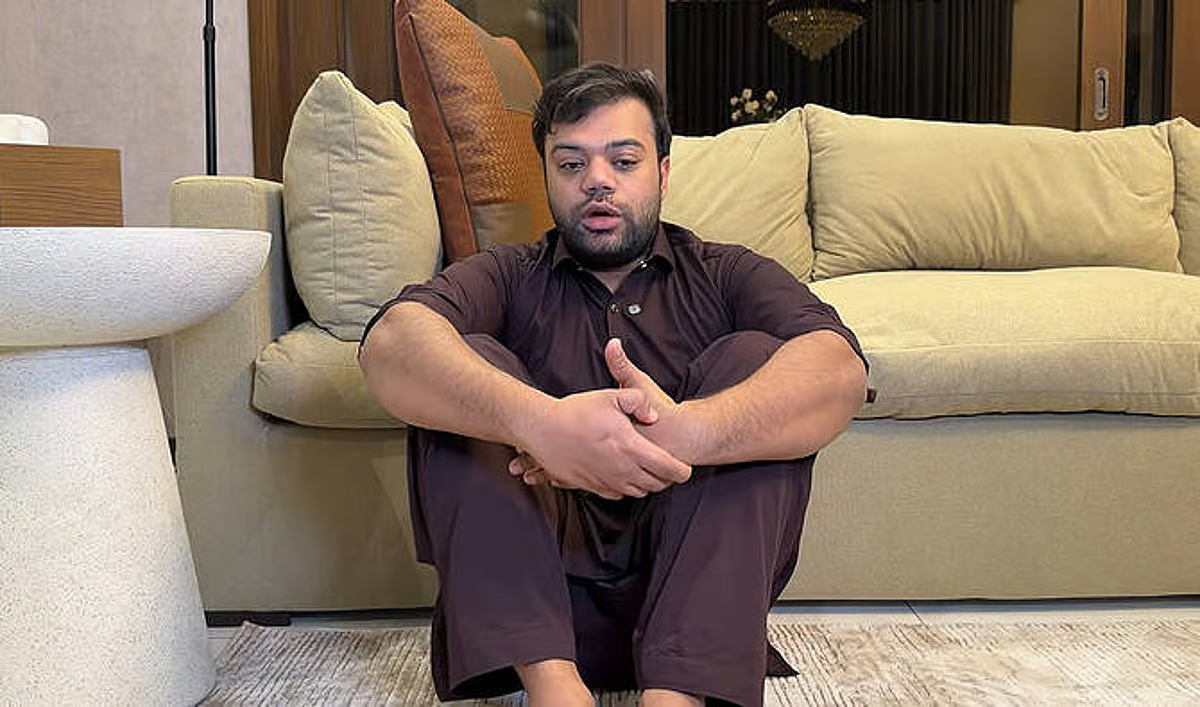
This research brief examines the deepening press freedom crisis in Pakistan through the case of a Pakistani YouTuber who has alleged torture and coercion while in custody under the country’s cybercrime laws. The case highlights broader structural concerns about the use of digital regulations, custodial practices, and security narratives to suppress journalistic activity and online expression.
Context and Background
Pakistan has increasingly relied on the Prevention of Electronic Crimes Act (PECA) and related cybercrime provisions to investigate, detain, and prosecute journalists, bloggers, and digital content creators. While officially framed as tools to combat disinformation and online crime, these laws have been widely criticized by rights groups for vague definitions and expansive enforcement powers that allow authorities to target critical voices.
The reported case involves a YouTuber engaged in political commentary and current-affairs reporting, who was detained by the Federal Investigation Agency (FIA) on cybercrime-related charges. Following his release, he alleged that he was subjected to physical abuse, threats, and pressure to confess or alter his content.
Key Findings and Patterns
Cybercrime Laws as Instruments of Control
The case illustrates how cybercrime legislation is increasingly used to police political speech rather than genuine digital offenses. Charges are often linked to “anti-state content” or alleged misinformation, blurring the line between journalism and criminal activity.
Allegations of Custodial Abuse
Claims of torture and coercion in custody raise serious human rights concerns. Such allegations align with previous reports documenting the mistreatment of journalists and activists during interrogations, particularly in cases involving national security or online dissent.
Targeting of Digital Journalists
YouTubers and independent online journalists appear especially vulnerable due to their lack of institutional backing. Unlike reporters employed by large media houses, digital creators often face detention without strong legal or organizational protection.
Chilling Effect on Media Ecosystem
The threat of arrest, coupled with reports of abuse, encourages widespread self-censorship. Journalists may avoid sensitive topics such as military affairs, corruption, or enforced disappearances to reduce personal risk.
Institutional and Legal Implications
From a research perspective, the case underscores weaknesses in Pakistan’s legal safeguards for freedom of expression. Oversight mechanisms for cybercrime enforcement remain limited, and accountability for alleged custodial abuse is rare. This environment enables repeated violations without systemic reform.
Broader Impact on Press Freedom
International press-freedom organizations have consistently ranked Pakistan as a high-risk environment for journalists. The expansion of cybercrime enforcement into journalistic domains reflects a shift from overt censorship toward legal and administrative repression, which is often harder to challenge and document.
Conclusion
The allegations of torture and coercion against a detained YouTuber are not isolated incidents but symptomatic of a wider strategy that leverages cybercrime laws to suppress critical journalism in Pakistan. Addressing this crisis requires legal reform, independent oversight of law enforcement agencies, and stronger protections for digital journalists. Without these measures, the space for free expression is likely to continue shrinking, with profound consequences for democratic accountability and public trust.
Reference –