Maharashtra Panel Recommends Jail Time for Journalists in Defamation Case, Sparking Press Freedom Concerns
December 14, 2025
Jailed French Journalist Appeals Conviction in Algeria as Family and Press Groups Seek Pardon
December 15, 2025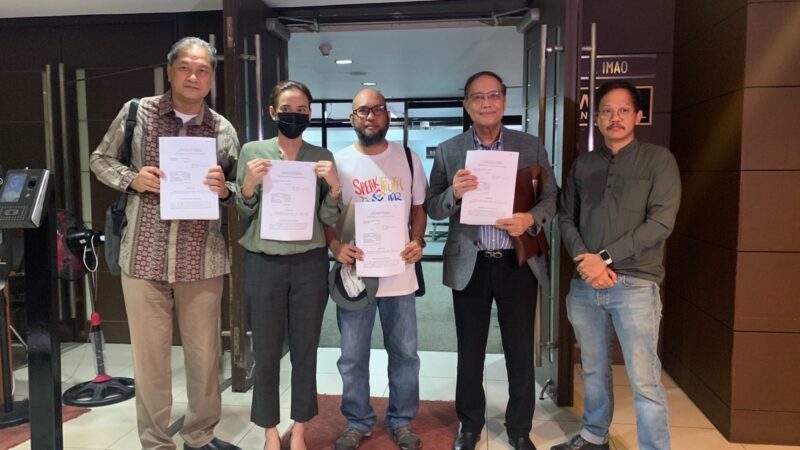
December 14, 2025 – Philippines –
A Filipino journalist has launched a legal and public challenge against Meta, the parent company of Facebook and Instagram, accusing the tech giant of enabling red-tagging and the spread of disinformation that puts journalists and activists at serious risk in the Philippines.
The case centers on journalist Ressa Villanueva (as reported), who says Meta’s platforms were used to circulate false and dangerous claims linking her to communist groups — a practice known locally as red-tagging. In the Philippines, such accusations are widely recognized as a precursor to harassment, surveillance, arrest, or even deadly violence, particularly against journalists, human-rights defenders, and activists.
According to reports, the journalist argues that Meta failed to act decisively despite repeated warnings and requests to remove content that falsely labeled her as a security threat. The posts, she says, were amplified by coordinated networks and algorithmic recommendation systems, allowing disinformation to spread rapidly and remain visible long after it had been flagged.
Red-tagging has long been condemned by international rights groups as a tactic that endangers lives. Journalists accused of communist ties have faced threats, arrests, and killings, often following sustained online campaigns that blur the line between digital harassment and real-world violence. Advocates say social media platforms play a central role in these dynamics by allowing harmful narratives to gain traction.
The journalist’s challenge against Meta is being closely watched as a potential landmark case for platform accountability in the Global South. Legal experts say it raises fundamental questions about the responsibility of technology companies to prevent their services from being used to incite harm, particularly in countries where red-tagging carries lethal consequences.
Meta has previously stated that it removes content that incites violence and works to combat coordinated inauthentic behavior. However, critics argue that enforcement is inconsistent and often too slow, especially in non-Western contexts where language, political nuance, and local risk factors are poorly understood by moderation systems.
Press-freedom advocates have welcomed the journalist’s pushback, describing it as a rare attempt to confront powerful technology companies over the offline harms of online disinformation. They stress that journalists should not be forced to choose between personal safety and public-interest reporting.
The case highlights the growing intersection between press freedom, digital rights, and corporate accountability. As journalists increasingly rely on social media to reach audiences, advocates warn that unchecked platform practices can become tools of repression rather than spaces for free expression.
Reference –
A Filipino journalist pushes back against red-tagging and disinformation by taking on Meta
https://www.newsgram.com/asia/2025/12/13/filipino-journalist-against-red-tagging-disinformation