

2025 Global Press-Freedom Report: How Hatred and Impunity Made This a Deadly Year for Journalists — A Research Overview
December 11, 2025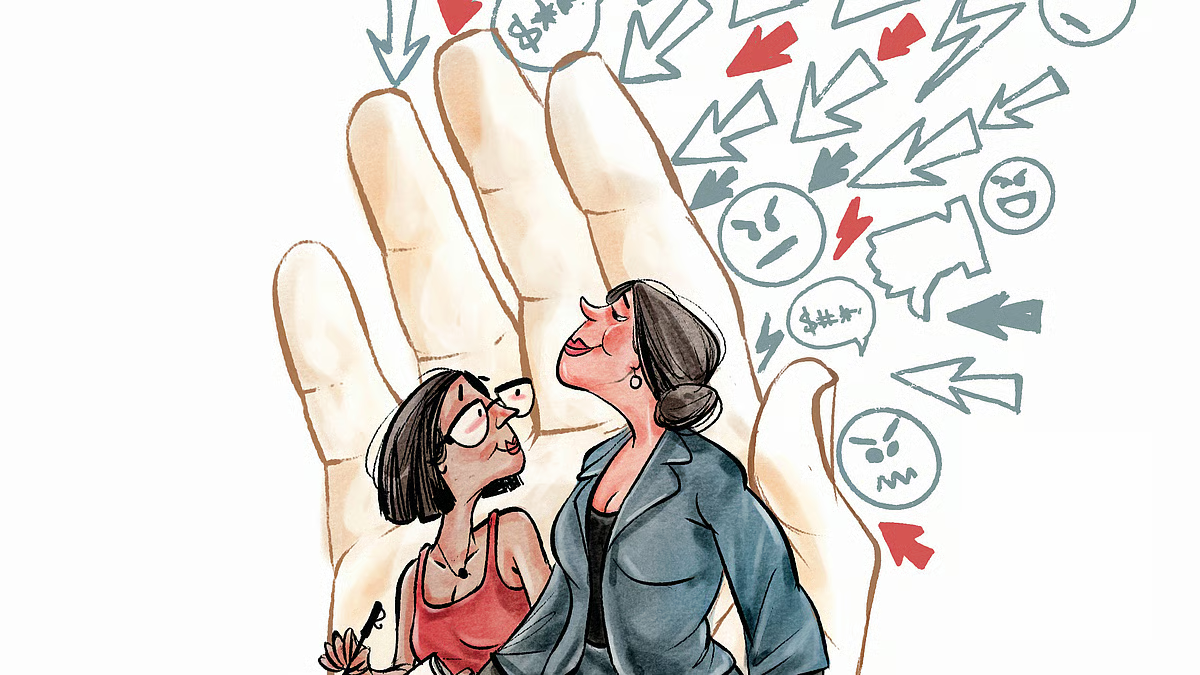
Why Women Journalists Cannot Log Off — Digital Violence, Gender, and the Persistence of Online Harassment
December 16, 2025
This research brief examines the case of Jarosław Ziętara, a Polish investigative journalist whose enforced disappearance remains one of the most emblematic unresolved crimes against journalists in Europe. Decades after Ziętara vanished, his case continues to highlight structural failures in accountability, political interference, and the long-term consequences of impunity for press freedom in democratic and post-transition societies.
Background
Jarosław Ziętara was a young investigative reporter in Poland in the early 1990s, a period marked by political transition, economic upheaval, and the rise of powerful business interests with opaque ties to political elites. He was last seen in September 1992, after working on sensitive investigations reportedly involving corruption and organized crime. His disappearance is widely believed to be linked to his journalistic work.
Despite repeated inquiries, parliamentary commissions, and renewed investigations over the years, Ziętara’s fate has never been fully clarified. Nobody has been found, and no final convictions have been secured, placing his case within the category of enforced disappearance.
Key Findings and Analytical Themes
Impunity as a Systemic Failure
The Ziętara case demonstrates how weak institutions, political pressure, and prosecutorial inertia can combine to prevent justice. Even when evidence and witness testimony emerge, delayed action severely undermines accountability.
Vulnerability of Journalists During Political Transitions
Ziętara worked during a fragile post-communist transition, when legal frameworks protecting journalists were underdeveloped, and power structures were rapidly shifting. Such periods often create heightened risks for investigative reporters.
Long-Term Impact on Press Freedom
The unresolved nature of the case has had a chilling effect on investigative journalism in Poland. When crimes against journalists remain unsolved for decades, they signal to perpetrators that silencing the press can occur without consequences.
Family-Led Justice and Civil Society Pressure
Much of the momentum in keeping Ziętara’s case alive has come from journalists’ unions, press-freedom organizations, and his family. This underscores the critical role of civil society when state mechanisms fail.
Broader Implications
From a research perspective, Ziętara’s disappearance aligns with global patterns observed in journalist killings and disappearances: delayed justice increases normalization of violence, erodes trust in institutions, and weakens democratic accountability. His case also illustrates how enforced disappearances are not confined to authoritarian states but can occur within democracies under strain.
Conclusion
Jarosław Ziętara’s case remains unresolved, not due to lack of significance, but due to entrenched impunity. It stands as a warning that press freedom is only as strong as the systems that protect journalists when they are targeted. Addressing historical cases like Ziętara’s is essential not only for justice but for restoring credibility to institutions tasked with safeguarding the public’s right to know.
Reference –