
Media Freedom Groups Urge Stronger EU Action After Google Fine
September 10, 2025
Over 300 Editorial Jobs at Risk in Major Reach plc Restructure
September 10, 2025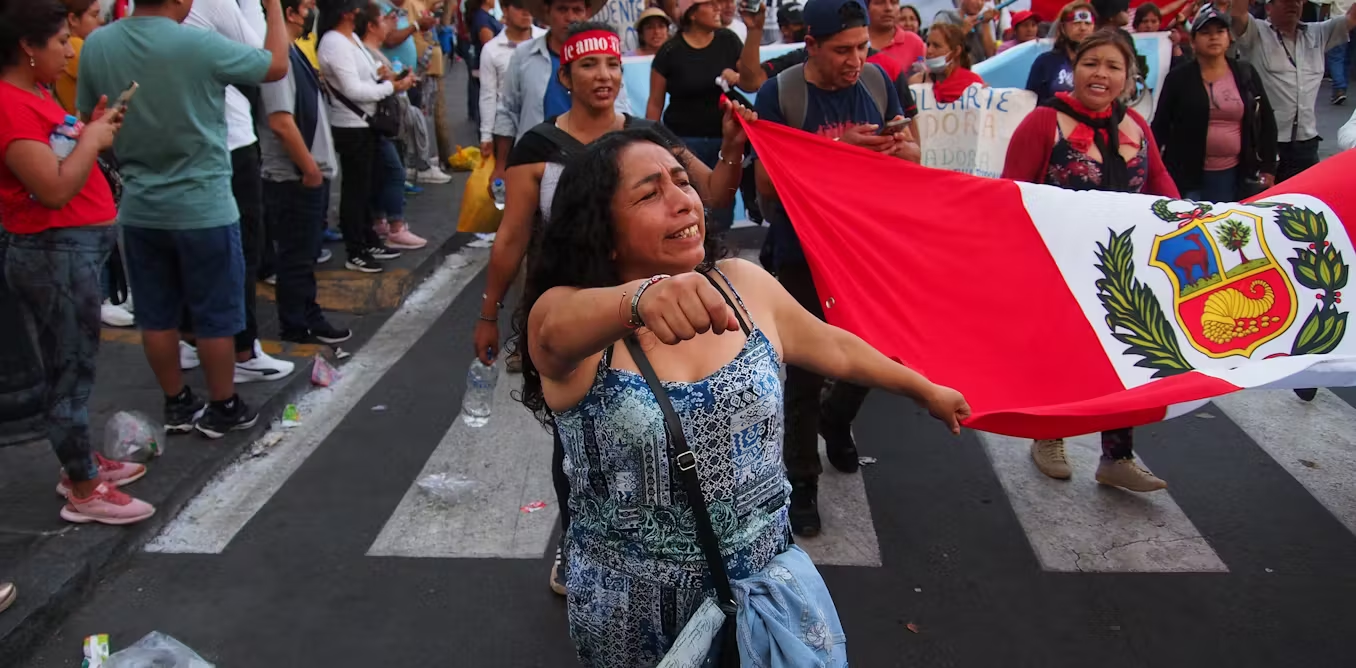
September 10, 2025 – Peru –
In the Puno region of Peru, a growing conflict has emerged between the judiciary and local press workers after a judicial proceeding was launched against Óscar Pareja Castro, director of Diario Los Andes. The litigation was initiated by Judge Juan Francisco Ticona Ura, who is also the former president of the Superior Court of Justice of Puno. The judge is demanding a retraction of a published piece that critiqued his performance as court president. Journalists view this move as an attempt to silence criticism and limit oversight.
The dispute has sparked protests among journalists in Juliaca and across Puno. Local media workers, supported by the National Association of Journalists of Peru (ANP) and the Network of Journalists, denounce the habeas data claim and accuse Ticona Ura of using legal tools to intimidate Los Andes. They argue this is part of a broader pattern of suppression, especially against media outlets critical of government branches.
The ANP has issued a formal statement rejecting what they call the judge’s “intimidation” of the press. They assert that legal instruments like habeas data and defamation suits are being misused—not to protect rights or reputations, but rather to punish journalists who perform their public duty by holding power accountable. Rather than ensuring justice, these actions threaten freedom of speech and the public’s right to know.
ANP president Zuliana Laínez emphasized the seriousness of this case, saying it affects not only the rights of journalists to report freely but also the rights of citizens to access important information. She warned that without media investigations, many corruption cases—national as well as regional—would remain hidden. Such legal pressures, she added, amount to deliberate attempts to harass and silence journalism.
The National Federation of Journalists supports the protest actions of Puno’s media workers and urges the Superior Court of Justice of Puno to respect press freedom. They demand the court refrain from actions that may amount to censorship of public‐interest reporting. The case is being watched as a barometer for broader media freedoms in Peru, where nationally, critics say journalists and outlets face increasing pressure from both the executive and legislative branches.
Reference –